GRAVÜR DÜNYASI
Digital Engraving Library
| Artist | Charles Robert Leslie (1794 -1859) |
| Engraver | William Greatbach (1802-1885) |
| Date | 1870-1876 |
| Technique | Steel Engraving |
| Category | William Shakespeare And His Works |
| Source | The Works Of Shakspere With Notes By Charles Knight (London, Virtue & Co. Limited) |
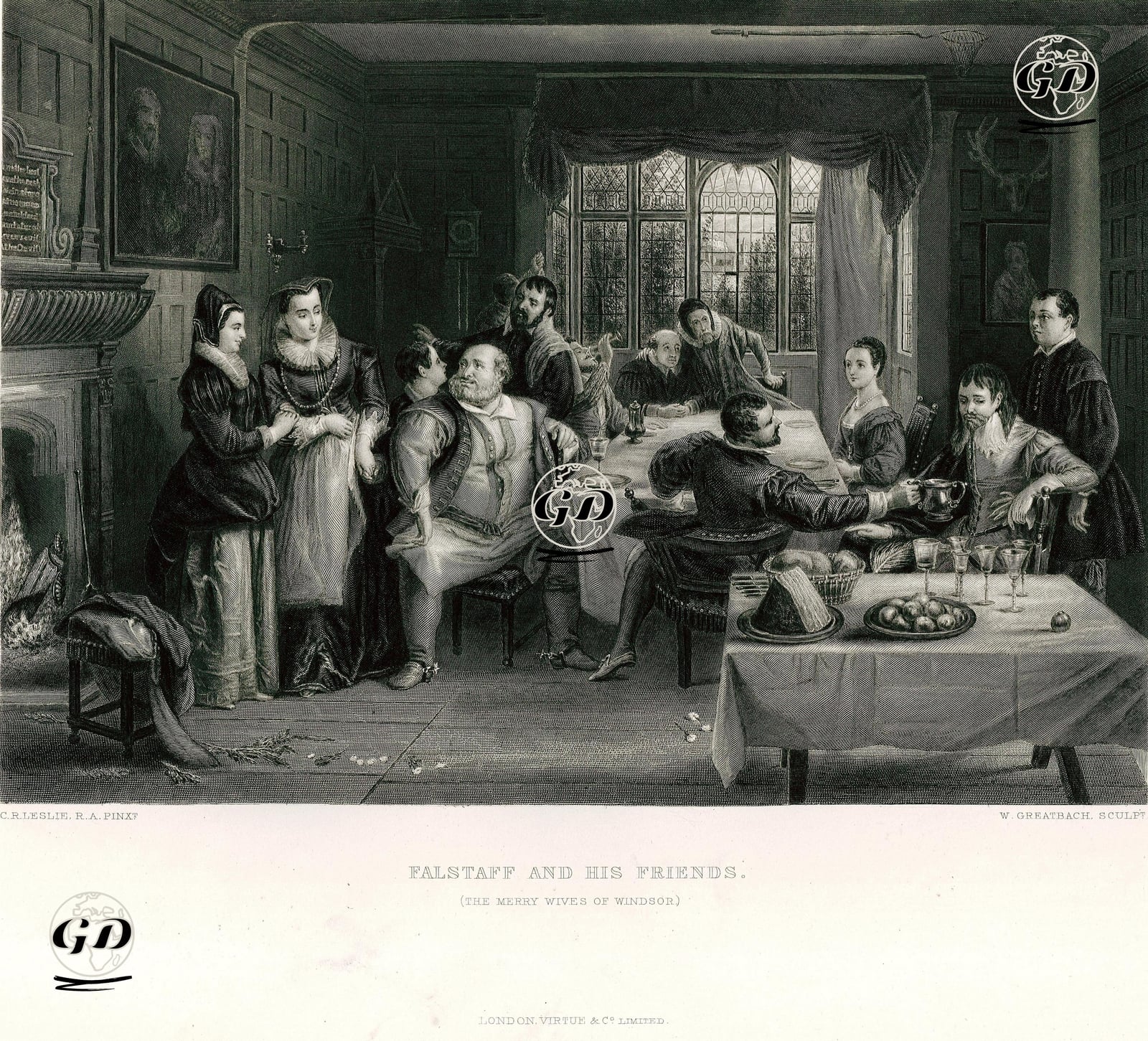
William Shakespeare's comedy "The Merry Wives of Windsor," first published in 1602, became one of the most cheerful works reflecting the social relations of Elizabethan England. The plot revolves around Sir John Falstaff, the famous character Shakespeare had previously introduced in his play Henry IV. Throughout the play, Sir John Falstaff simultaneously attempts to pursue a romantic relationship with two married women living in Windsor (Mistress Ford and Mistress Page). His aim is not for love, but for the women's husbands' money and his own personal gain. However, the two women recognize his arrogance and collaborate to play a series of tricks on Falstaff. The play satirically addresses gender roles, class differences, and human frailties, providing audiences of the time with great laughter and entertainment. The scene depicted here is presumably set in the first act of the play, but is not directly included in the text. The scene depicts Falstaff and his friends gathering at Mrs. Page's house. Nearly all the play's principal characters are depicted at the crowded table. On the left, Mrs. Ford and Mrs. Page stand side by side, approaching Falstaff with a sarcastic elegance. Falstaff, with his large frame, sits in a chair, confidently and arrogantly complimenting the ladies. The other characters at the table are also carefully depicted. Mr. Page offers Slender a glass, adding energy to the scene with his relaxed demeanor, while Slender's shy and awkward demeanor enhances the comic element. Anne Page observes the action in the background with a dignified stance reflecting the innocence of her youth. Bardolph and Pistol converse among themselves while Mr. Ford takes a deep sip of wine. In the background, Sir Hugh Evans observes the scene intently. The humorous atmosphere of the scene is enhanced by the placement of the figures and their facial expressions. Falstaff's self-important stance contrasts with the sarcastic elegance of the women. The interior, depicted with windows and a fireplace, reinforces the ties between the play and the visual by adapting Windsor's bourgeois domestic life to the stage.