GRAVÜR DÜNYASI
Digital Engraving Library
| Artist | William Quiller Orchardson (1832-1910) |
| Engraver | Charles William Sharpe (1818-1899) |
| Date | 1867 |
| Technique | Steel Engraving |
| Category | William Shakespeare And His Works |
| Source | The Art Journal (London, Virtue & Co. ) |
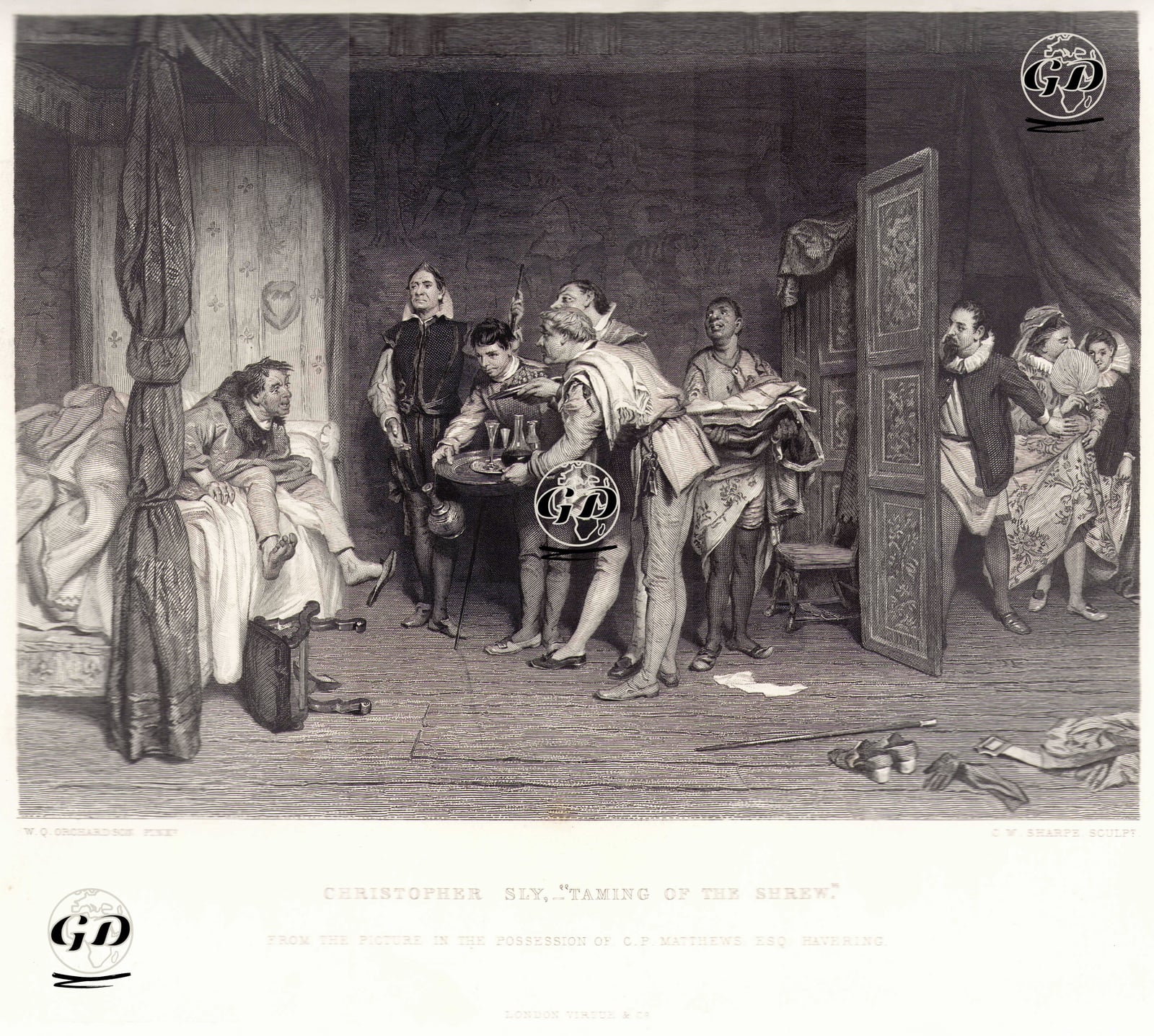
One of William Shakespeare's most controversial comedies, "The Taming of the Shrew" is thought to have been written in the early 1590s. The play, centered on marriage, gender roles, and power relations, reflects male-female dynamics during the Renaissance while also posing questions that remain controversial for contemporary audiences. At the heart of the play is the conflicted love affair between the rebellious and headstrong Katherine (Kate) and Petruchio, who attempts to "tame" her. However, the play's opening, in scenes called "inductions," features the story of a drunken mechanic named Christopher Sly. Sly, tricked by a nobleman, suddenly finds himself thrust into a life of luxury and treated like a master. This frame story serves as both humor and social satire before the main plot unfolds. This opening scene is depicted in the engraving. Christopher Sly, intoxicated, is taken to the nobleman's house, laid on a bed adorned with a precious pajama, and the scene that awaits him upon awakening is set. When Christopher Sly awakens, he sits in bed, bewildered and dazed, unsure of where he is, and stares suspiciously at the crowded servants surrounding him. The owner of the mansion appears disguised as a butler, while several servants approach Sly, carrying silver plates, goblets, food, and precious fabrics. The engraving shows in detail how Sly, bewildered by his drunkenness, stares blankly at his surroundings, while the servants serve him with exaggerated respect and courtesy. The engraving visually conveys the social farce emphasized in the play's text, transforming an ordinary drunk into a false "master" through costumes and gestures. The mess beside the bed, the scraps of clothing on the floor, and the elaborate decoration of the room heighten the tension between reality and illusion on stage. This engraving suggests reflection on identity, class, and social roles, while also revealing the fine line between the false reality of the theater and everyday life. This scene, both humorous and critical, demonstrates Shakespeare's power of social satire and his ability to entertain and provoke thought among the audience of the period.