GRAVÜR DÜNYASI
Digital Engraving Library
| Artist | George Clint (1770-1854) |
| Engraver | Herbert K. Bourne (1825-1907) |
| Date | 1855 |
| Technique | Steel Engraving |
| Category | William Shakespeare And His Works |
| Source | The National Gallery Div 6 Comprising The Pictures Known As The Vernon Collection And A Selection From The Works Of Modern Sculptors |
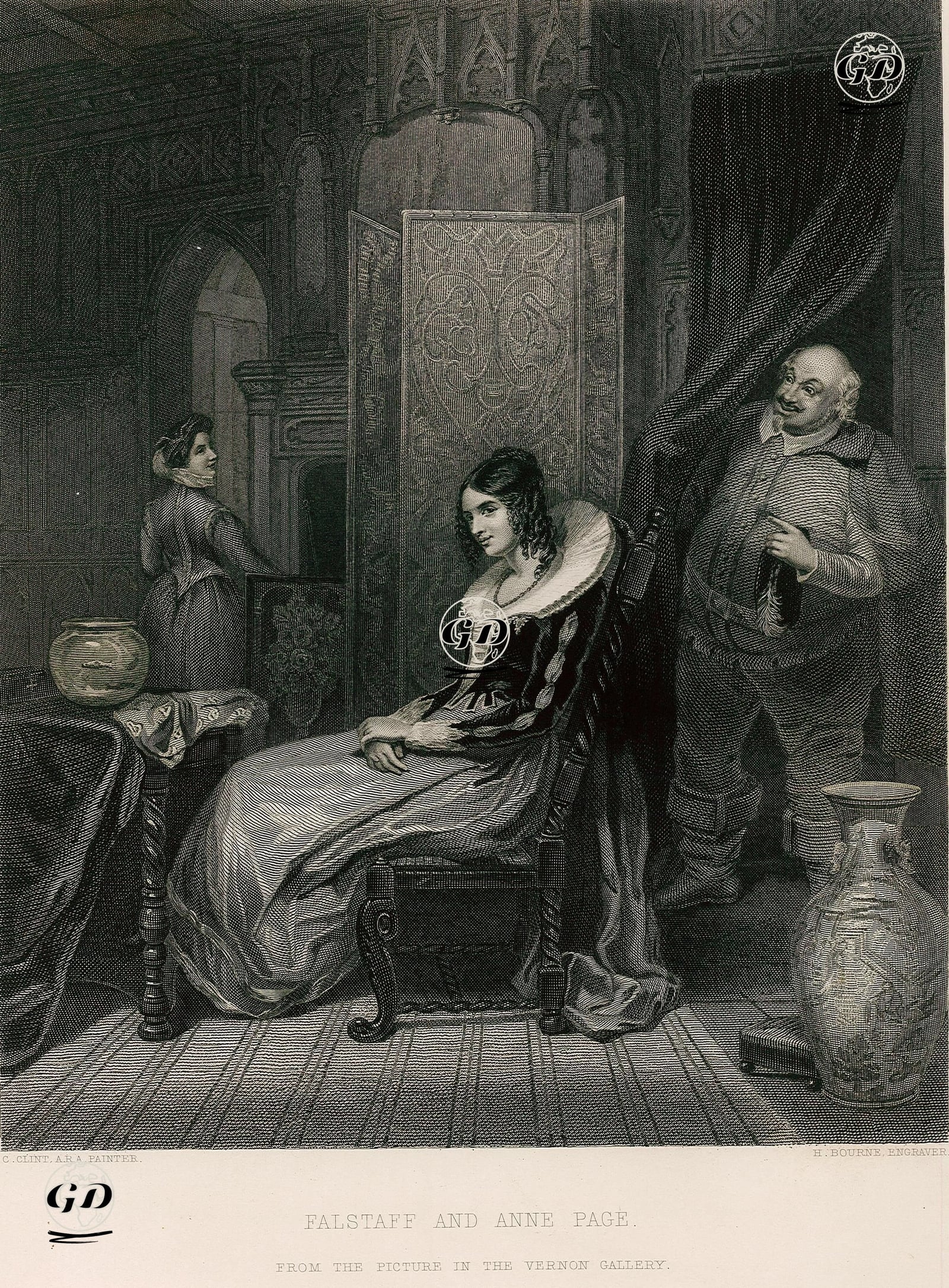
William Shakespeare's comedy "The Merry Wives of Windsor," first published in 1602, became one of the most cheerful works reflecting the social relations of Elizabethan England. The plot revolves around Sir John Falstaff, the famous character Shakespeare had previously introduced in his play Henry IV. Throughout the play, Sir John Falstaff simultaneously attempts to pursue a romantic relationship with two married women living in Windsor (Mistress Ford and Mistress Page). His aim is not for love, but for the women's husbands' money and his own personal gain. However, the two women notice this impudent attempt and devise plans to ridicule him. The scene depicted in the engraving is a prelude to one of these schemes. In this scene, set in Mistress Ford's house, Falstaff uses exaggerated and ornate language to win her favor. Mistress Ford masterfully maintains her role. However, the hidden mischief on his face reveals his plan to humiliate Falstaff. This shot depicts the servants bringing in a large laundry basket, Falstaff hiding inside it, and the basket being emptied into the muddy ditch on the banks of the Thames. The slight smile on Mistress Ford's lips both hints at this comical conclusion and foreshadows Falstaff's future ludicrous predicament. In the engraving, Falstaff, with his heavy body, sumptuous clothing, and self-important demeanor, is at the center of the painting. His facial expression balances between earnestly spoken words of love and comical arrogance. Mistress Ford, with her elegant attire and calm demeanor, forms the scene's opposite. However, the playfulness in her gaze reveals that she is luring Falstaff into a trap. The interior details in the background reflect the everyday atmosphere of the house, while anachronistic elements, such as the glass globe on the table, demonstrate the artist's infusion of the decorative tastes of his time into the scene.