GRAVÜR DÜNYASI
Digital Engraving Library
| Artist | Henry Perronet Briggs (1791-1844) |
| Engraver | Samuel Sangster(1804-1872) |
| Date | 1852 |
| Technique | Steel Engraving |
| Category | William Shakespeare And His Works |
| Source | The National Gallery Div 5 Comprising The Pictures Known As The Vernon Collection And A Selection From The Works Of Modern Sculptors (G.Virtue) |
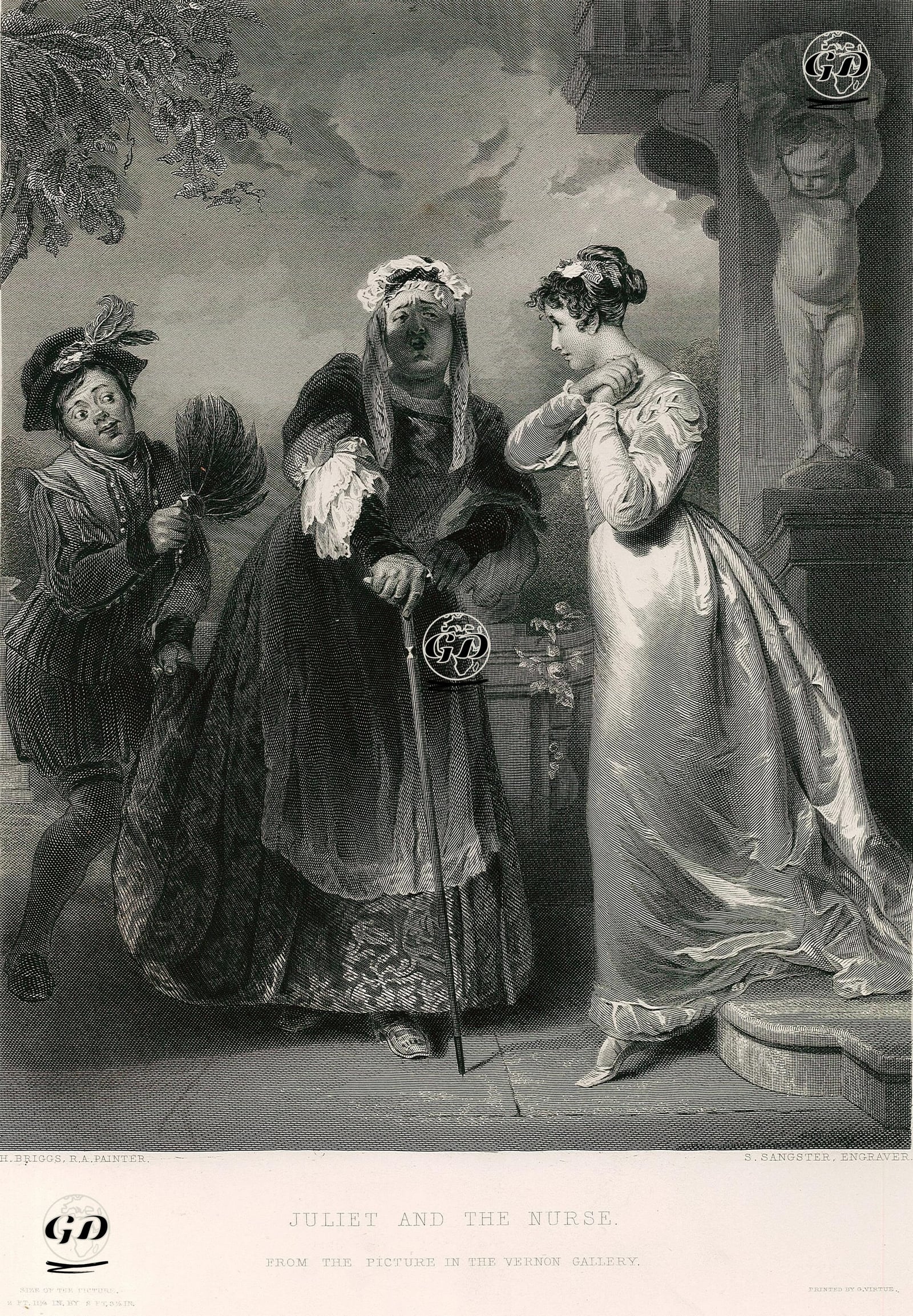
William Shakespeare's tragedy "Romeo and Juliet" is one of the most famous works of world literature, exploring themes of love and fate. Written between 1595 and 1596, the play depicts the tragic love affair between Romeo and Juliet, children of two feuding families in Verona. The play revolves around the passion of youth, the purity of love, and the devastating consequences of family conflict. This engraving depicts a moment in which Juliet, a key supporting character, is performed alongside her nurse. The nurse plays a significant role in the play as Juliet's confidant, mediator, and protector. She sometimes adds humor to the scene and sometimes accelerates the dramatic developments. The scene in the engraving alludes to the scene where Juliet awaits news of Romeo and eagerly awaits her nurse's return. In this scene, Juliet complains about her elderly nurse's slowness and demands to hear the news of her love immediately. This scene humorously illustrates the contrast between the impetuousness of youth and the soberness of old age. The engraving highlights the interaction between the three figures. Juliet, with her slender and graceful figure, symbolizes the freshness of youth, while the nurse, with her heavy clothes, cane, and weary expression, represents old age. Peter, the third figure beside them, plays a small but comic role as the nurse's assistant. By including this character, who should not have entered the scene directly in Shakespeare's text, the artist adds a humorous element to the visual composition. The engraving's gestures and facial expressions clearly convey Juliet's impatience, the nurse's weariness, and Peter's slightly sarcastic tone. The statues and architectural columns on the left and right of the composition immerse the scene in the aristocratic garden atmosphere of Verona. The putto figure in the sculpture, as an allegorical symbol of love and innocence, reinforces the scene's meaning. While the artist highlighted Juliet's youth through the play of light and shadow, he made the nurse's face take on a heavier expression with shadow, thus conveying the contrast of "the haste of youth and the slowness of old age" that is prominent in Shakespeare's text into visual language.