GRAVÜR DÜNYASI
Digital Engraving Library
| Date | 1856 |
| Technique | Steel Engraving (Text on Reverse) |
| Category | Ottoman Empire And Turkey |
| Source | Pictorial History Of The Russian War 1854-5-6 |
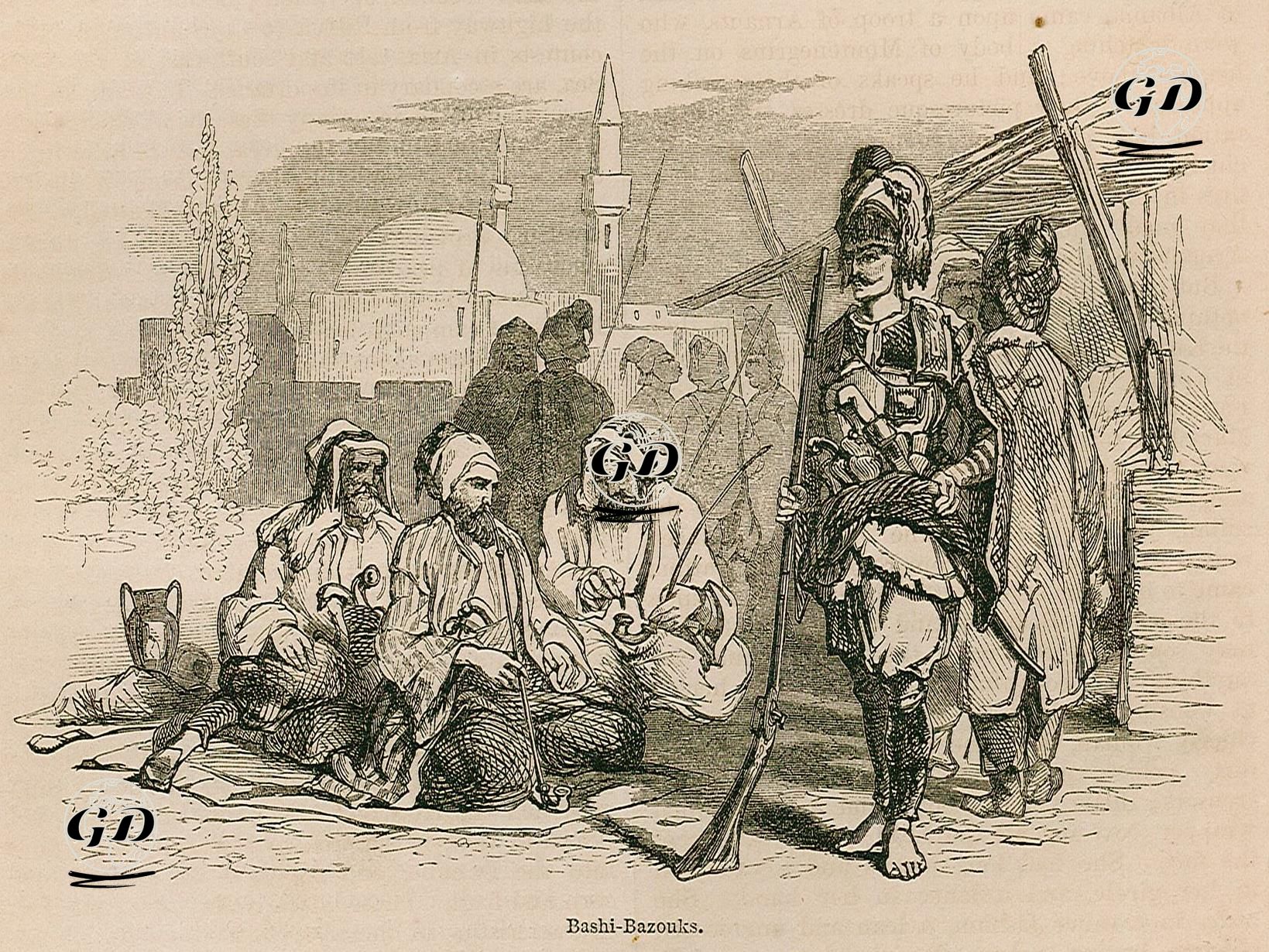
The term "Bashibozuk" refers to irregular Ottoman military forces that were not part of the regular army and were mostly volunteers, local or semi-official. Their name was also used metaphorically to mean "irregular, undisciplined". They were usually composed of individuals of Albanian, Kurdish, Circassian, Bulgarian, Arab or Anatolian origin. The bashibozuk did not receive a salary and fought for booty and plunder; this often made them a force known for being undisciplined and ruthless. However, they were especially effective in areas such as border warfare, ambush-warfare methods, and light cavalry movements, especially along the border. They were used in the Balkans, Eastern Anatolia and the Caucasus, as well as in Crimea at various points. During the Crimean War, they mostly took part in intelligence, raids, surveillance and sabotage missions in sparsely populated areas. The bashibozuk in the engraving is depicted with his richly decorated clothing, turban wrapped in layers around his head, sashes and weapons. A cartridge belt is seen on his chest, a machete and a gun on his waist, and a long matchlock rifle in his hand. His barefootness emphasizes his nature as a vagabond and identified with rural life as well as his warrior identity. The engraving presents an orientalist view to the western viewer: the image of the exotic, tough-tempered, undisciplined but strong and unruly is highlighted with the traditional warrior type.