GRAVÜR DÜNYASI
Digital Engraving Library
| Artist | Thomas Allom (1804-1872) |
| Engraver | Joseph John Jenkins (1811-1885) |
| Date | 1838-1839 |
| Technique | Steel Engraving |
| Category | Ottoman Empire And Turkey |
| Source | Constantinople And The Scenery Of the Seven Churches of Asia Minor Illustrated…, With an historical Account of Constantinople, and Descriptions of the Plates… (Fisher, Son & Co. London & Paris) |
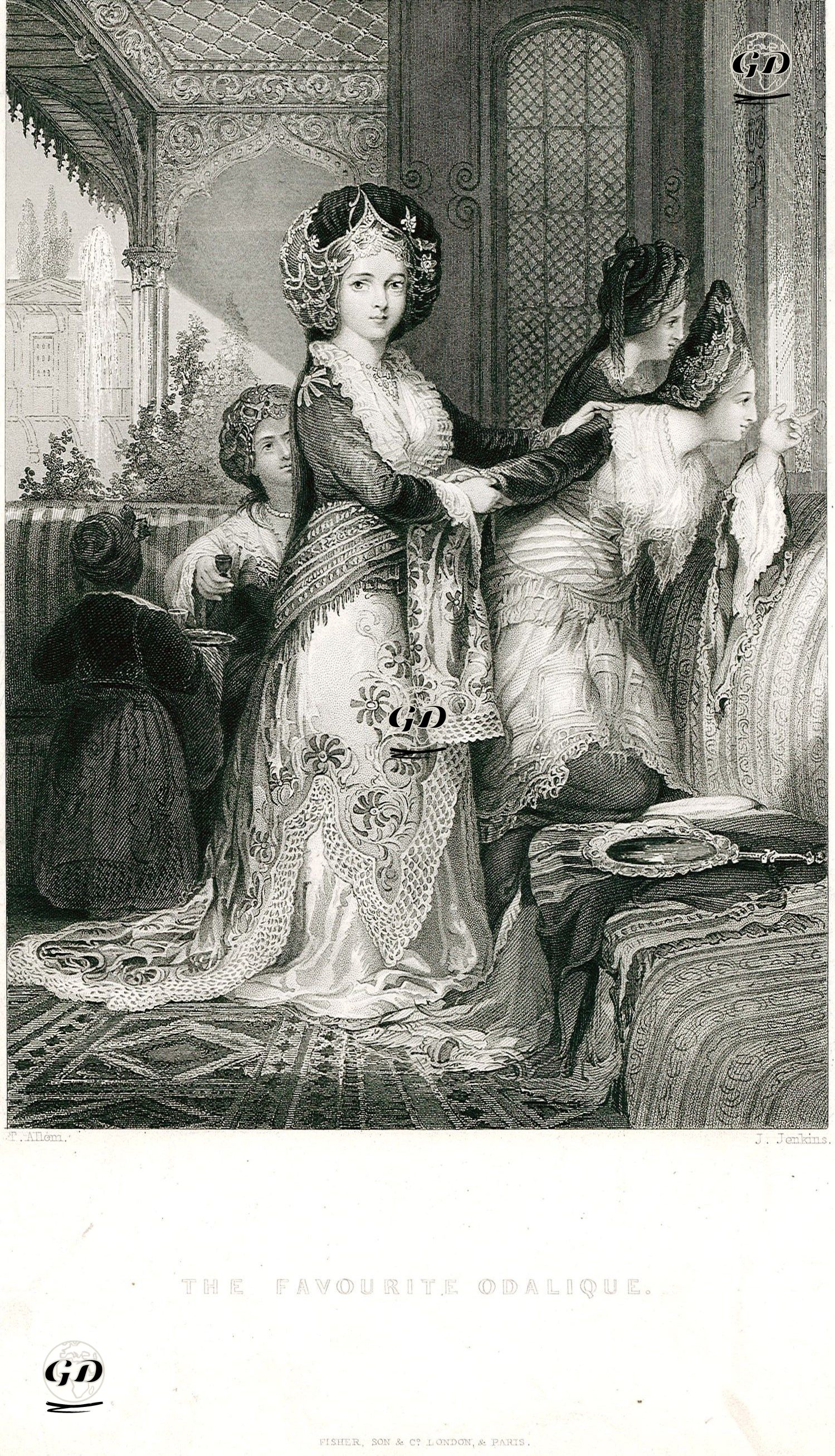
This engraving was designed to convey to Western audiences one of the most intriguing aspects of Ottoman palace life: the status and rivalry between the women of the harem. The engraving's depiction of the odalisque's ornate, elegant dress, jeweled crown, servants, and ornate interior reveals the world of Ottoman palace women, encompassing both splendor and fragility. As stated in the book "Constantinople And The Scenery Of The Seven Churches of Asia Minor Illustrated…," which includes the engraving, the women in the palace harem were divided into two categories: haseki (slave) and odalisque (housewife). Hasekis were women who had given birth to sons, attained status, and were allocated private apartments, gardens, private baths, and even a separate prayer room (masjid) for their prayers. Hasekis received a regular income called paşmaklık (slippers). Using their paşmaklık income, they occasionally built mosques, which is why these mosques are known as "Paşmaklık Mosques." Odalisques were among the sultan's favorite women and had no privileges. The book also describes how the rivalry between the hasekis and odalisques often led to jealousy and hostility, even leading to dramatic stories that ended in death. Indeed, an incident during the reign of Mehmed IV illustrates this tension. A beautiful Georgian odalisque gifted to the Sultan became the target of the jealousy of the chief haseki, Zachi, and in a plot orchestrated by the palace's executioners, the young woman lost her life in the Belgrade Forest. This dramatic incident demonstrates how fragile and lethal the balance of power within the harem could be. This engraving by Thomas Allom symbolizes the sumptuous lifestyles and fragile fates of the harem women, which emerged against the backdrop of such stories. Such images, which fueled an element of "orientalist curiosity" for Western audiences, constructed the Ottoman palace as both an exotic and mysterious place.