GRAVÜR DÜNYASI
Digital Engraving Library
| Artist | Melton Prior (1845-1910). |
| Date | 1877 |
| Technique | Woodblock Engraving (Newspaper-Text on Reverse) |
| Category | Ottoman Empire And Turkey |
| Source | The illustrated London News (April 21 1877-Page 381) |
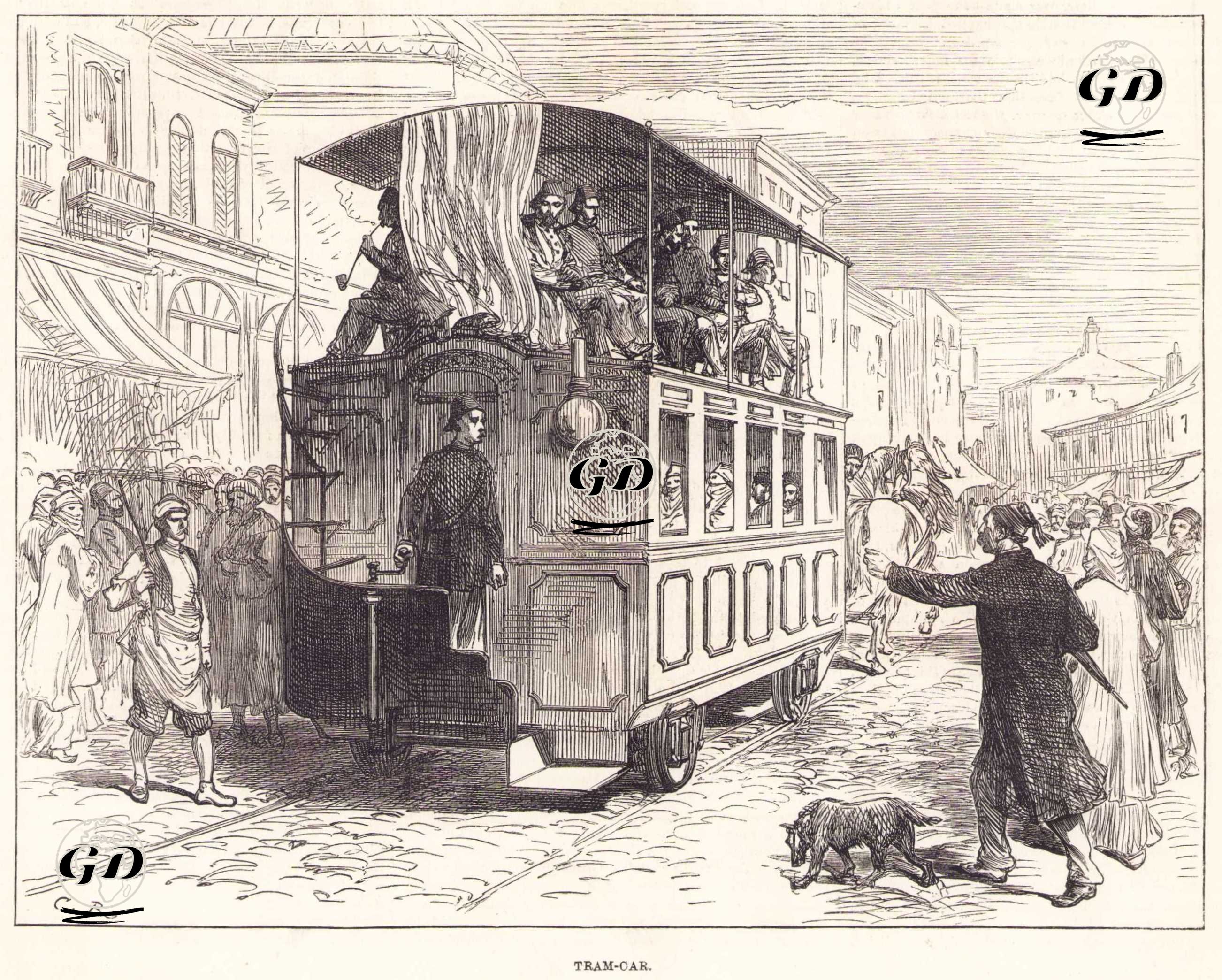
This engraving, published in The Illustrated London News on April 21, 1877, illustrates the modernization of public transportation in the Ottoman capital. The image depicts one of the horse-drawn trams, which first began operating on September 3, 1872, and marked a turning point in Istanbul's urban transportation. These horse-drawn trams, which began operating in Istanbul's most populous commercial and shopping districts, such as the Azapkapı-Ortaköy line and the Eminönü-Aksaray line, served as one of the most concrete examples of Ottoman modernization, inspired by systems similar to those in Paris and London. The introduction of horse-drawn trams in Istanbul marked a significant transformation in urban life. For the first time, the middle class and the poor, previously unable to access vehicles such as throne carriages, horse-drawn carriages, and canopy carriages pulled by steeds, had access to a relatively affordable means of public transportation. Thus, the daily mobility of Istanbul residents gained a new dimension thanks to horse-drawn trams. Horse-drawn trams were manned by three officers: the driver (ispir), the ticket collector, and the vardaci. Known for their uniforms and booming voices, the vardaci would run in front of the tram with a trumpet, shouting "varda-varda," and clearing the way for the tram. Horse-drawn trams, which were in use until the electric tram entered service in 1914, were driven by one to four horses, depending on whether the line was level or hilly. The engraving depicts passengers on both the lower and upper decks of the tram, as well as the driver and ticket collector at the rear of the tram, who checked the brakes.