GRAVÜR DÜNYASI
Digital Engraving Library
| Date | 1875 |
| Technique | Steel Engraving |
| Category | Ottoman Empire And Turkey |
| Source | Bilder-Atlas: Ikonographische Encyklopädie der Wissenschaften und Künste ; ein Ergänzungswerk zu jedem Conversations-Lexikon ; 500 Taf. in Stahlstich, Holzschnitt u. Lithographie ; in 8 Bd.. 5 by bearb. von Karl Gustav Berneck … - Druck und Verlag von F. A. Brockhaus in Leipzig |
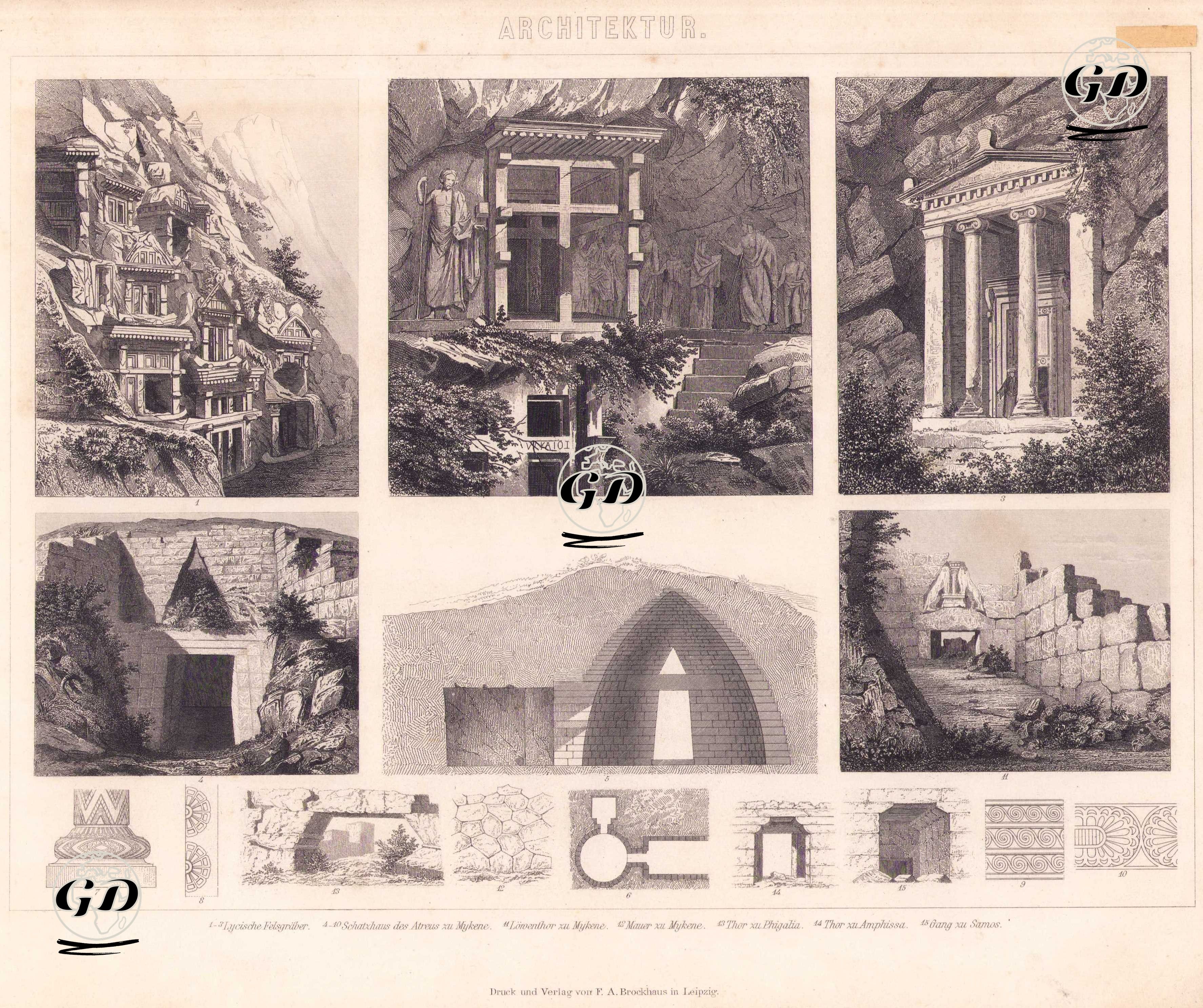
The architectural structures depicted in this engraving represent examples of tomb, defensive, and sacred space architecture, spanning a wide geography stretching from southern Anatolia to the interior of Greece, from the 13th century BC to the 4th century BC. The first and second structures in the upper left of the engraving are Lycian rock tombs located in the ancient city of Myra in the Demre district of present-day Antalya province. These multi-story tombs with temple facades carved into the cliffs are unique examples of Lycian architecture. The facades were generally carved to imitate wooden architecture (columns, beams, pediments), and wooden house architecture was immortalized in stone. The Lycian belief that a domestic life continued after death gave rise to this tomb form. The third structure is the Amyntas Rock Tomb (colloquially known as the "King's Tomb"), located in the necropolis of the ancient city of Telmessos in the Fethiye (Telmessos) district of Muğla province. Dating back to 3000 BCE, the tombs date back to 3000 BCE. It was carved into the rock in the 4th century by the Lycians in the style of house and temple architecture. The tomb's entrance features two Ionic columns and a triangular pediment. Inside, a single tomb chamber combines classical architecture with the idea of an afterlife. It is called the "Amyntou tou Ermagiou" (Amyntou, son of Hermapias) inscription on its pediment. The Frenchman Charles Texier inscribed his name in the upper left corner of the monument to prove that he had visited and examined it during his visit in the 1850s. Structures 4 through 10 illustrate the architecture of the Treasury of Atreus, a tholos-type monumental tomb located in Mycenae, Peloponnese, Greece. Accessed by a long corridor called a dromos, this tomb is covered with a corbel vault system, creating a dome-like effect with stones. It is significant as the first large stone dome known in Europe. This section also presents details of the tomb's interior structure and stonework. Structures 11 and 12 display the Mycenaean Lion Gate and cyclopean city walls. The Lion Gate, dating back to the 13th century BC, was the main entrance to Mycenae. The relief above the gate depicts two lions facing each other. These figures, the oldest known monumental stone reliefs in Europe, symbolize power and divine protection. Surrounding the gate are the walls of the Mycenaean city, composed of giant stone blocks. The 13th structure is at Figalia, the 14th at Amphissa, and the 15th on the island of Samos; these three entrance structures reflect the simple yet effective forms of architectural border structures, whether religious or defensive, in different regions.