GRAVÜR DÜNYASI
Digital Engraving Library
| Artist | Sebastian Munster (1489-1552) |
| Engraver | Georg Scharffenberg (1530-1607) |
| Date | 1552-1575 |
| Technique | Wood Engraving |
| Category | Ottoman Empire And Turkey |
| Source | La cosmographie universelle de tout le monde : en laquelle, suivant les auteurs plus dignes de foy, font au vray descriptes toutes les parties habitables, et non habitables de la terre, et de la mer, leurs ssiettes et choses qu'elles produisent, puis la description et peincture topographique des regions, la difference de l'air de chacun pays, d'où advient la diversité tant de la complexion des hommes que des figures des bestes brutes...., by Sebastian Münster (French Version) |
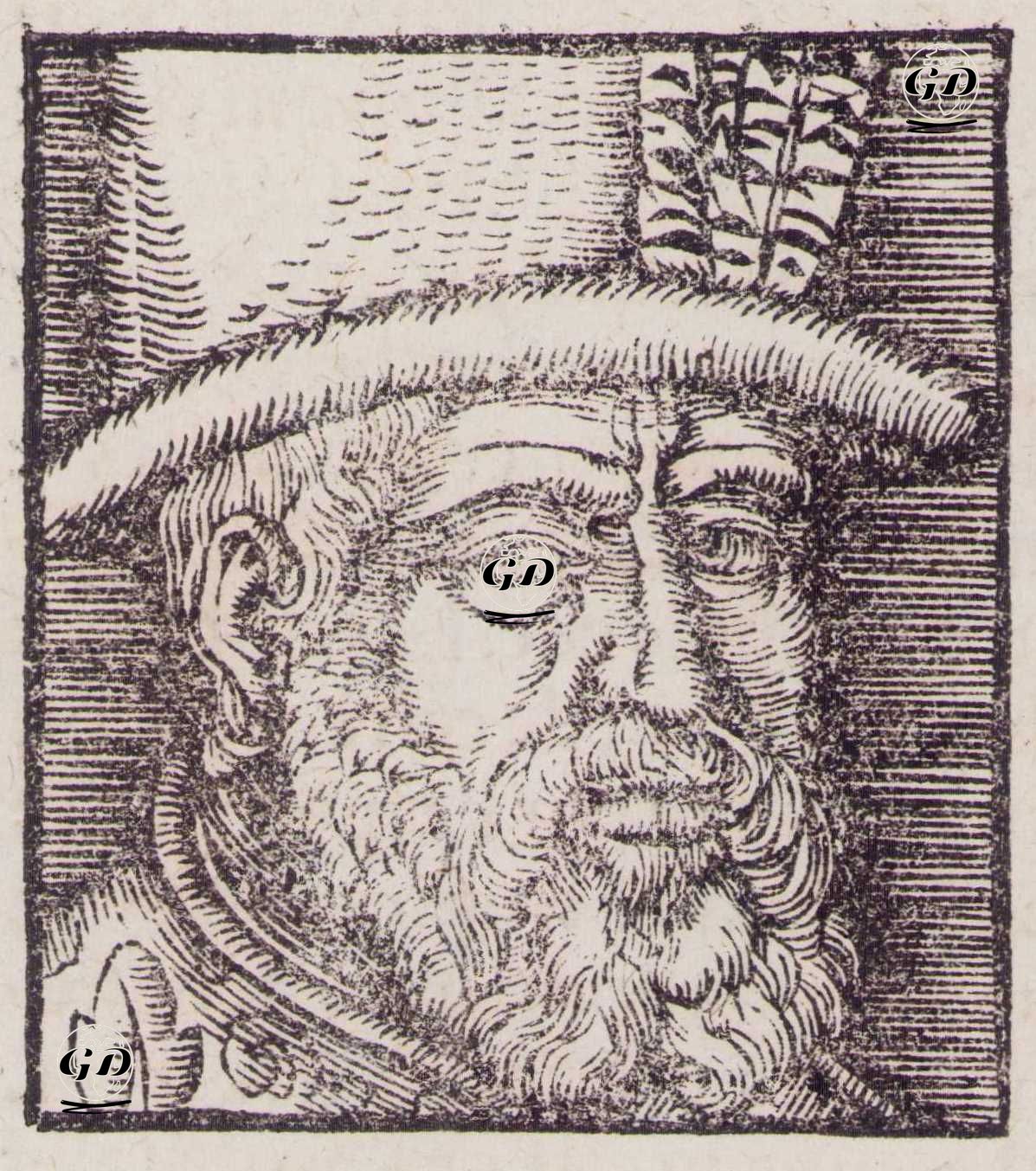
This French woodcut engraving is one of the early modern European representations of Sultan Murad I, the third ruler of the Ottoman State. Such ruler portraits, which became widespread in Europe throughout the sixteenth century, reflect not so much a lack of knowledge about the actual appearance of Ottoman sultans as the tendency of European artists and authors of historical works to construct the Ottoman world as the “Other.” Sultan Murad’s facial features, beard style, and type of headgear are conceived not as a historical portrait, but as a symbolic image consistent with the “Oriental ruler” typology common in Europe. This indicates that the engraving functions less as a documentary portrait than as a visual narrative representing Ottoman power. The engraving and the accompanying French text constitute a typical example of sixteenth-century sources that convey Ottoman history within the framework of Western cosmographic and universal historiographical traditions. In this context, both the visual depiction and the textual narrative are shaped not by Ottoman chronicles but by Europe-centered perceptions, limited information, and period-specific interpretations. In the text, Sultan Murad is described as a ruler who ascended the throne after his father Orhan Gazi, characterized as courageous, industrious, and strong in military discipline. At the same time, his portrayal as a “master of deception and dissimulation” reflects the discourse of political cunning and pragmatism frequently attributed to Ottoman rulers in early modern European texts. Such expressions reflect not a historical judgment but rather Western narrative patterns attempting to explain the Ottoman rise against Byzantium. At the center of the accompanying text lies the power struggle within the Byzantine Empire. The text presents the existence of two emperors in Constantinople at the same time and their intense conflict as the fundamental factor that enabled the Ottoman passage into Europe. The appeal for assistance made by the weaker Byzantine side to Sultan Murad emphasizes that the crossing via Gallipoli took place within the framework of an agreement. This narrative foregrounds the idea that the Ottomans entered Rumelia not solely through military conquest but also through diplomatic invitations and alliances. In the continuation of the text, it is stated that Sultan Murad, rather than adhering to the promises given, prioritized his own interests and deliberately prolonged the war in order to weaken Byzantine forces. This emphasis constitutes a typical example of Western historiographical approaches that explain Ottoman expansion through strategic patience and opportunistic politics. At the same time, it demonstrates that the Ottomans’ permanent establishment in the Balkans is directly associated with the military and political disintegration of the Byzantine world. The bold lines of the engraving, its pronounced hatching textures, and the frontal, dynamic pose occupying nearly the entire pictorial field are characteristic features of Renaissance woodcut technique. This engraving was published in the book Cosmographia Universalis, written by Sebastian Münster, which was first issued in 1544. Over the years, the book underwent numerous editions and revisions, becoming one of the most important geographical and historical works of the sixteenth century. Containing rich information in the fields of geography, cartography, natural history, and anthropology, the book served for centuries as a widely consulted reference source for scholars, explorers, and cartographers. The French editions of this work were published in 1552, 1556, 1560, 1565, 1568, and 1575.