GRAVÜR DÜNYASI
Digital Engraving Library
| Artist | Sebastian Munster (1489-1552) |
| Engraver | Georg Scharffenberg (1530-1607) |
| Date | 1628 |
| Technique | Wood Engraving |
| Category | Ottoman Empire And Turkey |
| Source | Cosmographia Universalis, Omnium Orbis Terrarum Regionum et Insularum Veteribus cognitarum descripsit P. Sebastianus Munsterus. This translates to Universal Cosmography, Describing All the Regions and Islands of the World, Known to the Ancients, by P. Sebastian Münster (German Version) |
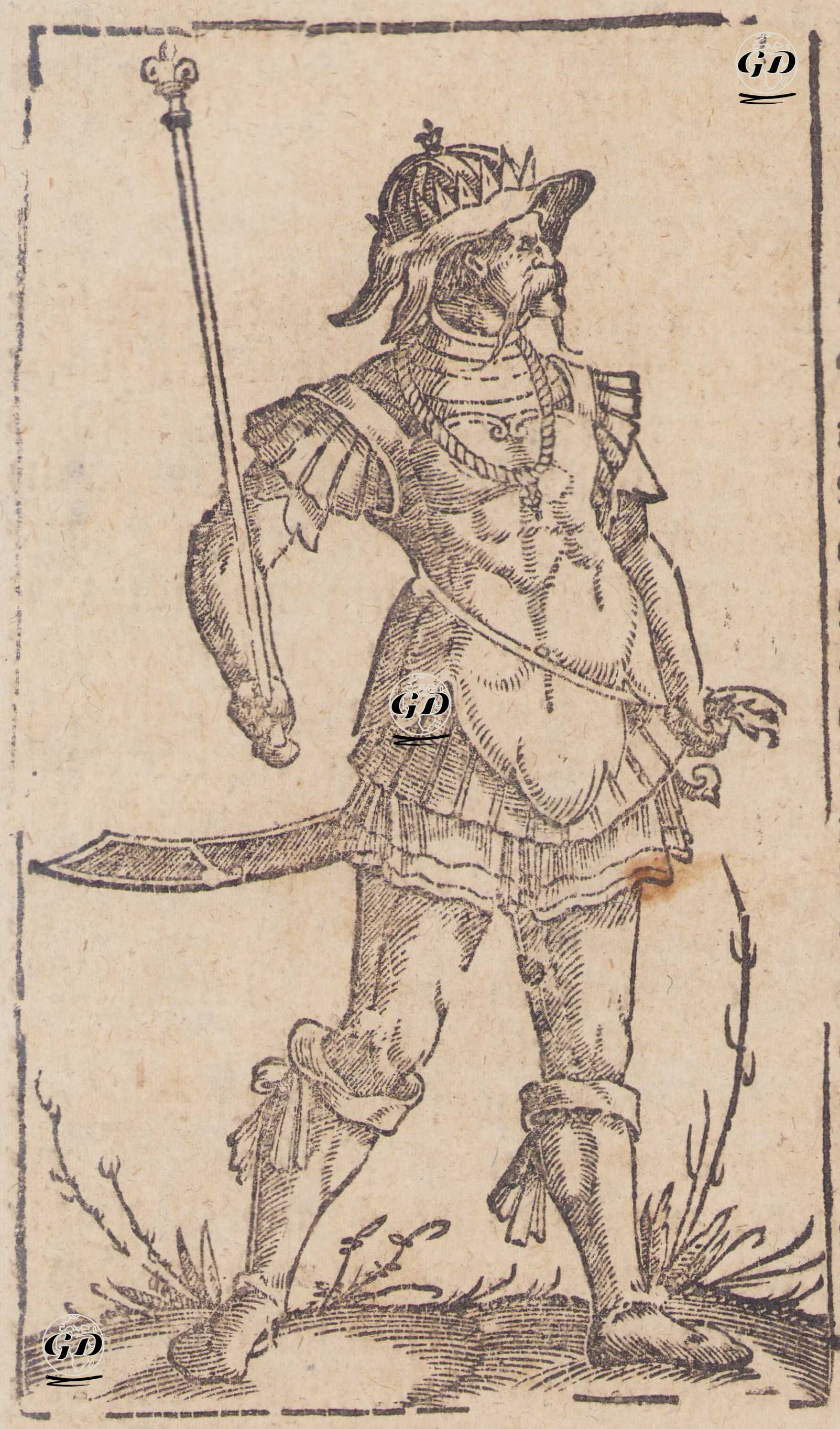
This woodcut engraving, as its title clearly indicates, is one of the iconographic representations of the founder of the Ottoman dynasty produced in 16th-century European history books and the Türckenbücher tradition. The figure seen in the print bears no visual resemblance to Osman Gazi's historical figure; instead, it is constructed as a fantastical and Eurocentric "founding ruler" type reflecting the early modern European perception of the Ottoman Empire. Osman Gazi is shown here wearing a muscular torso reminiscent of ancient Roman-Germanic warriors, segmented armor, a short tunic, greaves, and a European-style helmet. These elements are completely different from the actual court and military attire of the Ottoman sultans, demonstrating that the artist reconstructed Osman within his own cultural codes. The text in the book containing the engraving is typical of the anti-Ottoman propaganda literature prevalent in the 16th century. The text is replete with conflicting accounts of Osman Gazi's origins (such as that he came from Galatia, was of the Bering people, took his name from a castle, joined bandits and engaged in tyranny, ravaged cities, and conquered all of Asia Minor within a decade). These claims are both historically inaccurate and exaggerated, feeding into contemporary European fears. Such depictions are visual and textual reflections of the "Turkish threat" narrative that rose in the West at a time when the Ottomans were rapidly gaining power in the Balkans and the Eastern Mediterranean. Therefore, rather than providing historical information, the engraving documents the mindset, prejudices, and political anxieties of early modern Europe regarding the Ottomans. The engraving's bold lines, pronounced hatching textures, and dynamic frontal pose, filling nearly the entire space, are typical of the German woodblock printing (Holzschnitt) technique of the Renaissance. This engraving was first published in Sebastian Munster's Cosmographia Universalis … in 1544. Over the years, the book has gone through numerous editions and revisions, becoming one of the most important works of geography and history of the 16th century. Containing a wealth of information in geography, cartography, natural history, and anthropology, the book has been widely used as a reference source by scientists, explorers, and cartographers for centuries. This engraving, which is in our library, was published in the 1628 edition of Sebastian Munster's Cosmographia Universalis ….