GRAVÜR DÜNYASI
Digital Engraving Library
| Date | 1877 |
| Technique | Woodblock Engraving (Newspaper-Text on Reverse) |
| Category | Ottoman Empire And Turkey |
| Source | The Illustrated London News (April 14, 1877-Page 349) |
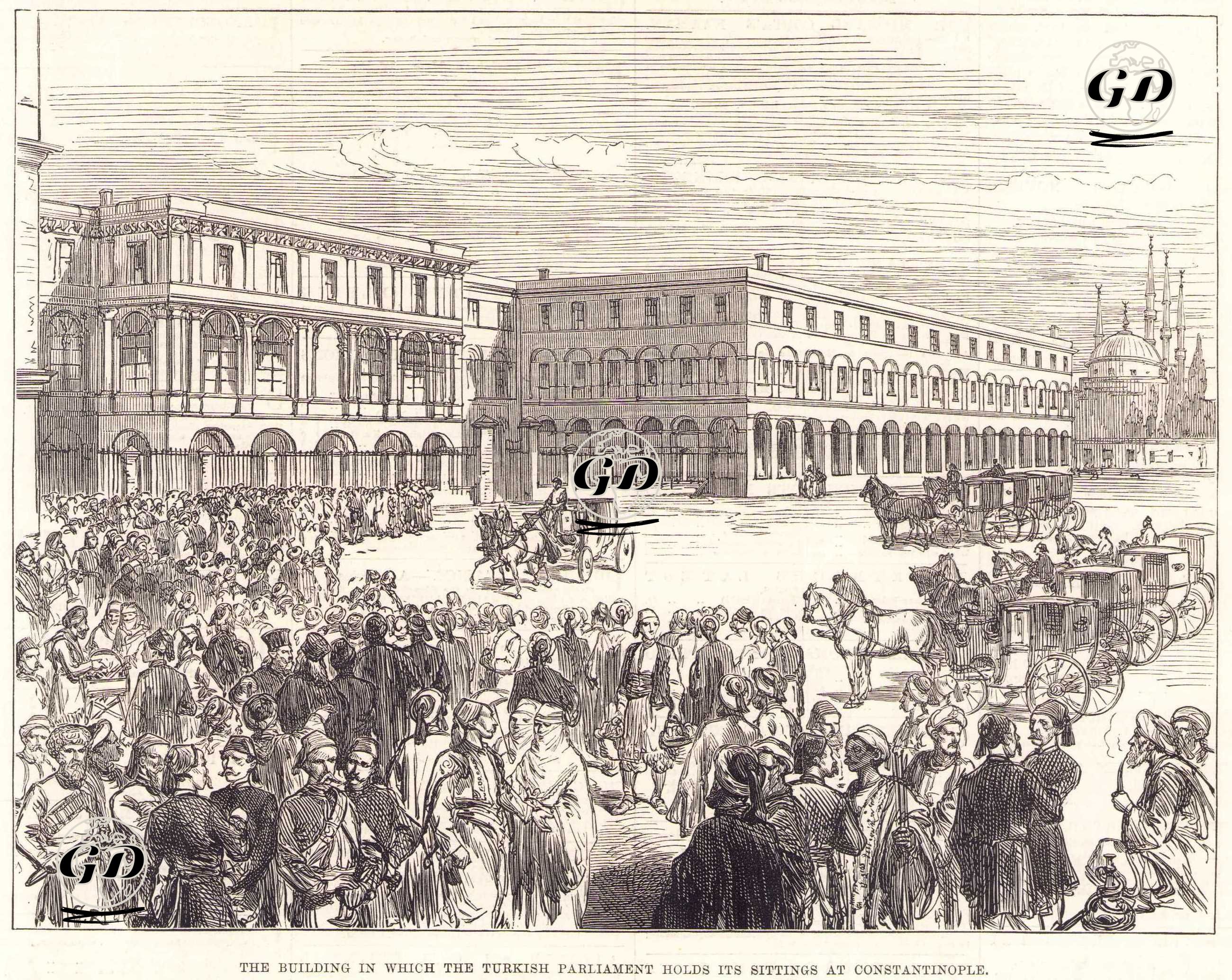
This engraving is an exterior drawing accompanying a news report published in the April 14, 1877, issue of The Illustrated London News, depicting the exterior of the building where the Ottoman Parliament (Meclis-i Mebusan and Meclis-i Ayan) meetings were held. As the news report states, the parliament convened in two halls of the large building known at the time as the "Darülfünun." Located near the Hagia Sophia Mosque and the former Byzantine cathedral, the building was initially built as part of a university project planned during the reign of Sultan Abdülmecid. The engraving reveals the building's façade overlooking a large courtyard, arched ground floors, and large windows on the upper floors. As the news report states, construction of the Darülfünun building began in the 1840s, and during the Crimean War of 1854, it was used as a military hospital for wounded and sick soldiers of the British army. After the war, the university initiative was briefly launched, but the program's failure led to the project being cancelled. The remaining sections of the building were later allocated to government services, and the Ministries of Trade and Public Works operated there. With the adoption of the new constitution (1876), the two large halls of the Darülfünun were renovated and converted into meeting spaces for the Meclis-i Mebusan (National Assembly) and the Meclis-i Ayan (Senate). The engraving shows a large crowd gathering around the building during a parliamentary session. The horse-drawn carriages demonstrate that the arrival of high-ranking officials and legislative sessions generated considerable curiosity and social activity in Istanbul at the time.