GRAVÜR DÜNYASI
Digital Engraving Library
| Artist | Abdullah Biraderler (Viçen, Hovsep ve Kevork Abdullah) (Photographer-Fotoğrafçı) |
| Date | 1877 |
| Technique | Woodblock Engraving (Newspaper-Text on Reverse) |
| Category | Ottoman Empire And Turkey |
| Source | The Illustrated London News, (February 17 1877-Page 165) |
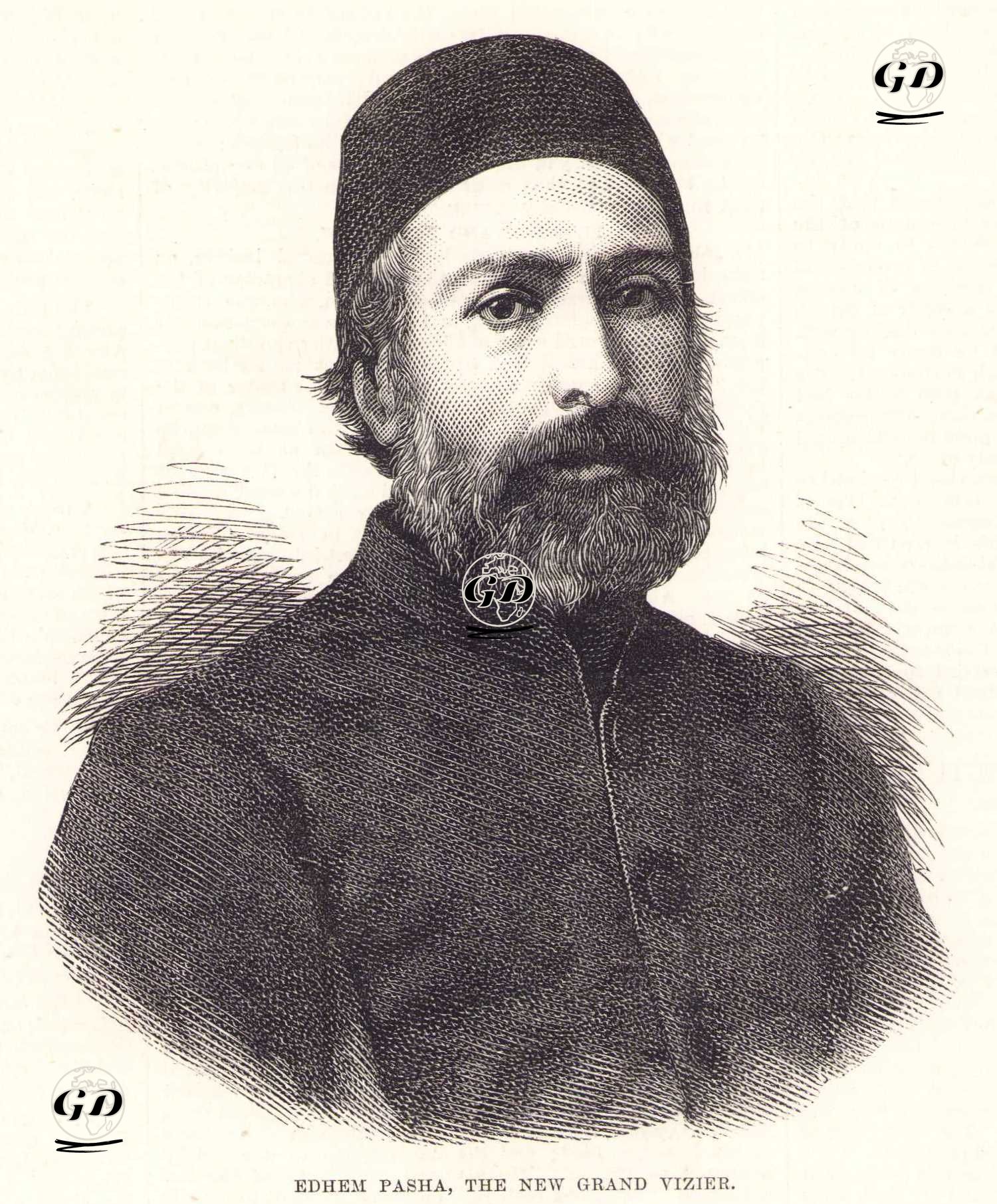
This engraving depicts Edhem Pasha, newly appointed Grand Vizier during a period of political crisis in the Ottoman Empire. The engraving was adapted from a photograph taken by Abdullah Brothers. The newspaper article accompanying the engraving reflects both the political atmosphere of the period and Edhem Pasha's personal story. According to the newspaper report, this portrait was published amidst the unrest in Istanbul following Midhat Pasha's sudden dismissal and exile. The article expressed doubts within the public and diplomatic circles about whether Edhem Pasha, a reformist and modernizing leader like Midhat Pasha, could carry the weight of this challenge. Edhem Pasha's life story is a striking example of the transformation of the 19th-century Ottoman bureaucracy. Born on the island of Chios in 1829, he was brought to Istanbul as a slave at a young age, and later freed by Hüsrev Pasha, a prominent statesman of the time, and sent to Paris for education. The education he received in Europe in the 1830s made him a representative of the new generation of Ottoman statesmen acquainted with Western culture. Upon his return to Istanbul, he took a position on the General Staff, distinguished himself with his work in geographical mapping, and quickly rose in rank. Being Sultan Abdülhamid's French tutor earned him the trust of the court. He was later appointed Minister of Foreign Affairs and entered the European political scene as one of the Ottoman representatives at the Berlin Conference. However, Edhem Pasha did not fully share the views of Midhat Pasha, the symbol of modernization. The newspaper report stated that he was not opposed to the Constitution (Kanun-i Esasi) in principle, but believed that the idea of "Western-style equal citizenship" was incompatible with Ottoman social structure. His resistance to the idea of equality between Christian subjects and Muslims demonstrates his representation of the conservative state tradition. The article also emphasized that Edhem Pasha's harsh and ironic tone towards Western diplomats at the Berlin Conference drew attention, particularly during discussions of the Bulgarian events, by referencing the French Revolution and the St. Bartholomew's Massacre to criticize the West's double standards. This stance resonated in the European press of the period as the "nationalist and defiant voice" of Ottoman diplomacy. The engraving depicts Edhem Pasha as a determined, cautious, and thoughtful statesman. The shape of his beard, the fez on his head, and his simple attire symbolize the Ottoman bureaucracy's pursuit of "Western-style statecraft while preserving its Eastern identity" after the Tanzimat reforms. The drawing, created using photographic realism, is an early example of the translation of portrait photographs taken in the Abdullah Brothers' studio into the art of engraving. The newspaper article concluded by stating that despite Edhem Pasha's harsh stance, he would now be forced to "follow a more moderate path" for the future of the empire. It also noted that Mahmud Nedim Pasha, Ahmed Vefik Efendi, Saffet Pasha, and Damat Mahmud Pasha were among Sultan Abdülhamid II's potential candidates for new grand vizier. The news report associated with this visual is a diplomatic testimony from the press regarding one of the most turbulent periods in Ottoman politics in 1877. The difference between Midhat Pasha's reformist stance and Edhem Pasha's conservative diplomatic stance can be considered a visual reflection of the dual trends in Ottoman modernization history.