GRAVÜR DÜNYASI
Digital Engraving Library
| Artist | William Henry Bartlett (1809-1854) |
| Engraver | Robert Brandard (1805-1862) |
| Date | 1854 |
| Technique | Steel Engraving |
| Category | Ottoman Empire And Turkey |
| Source | The Beauties Of The Bosphorus (London Published For Proprietors By Geo. Virtue 26 Ivy Lane) |
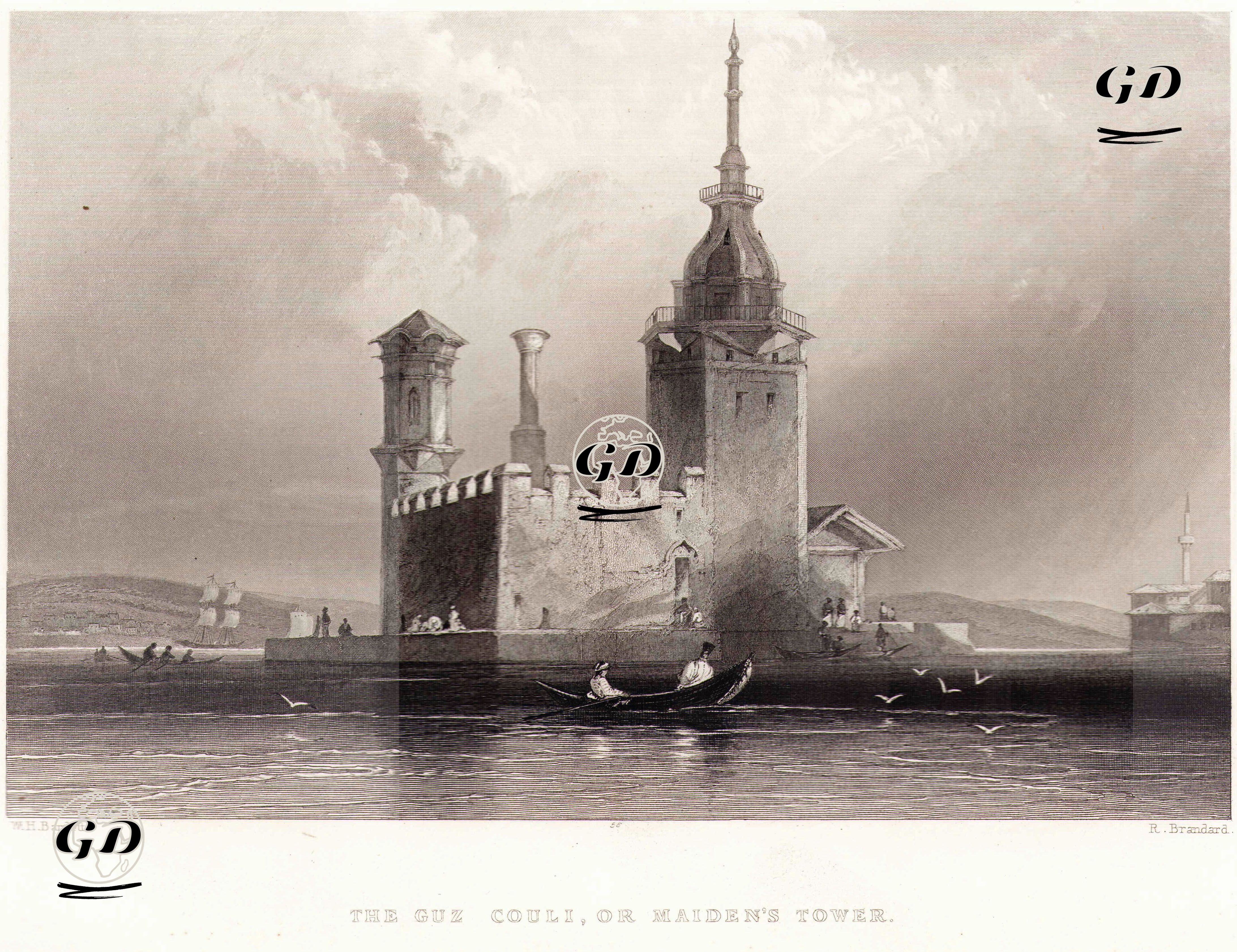
Located on a small island off the Salacak coast of Üsküdar, the Maiden's Tower, known to Western travelers as "Guz-Couli" or "Leander's Tower," has been surrounded by legends throughout history and has captured the attention of Western travelers and painters as one of the Bosphorus's most striking structures. The work "The Beauties of the Bosphorus," which includes the engraving, specifically focuses on both the tower's architectural setting and its cultural implications. As depicted in the work, the tower's solitary silhouette in the middle of the sea, surrounded by waves, created an extraordinary visual impact for Western observers. Travelers associated the site with legends. Sometimes they combined it with tales reminiscent of Cleopatra, depicting a high-born maiden dying here from a snakebite, and sometimes with the tragic love story of Hero and Leander. For this reason, the tower was often referred to as “Leander’s Tower” in the writings of European travelers (you can find the story in the engraving titled “The Parting of Hero and Leander” in our library). Historical sources record that the structure, originally built around 400 BC to monitor ships arriving from the Black Sea and collect taxes, was commissioned by the Eastern Roman Emperor Manuel I Komnenos as a defensive tower on the islet in the 12th century. The iron chain stretched between Sarayburnu and the tower played a strategic role in defending the Bosphorus. In later periods, it served as a lighthouse, watchtower, quarantine center, and even, at the time the engraving was made, a plague hospital. Its function has diversified over time. Today, it serves as a museum. With its square plan, the Maiden's Tower bears traces of transformations from the Byzantine to the Ottoman period. Its location in the middle of the sea has made the tower one of Istanbul's most romantic silhouettes, both defensively and symbolically. In the engraving, the structure's solitude, the movement of the waves surrounding it, and its commanding view of Istanbul's shores are depicted in a 19th-century orientalist perspective.