GRAVÜR DÜNYASI
Digital Engraving Library
| Artist | William Henry Bartlett (1809-1854) |
| Engraver | John James Hinchliffe (1805-1875) |
| Date | 1839 |
| Technique | Steel Engraving |
| Category | Ottoman Empire And Turkey |
| Source | The Beauties Of The Bosphorus (London Published For Proprietors By Geo. Virtue 26 Ivy Lane, 1839) |
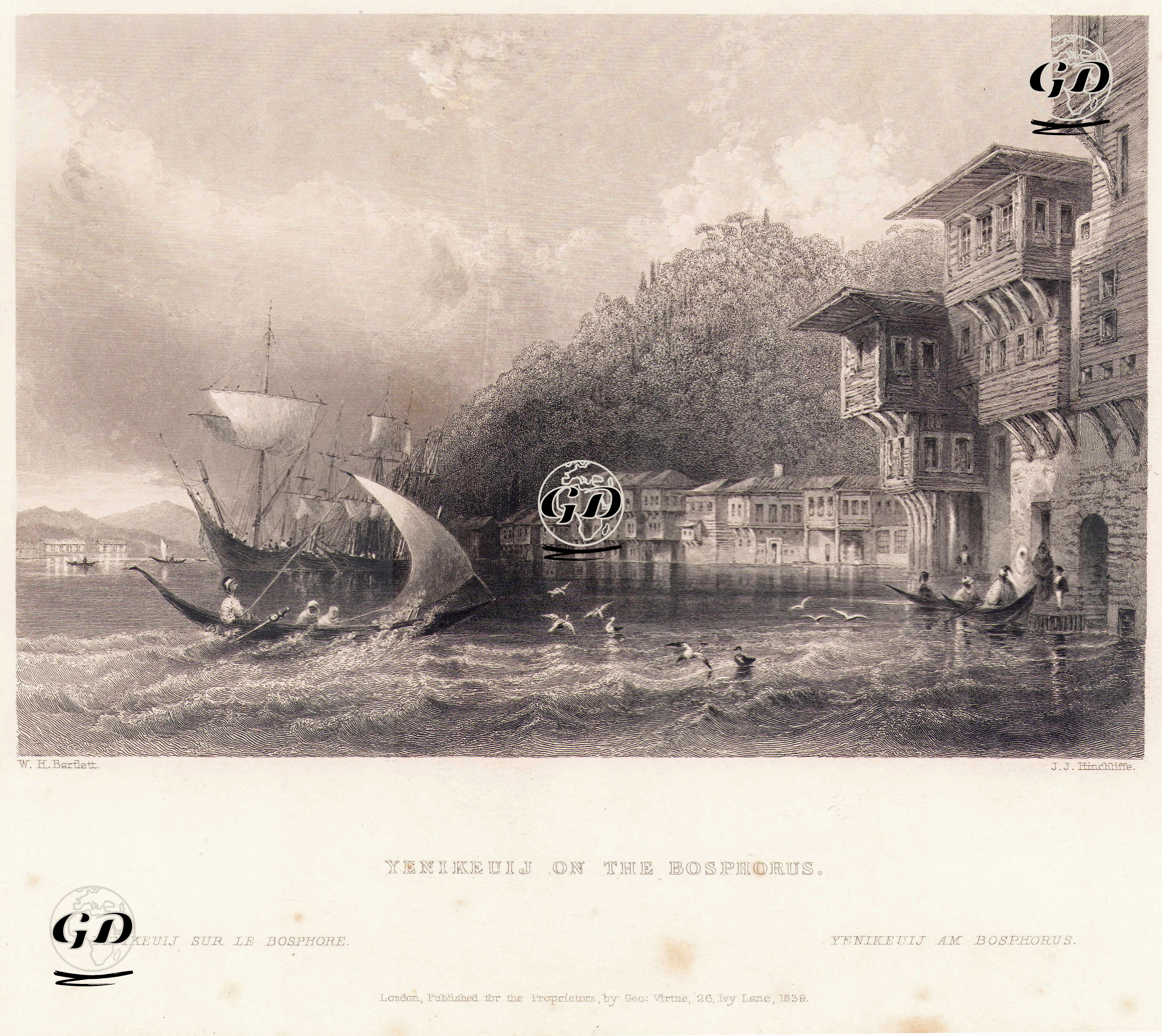
This engraving depicts Yeniköy, one of the most beautiful settlements on the Bosphorus. The book "The Beauties of the Bosphorus," in which the engraving was published, described Yeniköy as follows: "There are few villages as beautiful as Yeniköy on the Bosphorus. Located two miles south of Tarabya on the European side, most of the houses extend out over the sea. The waves lapping against the narrow terraces and the roar of the current create a cooling effect, especially in summer. The upper parts of the village are covered with trees, and wealthy Armenian moneychangers and Greek merchants had their summer houses here." In the engraving, the bay windows of the wooden Ottoman houses extending down to the seashore are depicted as if suspended above the water. These wooden waterside residences, traditional boats, and sailboats reflect the elegance and aesthetics of Bosphorus life in Istanbul at the time. The magnificent wooden mansion built by Dooz Oglou, the richest Armenian banker and diplomat of the period, by purchasing thirty houses in the surrounding area, is a striking element in the village's silhouette. The engraving reveals not only Yeniköy's architectural beauty but also its social and cultural vitality. The work "The Beauties of the Bosphorus" notes that Yeniköy was one of three centers of the Greek "Fire Festival," held to commemorate the Byzantines' second conquest of Istanbul, and that by the 1840s, this ceremony continued only in Yeniköy, Tarabya, and Büyükdere. It also describes how the festival involved building artificial islands on stilts along the shore, piling them with flammable materials, tying tar-soaked boats to the harbor, and lighting giant fires along the shore, connecting the three villages through a play of light and color. The Bosphorus transforms into a fairytale-like scene. The play of light and shadow in the engraving creates the impression of early morning or sunset. The contrast between the movement of the waves and the serenity of the wooden houses nestled against the shore lends the work a dramatic depth. The flight of the seagulls, the movement of the boats and the large sailboats in the background add both movement and the continuity of a life intertwined with the sea to the composition.