GRAVÜR DÜNYASI
Digital Engraving Library
| Date | 1875 |
| Technique | Steel Engraving |
| Category | Architecture And Design |
| Source | Bilder-Atlas: Ikonographische Encyklopädie der Wissenschaften und Künste ; ein Ergänzungswerk zu jedem Conversations-Lexikon ; 500 Taf. in Stahlstich, Holzschnitt u. Lithographie ; in 8 Bd.. 5 by bearb. von Karl Gustav Berneck … - Druck und Verlag von F. A. Brockhaus in Leipzig |
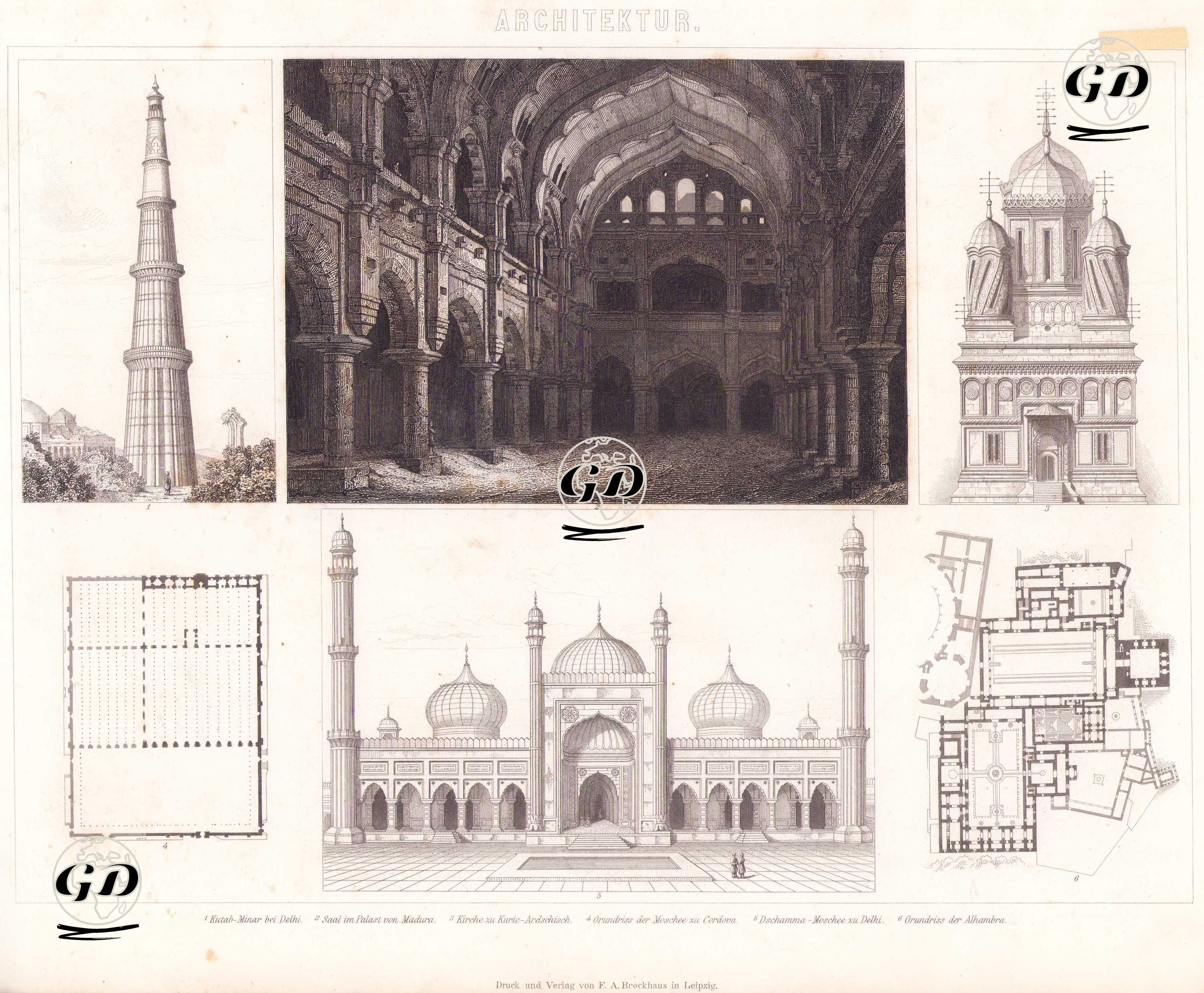
The engraving presents examples of Islamic and Hindu architecture from different periods found in cities such as Delhi, Madura, and Agra. These representations create a visual panorama of the eclectic style that synthesizes Muslim and indigenous architectural traditions across the Indian subcontinent. The structure in the upper left shows the Qutb Minar in Delhi. Begun by Qutb-ud-Din Aibak in the early 13th century and completed by his successor, Iltutmish, this monumental minaret is one of the earliest and most impressive examples of Delhi Sultanate architecture. The Kufic and Naskh script inscriptions on the brick casing reflect the distinctive decorative character that Islamic architecture acquired in India. The central structure represents a palace interior in Madura. This section demonstrates the fusion of the Dravidian architectural tradition of South India with Islamic dome and arch systems. Wide arch spans, drum vaults, and deep niches reveal a hybrid style blended with local stonework. The structure in the upper right is an example of the architecture of a Dargah in Delhi. This type of structure, with its dome-topped square plan and multi-layered façade arrangement, is notable in late Islamic architecture, where Timurid and Mughal influences are intense. Mausoleums are monumental symbols of not only religious but also dynastic legitimacy. The drawing in the lower center shows the Jama Masjid (Jama Masjid) in Delhi. Built by Shah Jahan in the 17th century, this structure is one of the pinnacles of Mughal architecture. The contrast of red sandstone and white marble, combined with its spacious courtyard and symmetrical façade layout, serves as both a space for communal worship and a symbol of imperial power. The plans in the lower section are comparative drawings of the plans of the Cordova Mosque (La Mezquita) and the Alhambra Palace (Alhambra). This is a didactic comparison aimed at demonstrating the "universality of Islamic architecture" for European architectural historians of the period. The plan layout of Indo-Islamic buildings bears formal similarities to examples from Andalusia and the Arab world. This draws attention to the wide geographical spread of Islamic architecture. Feedback Google Translate