GRAVÜR DÜNYASI
Digital Engraving Library
| Date | 1875 |
| Technique | Steel Engraving |
| Category | Architecture And Design |
| Source | Bilder-Atlas: Ikonographische Encyklopädie der Wissenschaften und Künste ; ein Ergänzungswerk zu jedem Conversations-Lexikon ; 500 Taf. in Stahlstich, Holzschnitt u. Lithographie ; in 8 Bd.. 5 by bearb. von Karl Gustav Berneck … - Druck und Verlag von F. A. Brockhaus in Leipzig |
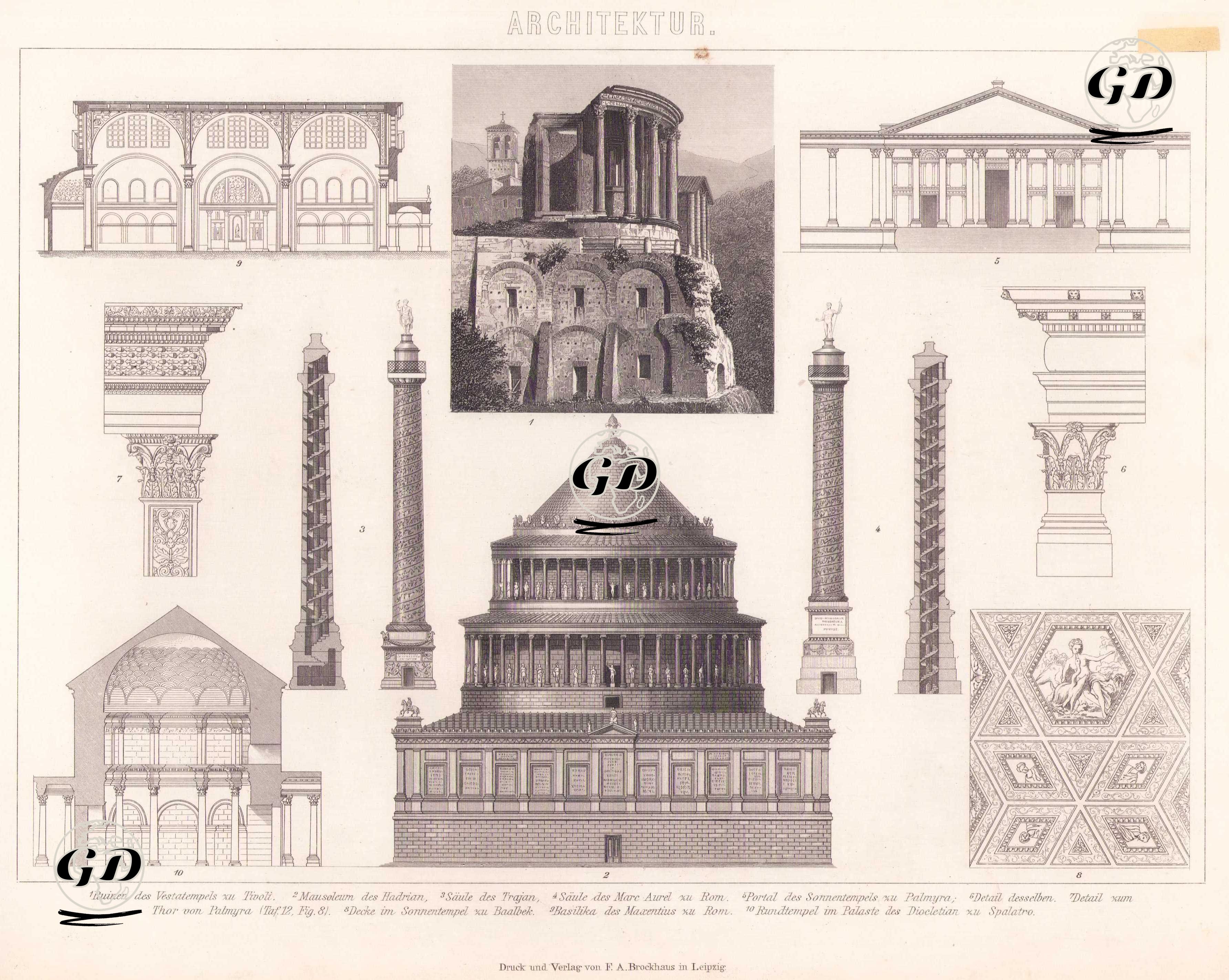
This engraving systematically depicts the forms of temples, basilicas, triumphal columns, and mausoleums—the most characteristic examples of monumental architecture that developed in Rome between the 1st and 4th centuries AD. This composition reveals both the technical mastery of Roman architecture and its symbolic language, which extolled imperial ideology. The magnificent structure at the center is the Pantheon (118-128 AD). It was rebuilt by the architect Apollodorus of Damascus during the reign of Emperor Hadrian. Its dome, with a diameter of 43.3 meters, is the largest single-piece concrete dome in antiquity. The oculus (eye opening), the source of light, symbolizes both the structural balance of the architecture and the cosmic center of God. This structure represents the continuity of Western architecture, being one of the first examples of the transformation from a circular pagan temple to a Christian basilica. Hadrian's Mausoleum (today's Castel Sant'Angelo) is visible above the Pantheon. This monumental tomb structure is an architectural monument where imperial authority is immortalized. On the right is the Temple of Mars Ultor (1st century AD). This structure, where Augustus deified the concept of divine retribution, is an expression of Roman political and religious propaganda. The vertical elements in the center represent the Columns of Trajan and Marcus Aurelius. These columns, adorned with spiral reliefs, tell stone stories of Rome's military successes. Trajan's Column (113 AD), with its 200-meter spiral frieze depicting the Dacian campaign, constitutes the visual pinnacle of Roman historical narrative. The cross-sectional drawings in the lower section illustrate the interior layout of Roman basilicas. These structures initially served judicial and administrative functions and later formed the model for the early Christian church plan. St. Paul's Basilica (San Paolo fuori le Mura), in particular, is architectural evidence of this transition. The Corinthian capitals on the right and left sides of the plate demonstrate how Roman architecture reinterpreted Greek aesthetic principles. Roman architecture, while continuing the Hellenistic tradition in form, developed an innovative understanding of materials and building techniques; in particular, the systematic use of concrete allowed the construction of large spans and enormous domes.