GRAVÜR DÜNYASI
Digital Engraving Library
| Artist | William Etty (1787-1849) |
| Engraver | Charles William Sharpe (1818-1899) |
| Date | 1853 |
| Technique | Steel Engraving-Mezzotint |
| Category | Mythology |
| Source | The National Gallery Div 3 Comprising The Pictures Known As The Vernon Collection And A Selection From The Works Of Modern Sculptors |
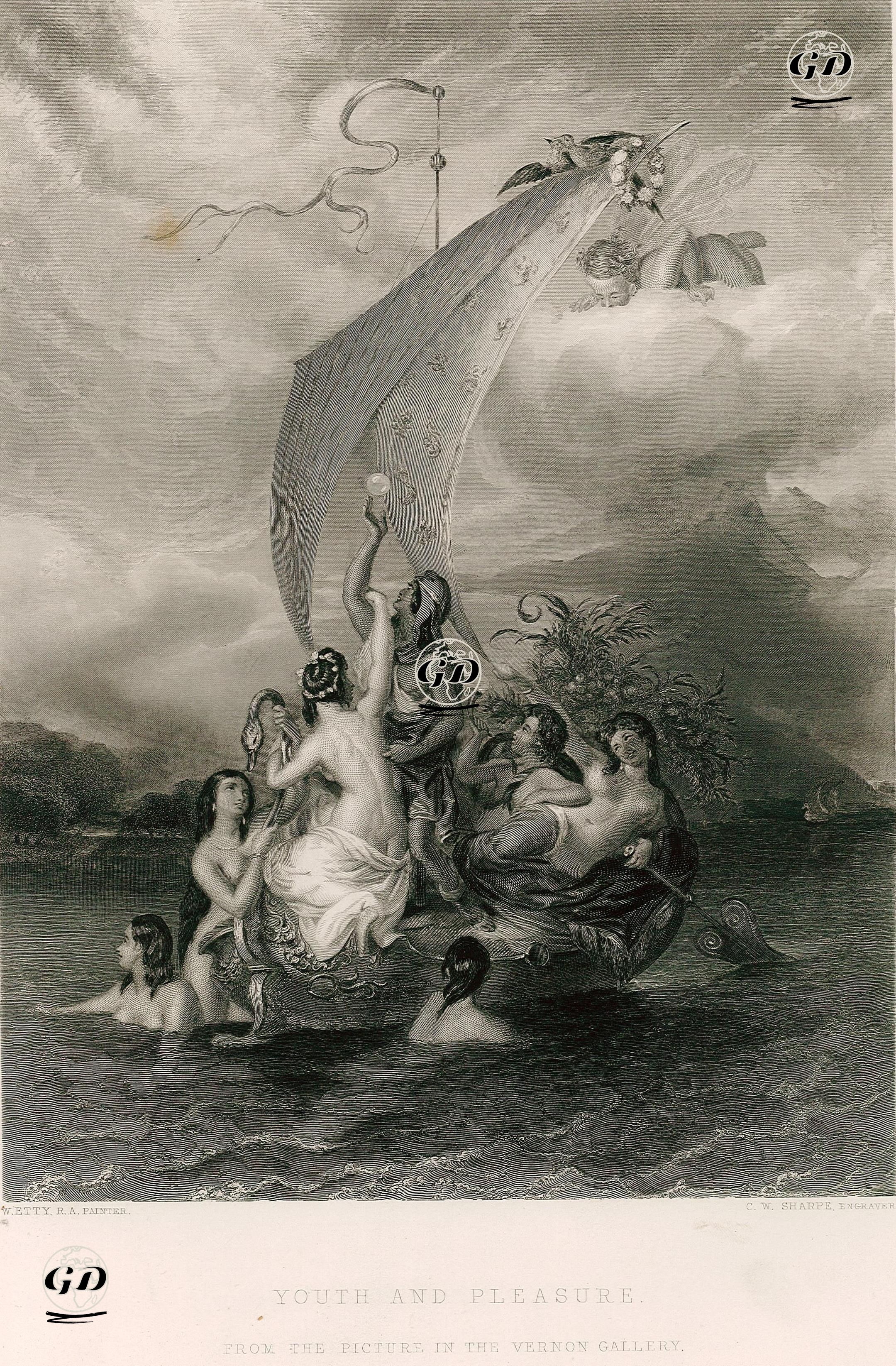
This engraving is based on William Etty's original oil painting, "Youth on the Prow, Pleasure at the Helm." Exhibited at the Royal Academy in 1832, the work is currently in the collection of the Tate Museum, London (oil on canvas, 44.4 × 32.3 cm). The engraving itself was meticulously executed by Charles William Sharpe using the steel mezzotint technique. The composition is conceived as a poetic allegory of human life. This allegory depicts life as a journey, and the ship of youth, adorned with songs and beauties, is swept away by inevitable storms. As the ship sails, "Youth" holds the helm, while "Pleasure" guides. However, preoccupied with the allure of enthusiasm and amusement, they remain indifferent to the course they are following, paying no attention to where the ship is drifting. The figures on the ship live in the moment with songs, games, and joy. One of them is trying to catch a balloon released into the air. The other figures around the ship, attracted by its beauty, also want to join in this joyful journey. The work is identified with the following lines from Thomas Gray's poem:“Fair laughs the morn, and soft the zephyr blows, While proudly riding o’er the azure realm, In gallant trim the gilded vessel goes, Youth at the prow, and Pleasure at the helm, Unmindful of the sweeping whirlwind’s sway, That, hush’d in grim repose, expects his evening prey.” These lines summarize the painting's central theme. Youth and pleasure adorn life's journey with fervor, but behind this journey lies a storm that silently awaits, and the inevitability of death. Two doves perched atop the mast to which the sail is attached symbolize simplicity and innocence, while a winged figure watching the ship's progress from the dark clouds heralding the approaching storm represents a personified allegory of fate or death. Thus, this allegory, which combines mythological elements with moral references, serves as a poetic representation of life. Youth and pleasure are dazzling but fleeting. The ship of dreams is ultimately lost in sorrow and loss. As emphasized in the quote from the poet Thomas Gray, no beauty without truth can endure, and no joy without recognition of life's transience is considered true.