GRAVÜR DÜNYASI
Digital Engraving Library
| Artist | Leslie Ward (Spy) (1851-1922) |
| Engraver | Vincent Brooks, Day & Son Lith. |
| Date | 1881 |
| Technique | Chromolithography |
| Category | Uncategorized |
| Source | Vincent Brooks Day & Son Lith. - Vanity Fair, London |
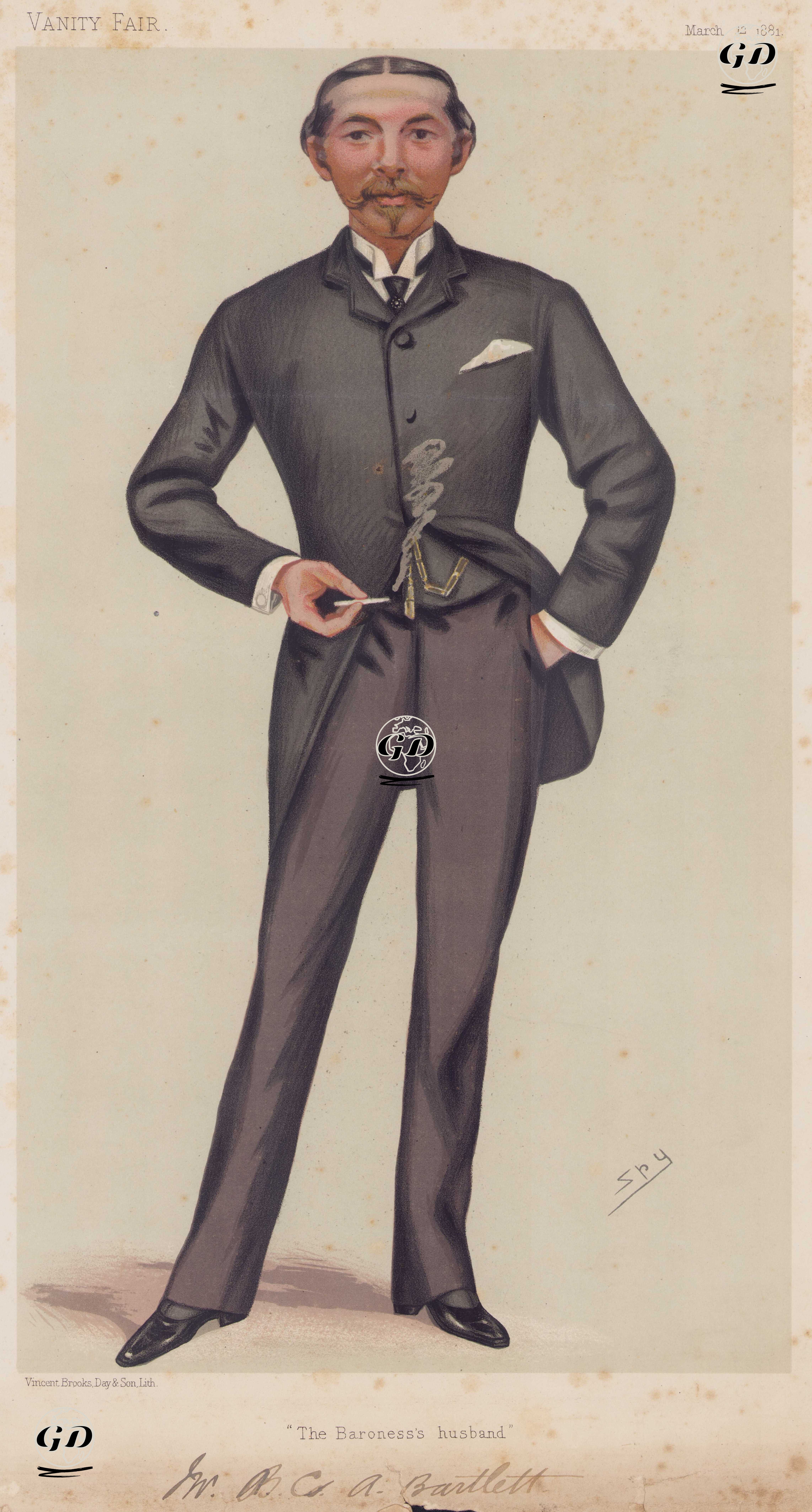
Vanity Fair was a weekly magazine published in England between 1868 and 1914, known for its high-quality lithographs depicting political, social, and aristocratic figures of the era in caricatural yet identifiable forms. The series aimed to "portray" public figures of the Victorian and Edwardian eras with an ironic eye, while also demonstrating the power structure of the period. Additionally, Vanity Fair portrait cartoons often have a humorous or playful subtitle beneath them. Rather than directly identifying the person or their title, these subtitles often reference the person's social circle or association through an allusion, a joke, a nickname, or a play on words. Two of the most famous artists to work for Vanity Fair were "Ape" (Carlo Pellegrini) and "Spy" (Leslie Ward). This Vanity Fair cartoon depicts William Lehman Ashmead Bartlett Burdett-Coutts, one of the most influential figures in British political life during his time. Born in New York in 1851 and later granted British citizenship, Burdett-Coutts served as a Conservative MP in the House of Commons of the United Kingdom from 1885 until his death in 1921. The words "Baroness's Husband" beneath the engraving provide a significant reference to his social identity. Burdett-Coutts married Baroness Angela Burdett-Coutts, one of Britain's wealthiest women and internationally renowned for her philanthropy. This marriage was seen as a symbolic union uniting the British aristocracy, finance, and politics. Vanity Fair's character portraits chronicled individuals not only through their physical appearance but also through the social standing they held within the London elite of the time. In this engraving by cartoonist “Spy” (Leslie Ward), Burdett-Coutts’ relaxed but controlled stance, standing with his hands in his pockets and holding a cigarette paper, is one of the classy, slightly distant and confident representations of the late 19th-century British political figure.