GRAVÜR DÜNYASI
Digital Engraving Library
| Artist | S.Wale |
| Engraver | J.Hall |
| Date | 1770`s |
| Technique | Copper Engraving |
| Category | Uncategorized |
| Source | A New, Royal and Authentic System of Universal Geography |
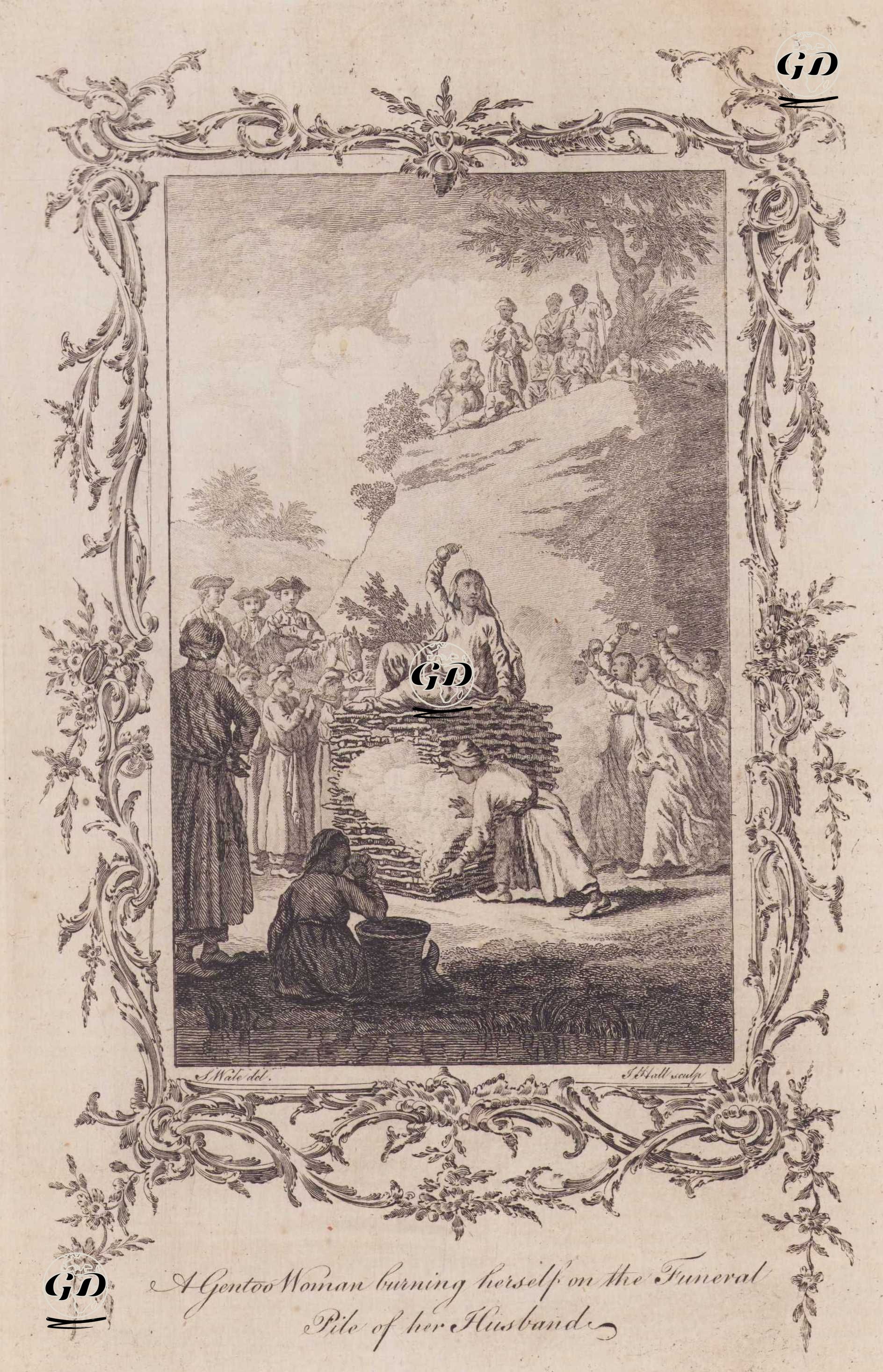
The engraving depicts the ritual of self-immolation by Hindu widows, known in European sources as "sati" or "suttee," as part of their husbands' funeral rites. In this scene, a woman is shown sitting on a pyre containing her deceased husband's body, pouring oil on her head. In the background, female figures weep, while priests and a crowd of people observe the ritual. European travelers and geographers, through such engravings that exoticized Indian religious practices, characterized Eastern societies as "mystical yet savage." The term "Gentoo" in the engraving's title was used in 18th-century English literature to refer to Hinduism, reflecting the colonial perspective of the time. In reality, the "sati" ritual was not widespread throughout India but was confined to certain communities. However, in European narratives, it was portrayed as a general "barbarian tradition" of India. The Sati ritual is an ancient practice, practiced throughout history in some parts of India, involving a widow throwing herself on the funeral pyre of her deceased husband. The word derives from the Sanskrit word satī, meaning "faithful, virtuous wife." This ritual was particularly revered among the upper castes of Hindu society (especially the Rajputs) as a sign of "devotion to her husband" and "spiritual union." The belief was that a woman's self-sacrifice would both purify her husband's soul and bring spiritual salvation to herself and her family. However, this belief gradually became a consequence of social pressure and male dominance, and it has been documented that many women were forced to die against their will. The practice of Sati began to be criticized during the 19th century, during the British colonial rule, through the efforts of intellectuals such as the reformer Raja Ram Mohan Roy, and was finally officially banned in Bengal in 1829. Despite this, some cases, albeit rare, continued until the late 20th century. Today, Sati is considered a tragic symbol of both a violation of women's rights and gender inequality in India.