GRAVÜR DÜNYASI
Digital Engraving Library
| Artist | I.L.Rüdisühli (Basel) |
| Date | 1840`s |
| Technique | Etching |
| Category | Uncategorized |
| Source | Muhtemelen “Voyage en Égypte” serisinden |
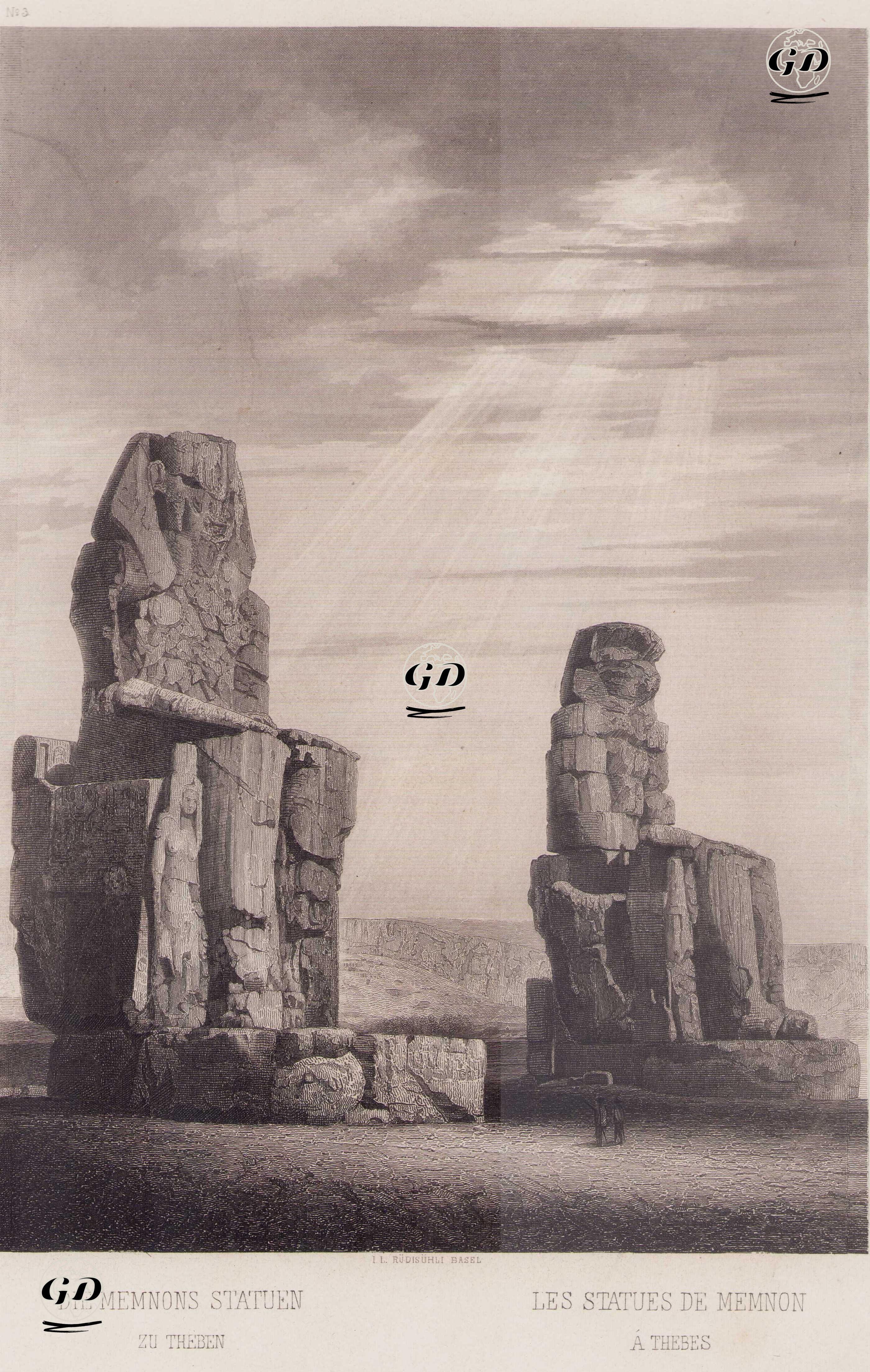
This engraving depicts the Colossi of Memnon, located in ancient Thebes, near modern-day Luxor. These two colossal stone statues were guardian figures that adorned the façade of the funerary temple of Amenhotep III (Amenophis III), the 18th Dynasty pharaoh who reigned in the 14th century BC. Each approximately 18 meters high, these statues symbolized not only the pharaoh's power but also the Egyptian concepts of immortality and divine order. The engraving depicts morning rays penetrating the clouds and falling on the statues, a reference to the ancient lore of these figures as "stones that speak to the sun." In ancient Greek and Roman times, these statues were identified with Memnon, son of Eos (goddess of the dawn). Legend has it that the sound the Eastern statue emits in the morning is a melody sending greetings to his mother, Eos. This phenomenon stems from the cracking sound of the stones due to temperature differences, but travelers of the time interpreted it as a mystical phenomenon. The engraving, in a romantic light atmosphere, reflects the deep interest that 19th-century European archaeologists and artists held in Egyptian civilization and the timeless existence of these monuments, described as "silent witnesses of the Nile." The monumental size of the sculptures, compared to the scale of the figures in the composition, evokes in the viewer a sense of both cosmic grandeur and historical reverence. The Colossi of Memnon still stand today and are among the landmarks of the Theban necropolis, a UNESCO World Heritage Site.