GRAVÜR DÜNYASI
Digital Engraving Library
| Date | 1845 |
| Technique | Copper Engraving |
| Category | Uncategorized |
| Source | Palestine, Description Geographique, Historique et Archeologique par S.Munk, Firmin Didot Freres, Editeurs, Paris |
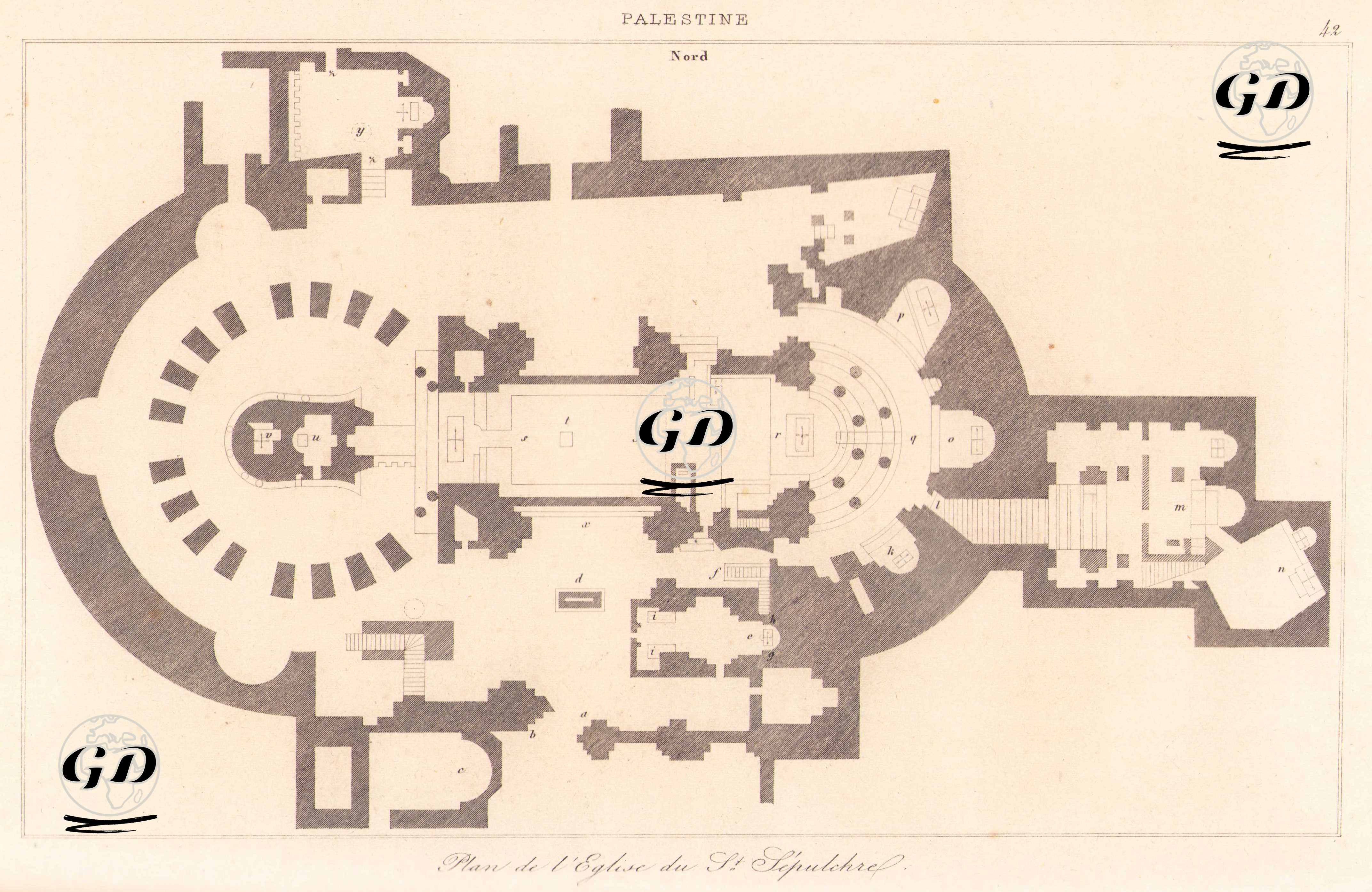
This engraving shows the architectural plan of the Church of the Holy Sepulchre in Jerusalem. The Church of the Holy Sepulchre is one of the holiest sites in the Christian world, housing the Golgotha Hill where Jesus was crucified and the tomb where he is believed to have been buried and resurrected within the same complex. The plan drawn in the engraving combines the additions made to the church over the centuries, from the Byzantine, Crusader, and Ottoman periods, into a single scheme. The large circular area on the left side of the plan represents the domed tomb known as the "Anastasis," the place where Jesus is believed to have been buried. The columns surrounding this circular area bear traces of the older Byzantine-era structure. A small area in the inner center of the circular area represents the tomb structure where Jesus is believed to have been buried. The long rectangular area in the center is the main prayer area, built during the Crusader period, and is surrounded by small chapels. The wider semicircular section on the right reflects the lower and upper chapels of the Calvary (Golgotha) area. This section, rising by steps, marks the sacred platform where it is believed Jesus was crucified. Numerous smaller spaces, marked with letters on the plan, are chapels belonging to different Christian denominations. Niches allocated to the Greek Orthodox, Armenian Apostolic, Latin Catholic, Syriac, Coptic, and Abyssinian communities have separate sections, each capable of conducting its own religious ceremonies. This arrangement reflects the fixed system of sharing places of worship, known as the "status quo," established during the Ottoman period. The engraving's fine and clear drawings make the church's complex and multi-layered architectural structure understandable in a simple plan view. The sections of the structure, added at different periods, combine on the plan to form a unified composition.