GRAVÜR DÜNYASI
Digital Engraving Library
| Engraver | Augustin Francois Lemaitre (1797-1870) |
| Date | 1848 |
| Technique | Copper Engraving |
| Category | Uncategorized |
| Source | Syrie Ancienne et Moderne par M.Jean Yanoski et par M.Jules David - L'Univers Pittoresque, Firmin Didot Freres, Editeurs, Paris |
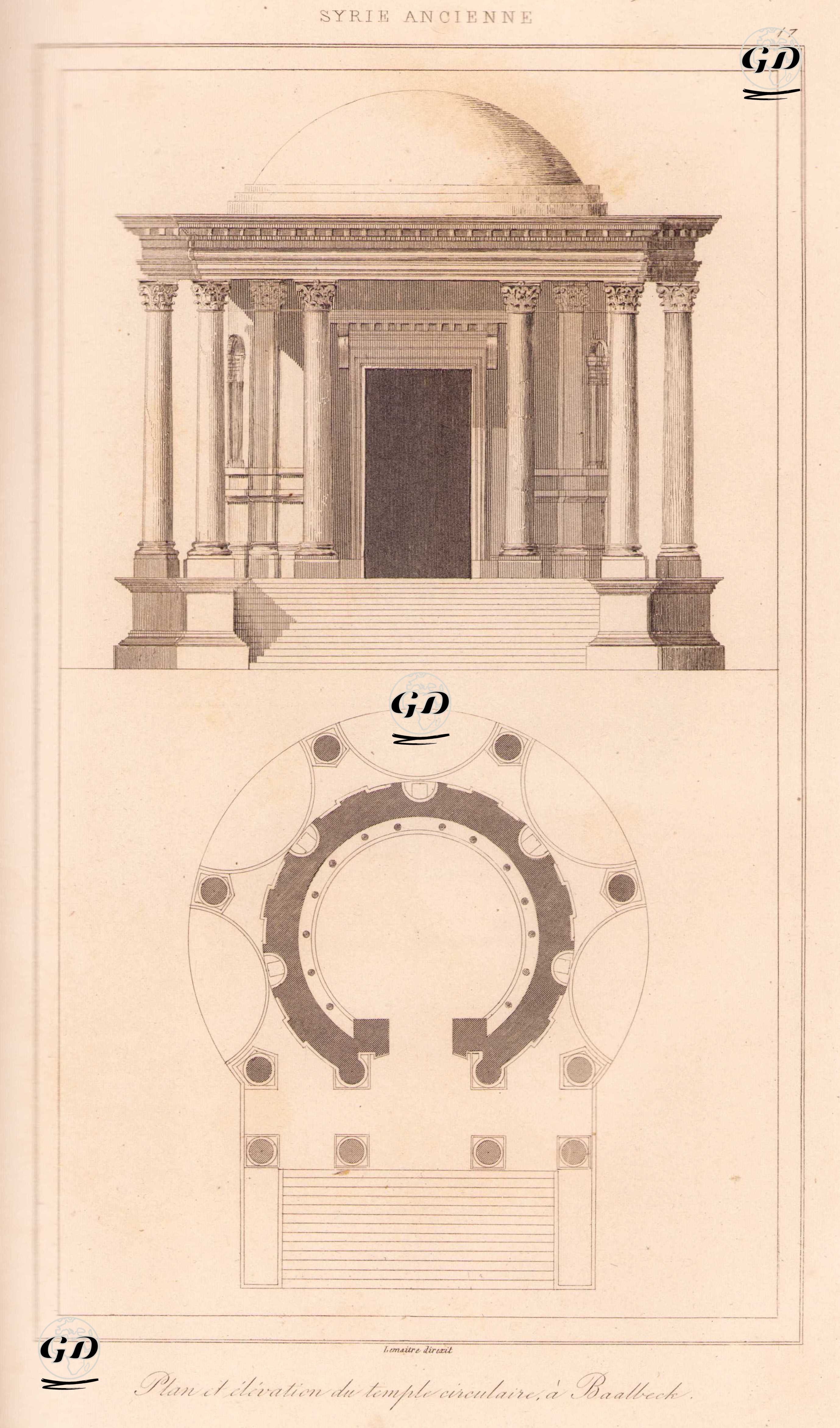
This engraving shows both the façade and ground plan of the circular temple (often identified as the Temple of Venus) in the ancient Baalbek complex. This temple, one of the most distinctive works of Roman architecture in the Eastern Mediterranean, is particularly notable for its circular plan, elegant column arrangement, and complex spatial structure. The upper portion of the engraving shows the temple's monumental façade. Here, slender and graceful Corinthian columns resting on a high stepped stone platform (krepis) support the temple's covered entrance (portico). The horizontal architectural section (entablature) supported by the columns surrounding the superstructure is elaborately crafted with a richly decorated frieze and projecting consoles. The temple is covered by a large dome, similar to those seen in examples like the Pantheon in Rome, and this dome is depicted in the engraving with a slight perspective effect. The entrance's deep, framed opening and the niches on the side surfaces indicate both the temple's ceremonial and symbolic functions. The ground plan below more clearly reveals the structure's architectural layout. At the center, a large circular main structure (cella) is supported by a surrounding colonnade and concave exterior walls. Small niches and projections surrounding the circular space contribute to the temple's structural and decorative integrity. Towards the main entrance, a propylon (monumental entrance) is visible, defined by wide staircases and rows of columns.