GRAVÜR DÜNYASI
Digital Engraving Library
| Engraver | Augustin Francois Lemaitre (1797-1870) |
| Date | 1845 |
| Technique | Copper Engraving |
| Category | Uncategorized |
| Source | Palestine, Description Geographique, Historique et Archeologique par S.Munk, Firmin Didot Freres, Editeurs, Paris |
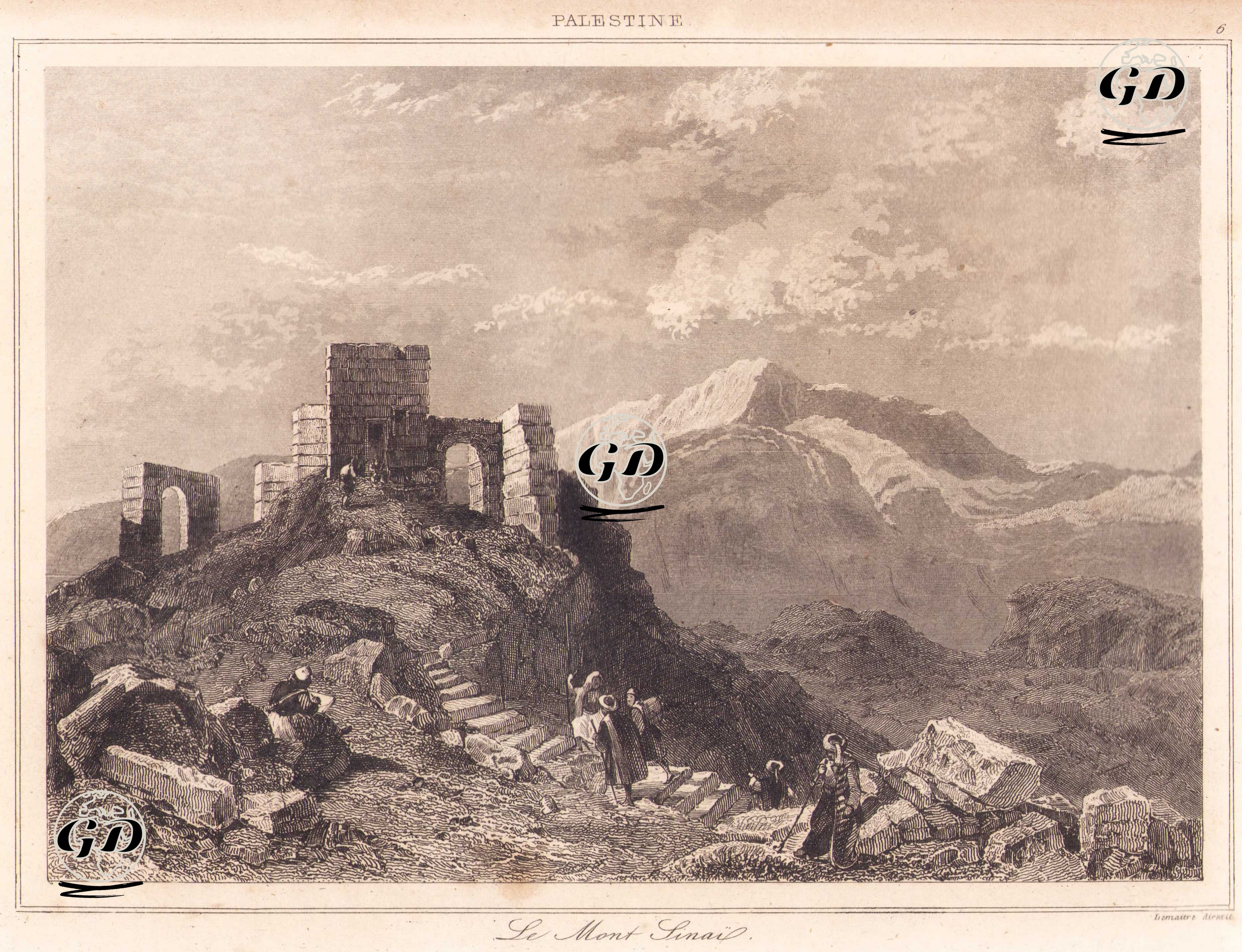
This engraving depicts the 19th-century view of the traditional path leading to the summit of Mount Sinai (Jebel Musa) and the small chapel/ruin structure located near the summit. Mount Sinai is a sacred mountain of central importance in all Jewish, Christian, and Islamic traditions. In Jewish belief, it is considered the site of the giving of the Covenant and the Ten Commandments; in Christianity, it is considered the place where God appeared to Moses, the supreme manifestation of prophecy; and in Islam, it is the Mount of Tur (Tur-u Sinai), where Moses spoke with God. This multilayered sacredness led to the interpretation of Sinai in European travel literature, from the 16th century onward, as not simply a mountain but a sacred topography where God manifested, a theophanic site. The wall traces and stone blocks seen in the engraving have been identified as “the remains of old monasteries or hermitage structures” mentioned in sources from the 16th century onwards and repaired in different periods, but their archaeological reading is often unclear. Yet, iconographically, this structure embodies Sinai's "place of witness." The staircase-like path embodies the rhythm of the "pilgrimage" documented by European travelers in the 19th century, while the figures seen in the engraving embody the "sacredness witnessed right next to oneself" of the Sinai experience in the orientalist engraving language of the period.