GRAVÜR DÜNYASI
Digital Engraving Library
| Artist | Marc Antonio Franceschini (1648-1729) |
| Engraver | Friedrich John (1769-1843) |
| Date | 1827 |
| Technique | Mezzotint-Steel Engraving |
| Category | Uncategorized |
| Source | Published in the pocket book “Aglaja” by J. B. Wallishausser |
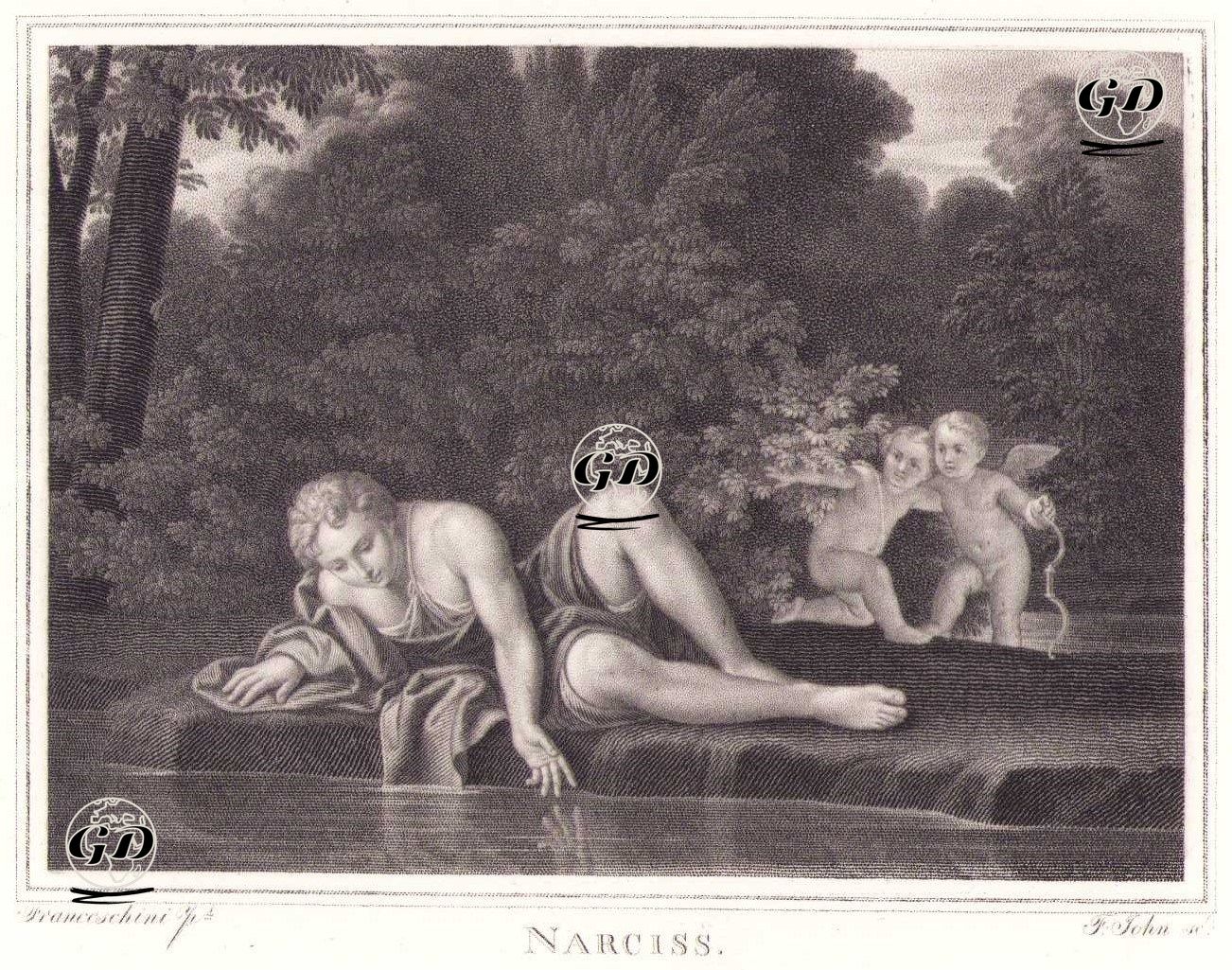
This engraving is based on an original painting by Marc Antonio Franceschini, "Narcissus," and was engraved on steel by Friedrich John. This composition, a mythological scene, combines the influences of both ancient Greek narrative tradition and the emotional lyricism of the Baroque period. The engraving depicts the tragic story of Narcissus, son of the river god Cephissus and the water nymph Liriope. According to Greek mythology, Narcissus, captivated by his beauty, rejected all the nymphs and mortals who fell in love with him. This prideful attitude was punished by the curse of Nemesis, the goddess of vengeance. One day, Narcissus fell in love with his own reflection in a river, but this love was merely an illusion. The moment when he leans over the water to gaze at his own reflection is the most poignant and symbolic moment in the myth. In Franceschini's composition, Narcissus's graceful body is seen reclining on the riverbank. The young man bows his head as he tries to touch the water, as if caressing his own reflection. Two small cupid figures in the background add allegorical depth to the scene. One smiles and nudges the other, as if judging Narcissus's infatuation with his own beauty with playful innocence. This scene is a visual allegory not only of individual vanity and self-admiration, but also of the human imprisonment of one's own self. The melancholic expression on Narcissus's face symbolizes the inner solitude of a soul captivated by its own beauty. Franceschini's soft modeling and graceful figure lines reflect the classical elegance of the Bolognese school, while Friedrich John's engraving technique deepens this idealized beauty through the interplay of light and shadow. In mythological contexts, the narcissus (Narcissus poeticus), born after Narcissus's death, represents the cyclicity of nature and rebirth. According to ancient legend, nymphs who fell in love with Narcissus wanted to bury him, but upon reaching the riverbank, they encountered only one flower and named him Narcissus. This is why this flower is often found near water, because as it grows, it leans toward the water to see its own reflection, just as Narcissus waited for his reflection to find the one he loved forever. This engraving is also an artistic representation of the myth that forms the basis of Freud's concept of "narcissism."