GRAVÜR DÜNYASI
Digital Engraving Library
| Artist | Domenichino (1581-1641) - Michele Desubleo (1602-1676) |
| Engraver | Friedrich John (1769-1843) |
| Date | 1827 |
| Technique | Mezzotint-Steel Engraving |
| Category | Uncategorized |
| Source | Published in the pocket book “Aglaja” by J. B. Wallishausser |
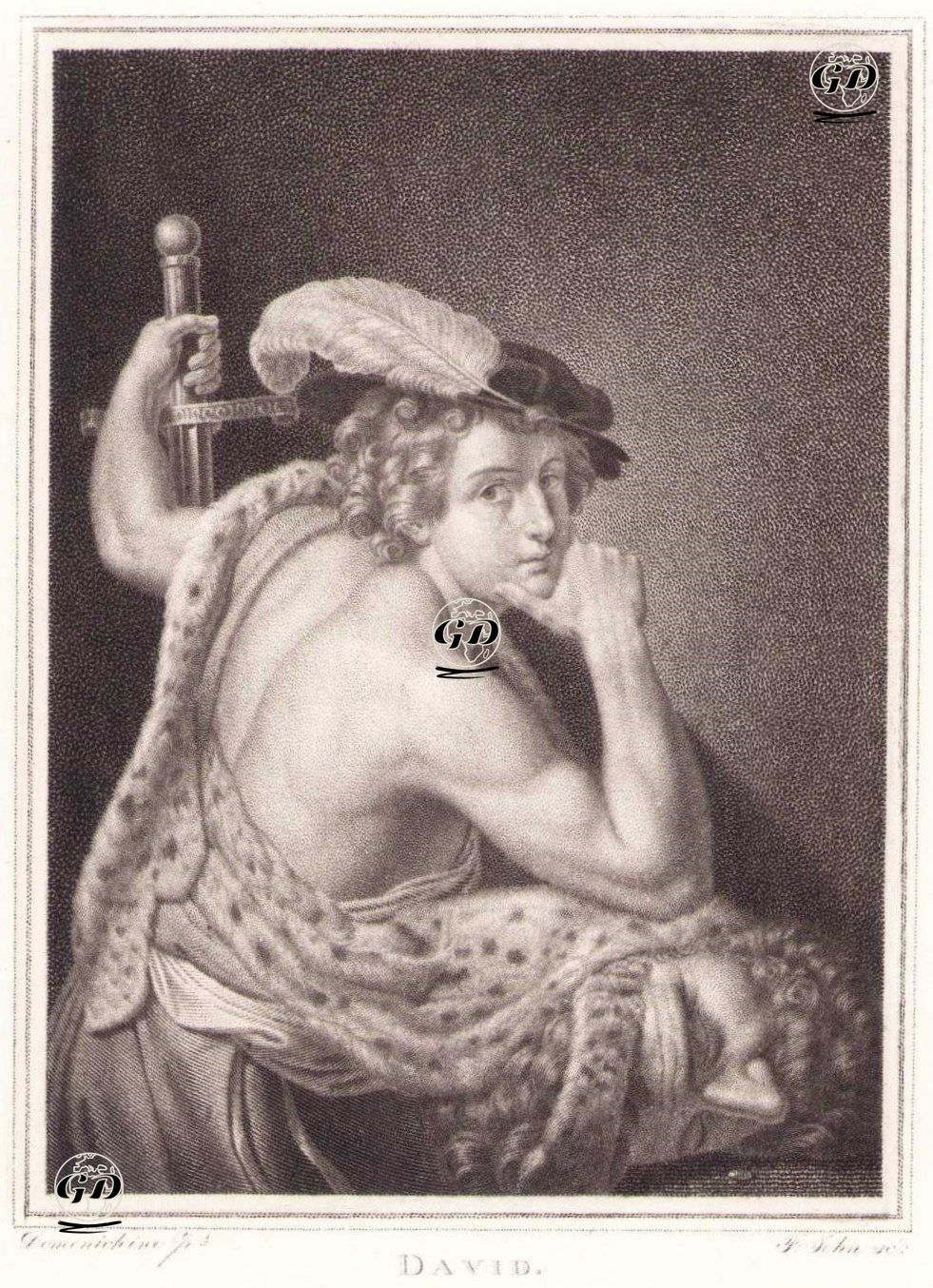
This engraving is based on a painting by Michele Desubleo (1602-1676) and was masterfully crafted into steel in the 19th century by Friedrich John (1769-1843). The engraving, titled "David," depicts the biblical scene of David slaying Goliath, a moment immediately following the event. The painting was initially attributed to Domenichino of the Bologna School, but later stylistic studies have established its identity as Michele Desubleo's. Since the original painting was attributed to Domenichino at the time of the engraving's publication, Domenichino's name appears on the engraving. An artist of Flemish origin, Michele Desubleo settled in Italy and was influenced by Caravaggio's play of light and shadow in Rome. Later, the years he spent in Guido Reni's workshop from 1636 onward shaped his art towards a more classical and elegant trajectory. In the engraving, David is depicted with his back turned to the viewer. He holds his sword in his hand and rests his other arm on the severed head of the giant Goliath he has slain. This gesture reflects both the weight of victory and the young hero's inner state of contemplation. Desubleo here transcends the heroic scene into a dramatic moment, emphasizing the inner serenity of the human spirit and the tranquility that follows victory. The spotted fur draped over David's shoulders symbolizes his journey to the kingdom. This is also seen as a symbol of divine providence in Renaissance and Baroque paintings. The feather hat on his head and the elegant details of his clothing lend the scene an aristocratic elegance. The soft tonal transitions achieved through Friedrich John's engraving technique reveal David's musculature in a naturalistic manner, while the pensive expression on his face conveys an idealized elegance. Ultimately, this engraving depicts not only the theme of "heroism" but also the inner silence of man after victory, the sublimity of thought and humility. This composition, which builds a bridge between Desubleo’s classical elegance and Caravaggio’s dramatic light, can be considered a “moral reflection of victory” in post-Renaissance European art.