GRAVÜR DÜNYASI
Digital Engraving Library
| Artist | J. Cramb (Photographer-Fotoğrafçı) |
| Engraver | E.Radclyffe |
| Date | 1860`s |
| Technique | Etching |
| Category | Uncategorized |
| Source | William Collins, Glasgow |
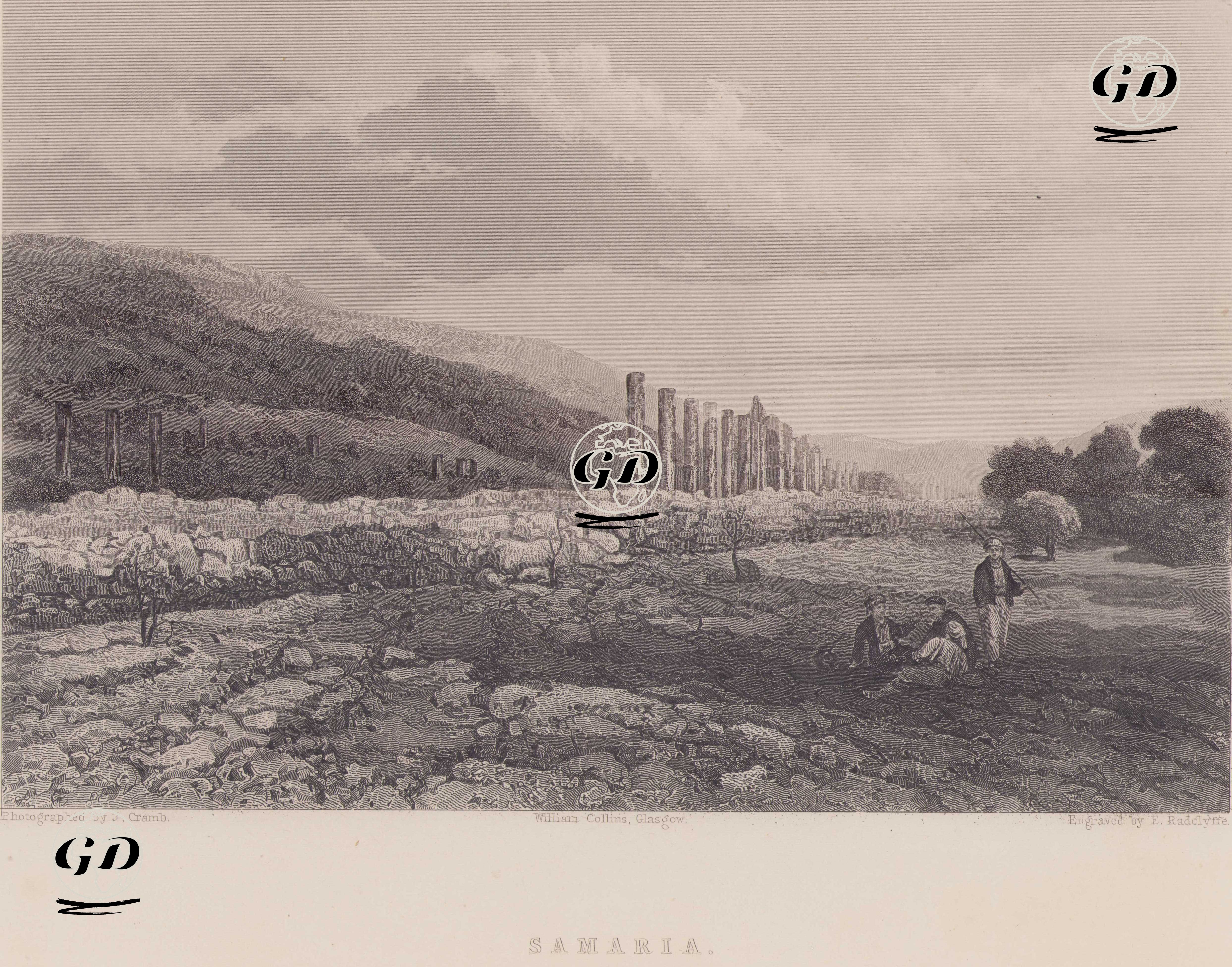
This engraving depicts the ruins of the ancient city of Samaria. The landscape depicts the tranquil ruins of this ancient city, once adorned with royal palaces, colonnaded streets, and temples, nestled in the shadow of the surrounding mountainous terrain and amidst a pastoral atmosphere. The ancient city of Samaria lies approximately 10 kilometers west of Nablus in the modern-day West Bank. It was founded by King Omri of Israel in the 9th century BC and made the capital of the Northern Kingdom of Israel. The city's strategic location made it one of the most powerful centers of the period, both politically and commercially. During the reign of Omri's son, King Ahab, strong relations were established with Phoenician culture, resulting in a rich synthesis of architectural and decorative arts. The "Samaritan ivories" from this period, now exhibited in archaeological museums, are considered among the most exquisite works of art in the ancient Near East. The rows of columns seen on the left in the engraving belong to the settlement of Sebaste (Sebastia), which was created during the Roman period during the rebuilding of the city. Reorganized by King Herod in the 1st century BC in honor of Emperor Augustus, the city acquired its identity as a Roman colony and was renamed Sebaste. The colonnaded street, theater, temple foundations, and city wall ruins bear traces of this rebuilding process. In the engraving, the figures in the foreground (travelers, local guides, and shepherds) are placed as a symbolic element emphasizing the theme of "human continuity with ancient ruins," a theme frequently encountered in 19th-century orientalist travel narratives. Throughout history, Samaria has maintained its importance not only as a political capital but also as the cultural and religious center of the Samaritan people (Samaritans). This community, adhering to the first five books of the Torah, considered Mount Gerizim a sacred site and preserved a religious tradition parallel to Judaism to this day.