GRAVÜR DÜNYASI
Digital Engraving Library
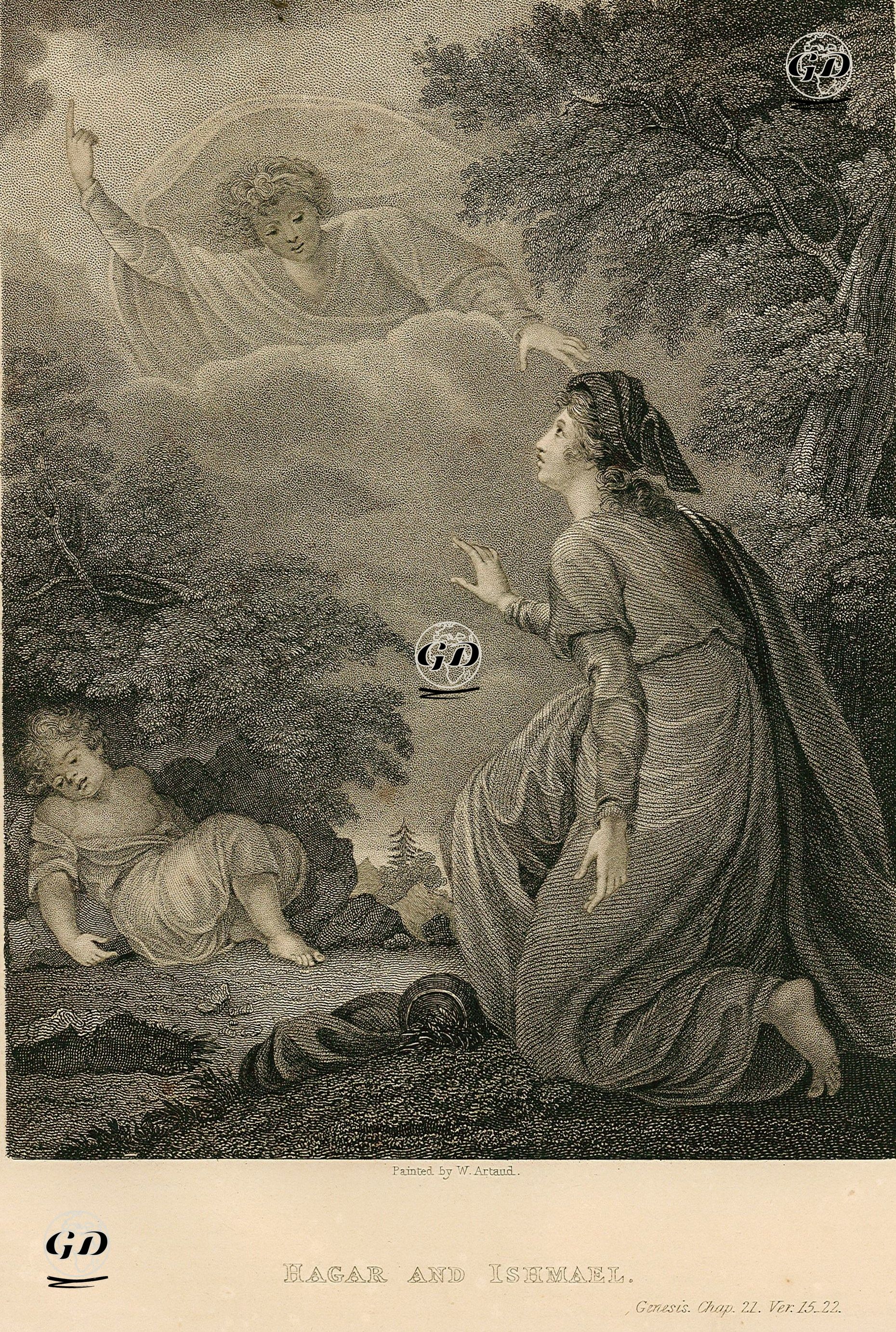
| Artist | William Artaud (1763-1823) |
| Date | 1835 |
| Technique | Etching-Mezzotint |
| Category | Religion |
| Source | The Holy Bible Containing Old and New Testaments to Which are Added Notes, illustrations and Practical Obsevations By The Rev. Matthew Henry |
This engraving depicts the rescue of Hagar and Ishmael by God's angels in the desert, described in verses 15-22 of Genesis, chapter 21, part of the Old Testament. This scene is not only a dramatic abandonment but also a magnificent reflection of God's grace and redemptive power. When Hagar and her son Ishmael are dehydrated and on the verge of death in the desert, God hears their cries and, through an angel, tells Hagar not to fear. God then opens Hagar's eyes and shows her a well of water. In the engraving, Hagar kneels in prayer in the desert, while an angel appears from the clouds and speaks to her. This engraving demonstrates how divine grace manifests itself in the physical conditions of the desert, and it also carries a profound theological meaning of the reward of faith and trust. Hagar's gaze directed towards the sky and the angel's hand pointing upwards are symbols of absolute submission to God's plan. This narrative, which also appears in the Quran, has deep symbolic meaning in Islamic belief, with Ishmael's thirst and Hagar's seven runs between the hills of Safa and Marwa in her search for water. Ultimately, God answers Hagar's prayers, and with the miraculous gush of Zamzam water to the earth, both biological and spiritual salvation takes place. Therefore, this scene symbolizes not only a mother's pain and supplication, but also the sublimity of divine forgiveness, surrender, and patience hidden in the depths of destiny.