GRAVÜR DÜNYASI
Digital Engraving Library
| Artist | Gustave Dore (1832-1883) |
| Engraver | Antoine Alphee Piaud 1813-1867) |
| Date | 1860's |
| Technique | Wood Engraving |
| Category | Religion |
| Source | Cassell's Illustrated Family Bible |
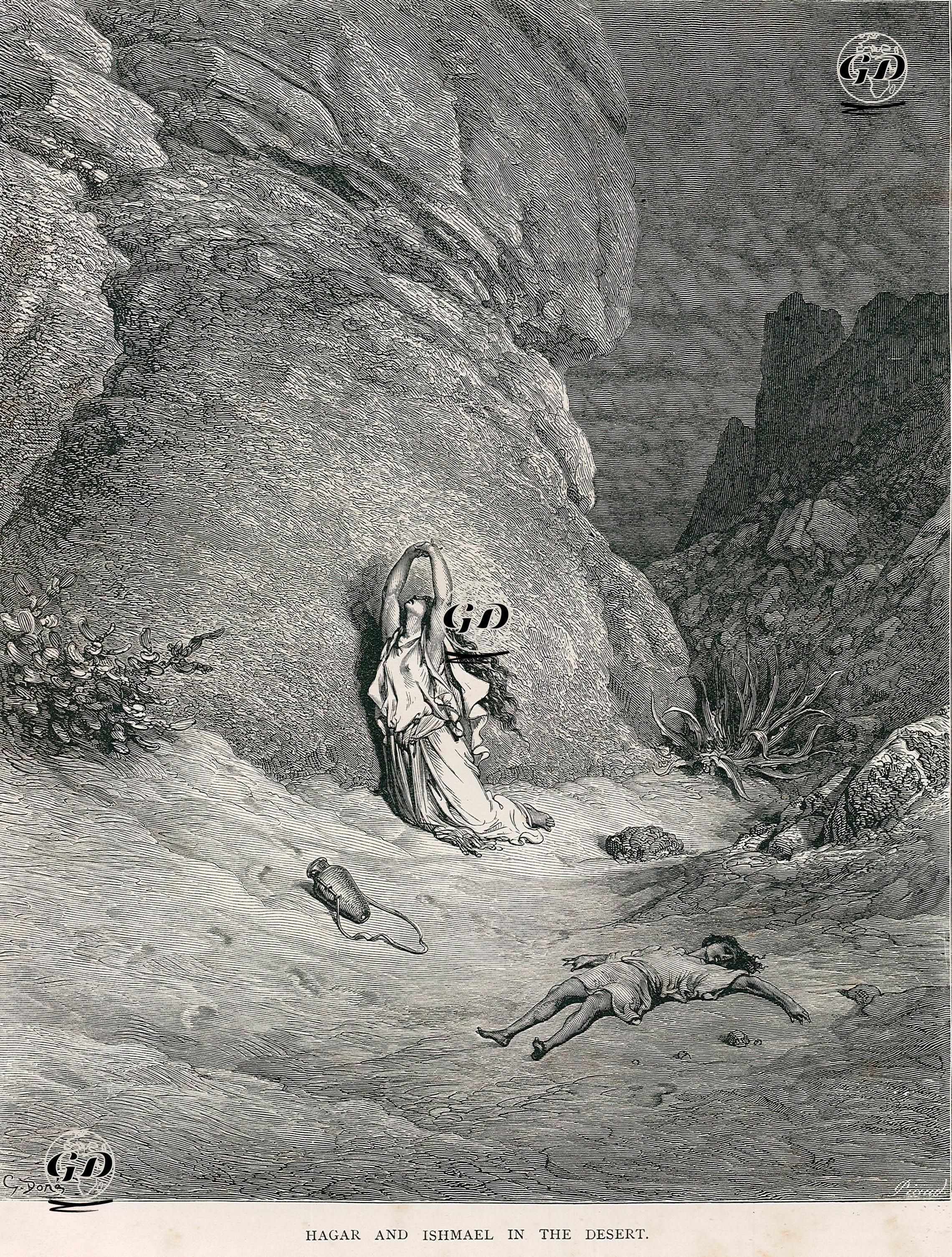
This engraving depicts the scene of Hagar and her son Ishmael being abandoned in the desert, described in verses 14-21 of the book of Genesis, chapter 21, of the Old Testament. Created by French artist Gustave Doré, this engraving depicts Hagar, the Egyptian slave girl, praying in her arms, seeking direct help from God, abandoned to her fate in the desert. In the foreground, young Ishmael, exhausted by thirst, lies on the ground, while the steep cliffs and vast desert expanse in the background symbolize both physical and spiritual desolation. Hagar's hands, raised to the sky, reflect her last hope in God and her desperate faith. At this point in the scriptures, God announces that He hears Ishmael's voice and provides salvation by showing him a source of water. This composition by Dore, with its dramatic use of light and shadow and the sense of emptiness, expresses in a sublime language the helplessness of man before God and yet the hope of salvation. The engraving is a multilayered reference to the birth, rejection, and divine protection of Ishmael, a figure of great significance in Jewish, Christian, and Islamic tradition.