GRAVÜR DÜNYASI
Digital Engraving Library
| Artist | John Martin (1789-1854) |
| Engraver | John Martin (1789-1854) |
| Date | 1831 |
| Technique | Etching-Mezzotint |
| Category | Religion |
| Source | The Paradise Lost by John Milton - London, James Sangster & Co. |
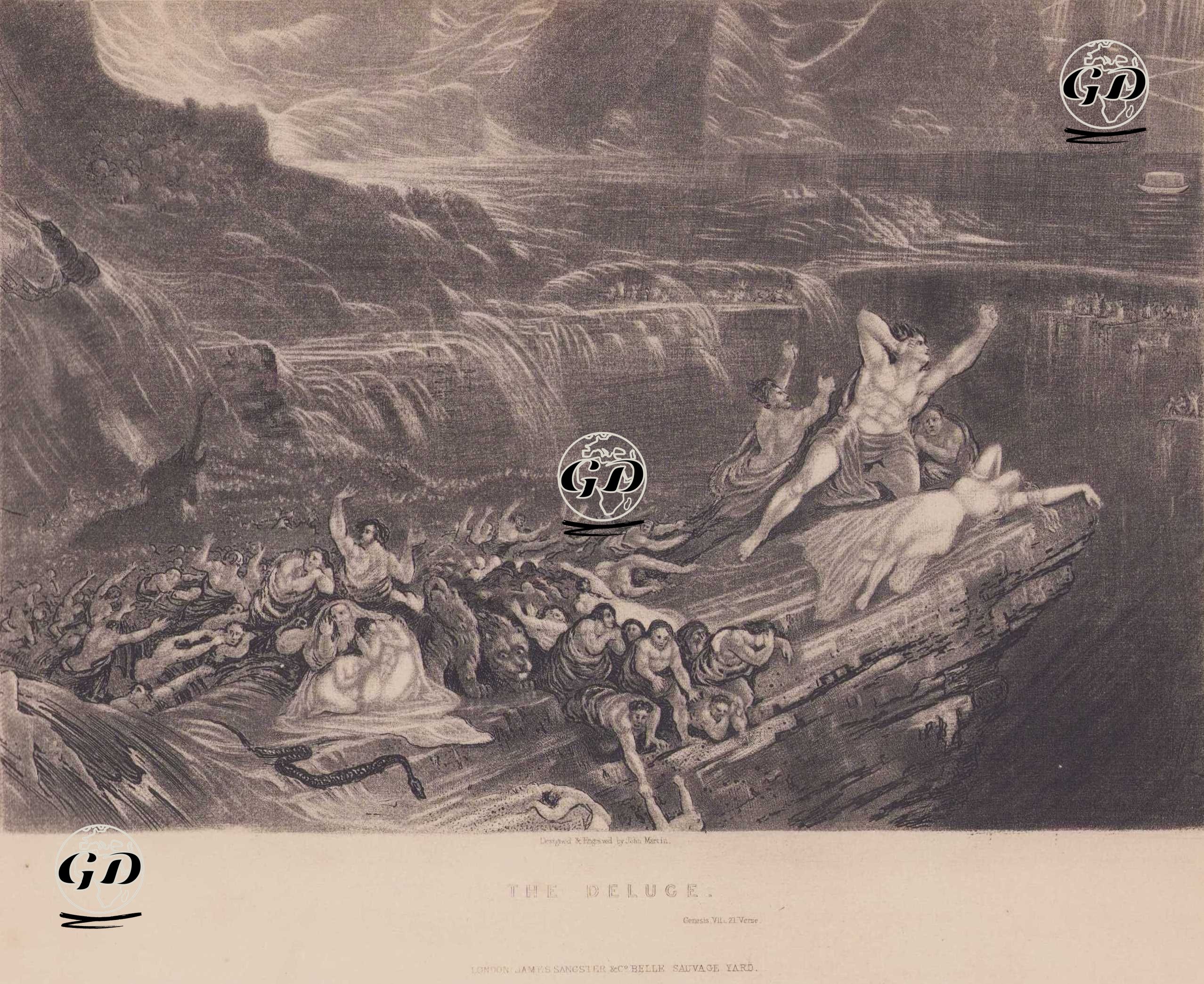
This engraving depicts the scene of the Great Flood, based on the phrase "Every living thing on earth perished; birds, domestic and wild animals, reptiles, humans, and every living thing that breathes died," as described in Genesis, chapter 6, verse 7 of the Old Testament. The engraving features human figures struggling to survive in a world submerged by the flood's violence. The main figures are women panicking for shelter, male figures trying to protect them, and mothers striving to save their children. The most striking element is the muscular male figure on top of the cliff in the upper right corner of the scene, raising his arm toward the sky. This figure resembles a leader desperately seeking help or a symbol of the search for salvation. Immediately behind and surrounding him, female figures clutch their young children, acting with protective instinct. This composition particularly emphasizes the mother-child relationship and human helplessness. The woman in the bottom center appears to want to help another woman trying to escape the water, but this effort proves futile in the face of the water's power. Furthermore, the serpent figure in the lower left corner, writhing among the rocks, is clearly visible. In biblical iconography, the serpent often symbolizes themes of sin, temptation, and the fall. In this context, the placement of a serpent in the flood scene suggests that the flood is not merely a physical disaster but also a consequence of humanity's moral decline. Noah's Ark, in the upper right background of the engraving and almost dim in the distance, represents the sole symbol of salvation, yet for the people in the foreground, it represents a hope that is no longer attainable. This scene reinforces the emphasis on divine justice that God saves only the chosen, leaving the rest to their fate.