GRAVÜR DÜNYASI
Digital Engraving Library
| Artist | John Martin (1789-1854) |
| Engraver | John Martin (1789-1854) |
| Date | 1831 |
| Technique | Etching-Mezzotint |
| Category | Religion |
| Source | The Paradise Lost by John Milton - London, James Sangster & Co. Belle Savuage Yard |
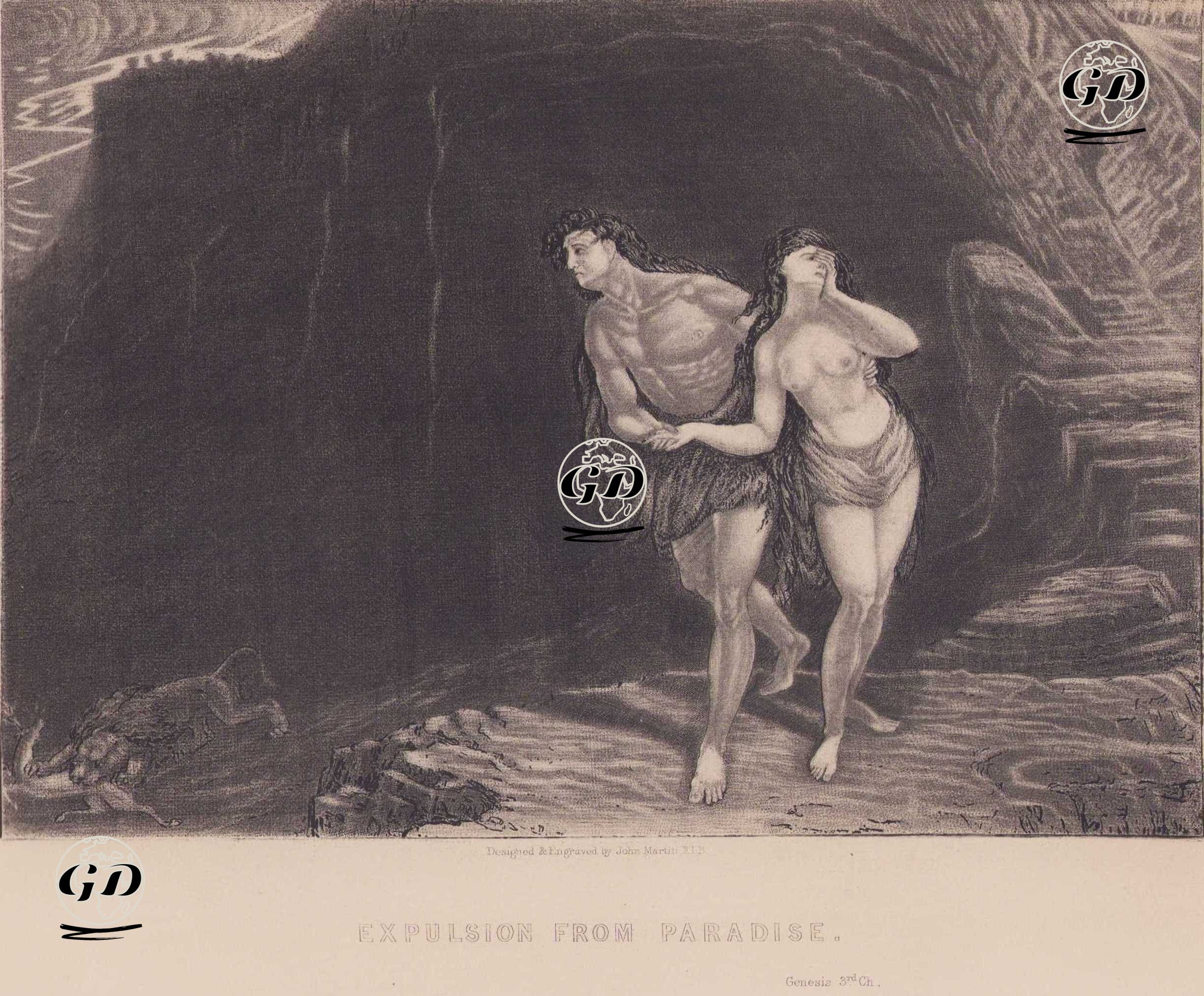
This engraving is titled “The Expulsion from Paradise” and visualizes a profound theological and symbolic narrative based on verse 24 of Genesis, Chapter 3, of the Old Testament of the Bible. The engraving depicts Adam and Eve being expelled from the Garden of Eden (Eden) for their original sin of disobeying God's command and eating of the forbidden fruit. The body language and facial expressions of the figures reveal the profound regret, guilt, and helplessness experienced in the wake of God's divine judgment. At the center of the composition, Adam's anxious but determined gaze is striking, while Eve, following behind, closes her eyes and weeps. Eve covering her face with her left hand symbolizes shame and pain, while Adam reaching out his other hand to hers implies that they are not alone in this new and unknown world. The dark background in the composition suggests that the exodus from paradise is a transition from light to darkness; In other words, it represents moving away from divine light. This scene symbolizes not just an individual fall, but the beginning of all humanity's earthly journey. Theologically, this moment is defined as the result of "original sin." By violating a commandment given by God, human nature was contaminated with sin, the pure bond between God and God was damaged, and humanity was separated from heaven (i.e., from its state of union with the Divine Being). This event is also considered in Christian theology as the justification for Christ's redemptive role. The idea that humanity is tainted by sin and that this sin can only be purified through divine atonement forms the basis of this narrative.