GRAVÜR DÜNYASI
Digital Engraving Library
| Artist | Edwin Henry Landseer (1802-1873) |
| Engraver | Lumb Stocks (1812-1892) |
| Date | 1854 |
| Technique | Steel Engraving |
| Category | Military |
| Source | The National Gallery Div 7 Comprising The Pictures Known As The Vernon Collection And A Selection From The Works Of Modern Sculptors (R.Holdgate) |
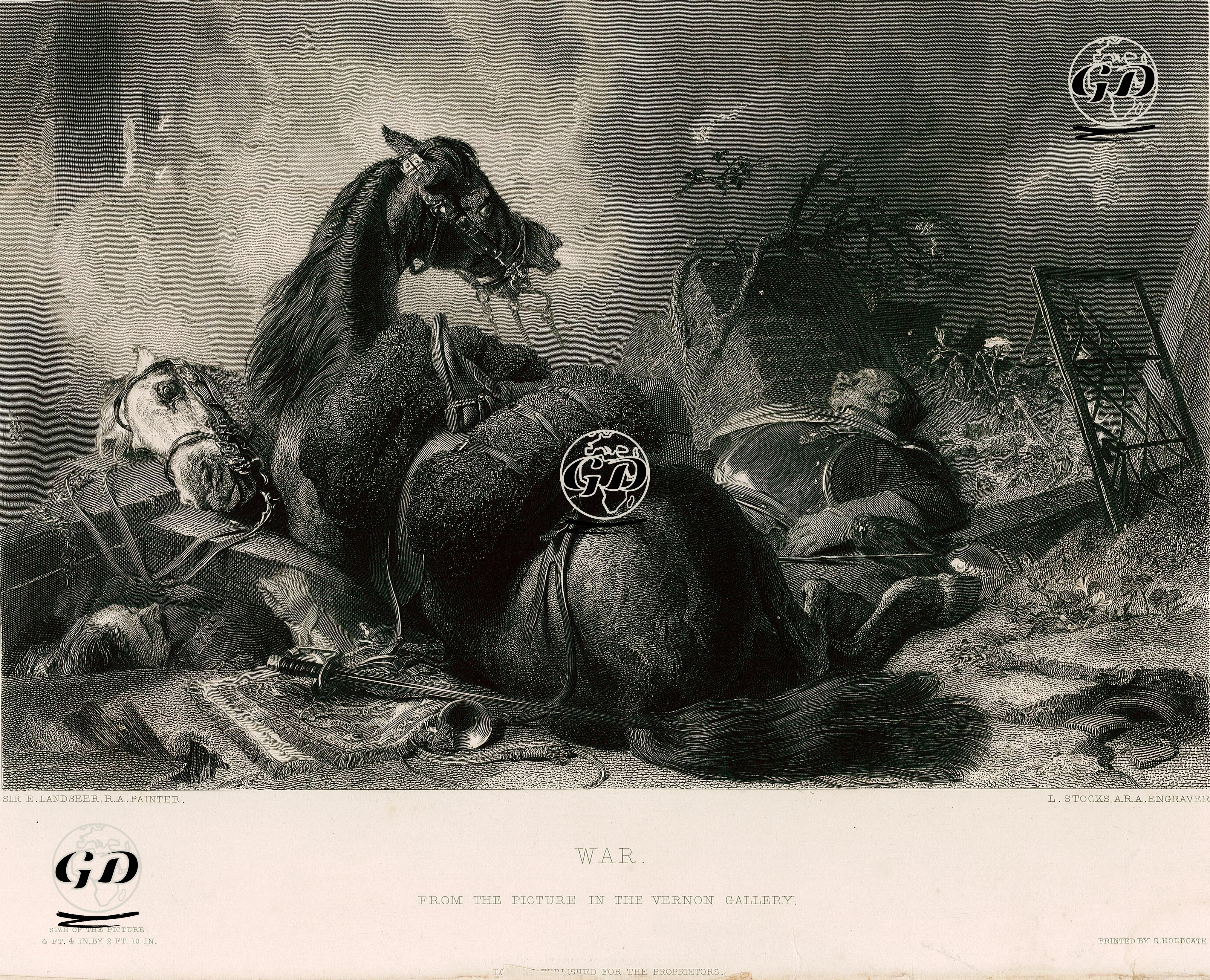
This engraving is not based on an actual battle scene but was created to directly illustrate the horrors of war. Rather than its glorious or heroic aspects, it portrays its devastating and tragic consequences. The composition depicts dead and dying soldiers sprawled on the battlefield. The silk embroidery on the trumpet suggests that the soldiers belonged to the British Royal Horse Guards. Two horses, one dead and one seriously wounded, are depicted alongside the soldiers. The agonized expression and the rearing of the black horse, struggling to free itself from the debris on the right, particularly enhance the dramatic intensity of the scene. The ruined hut, the collapsed latticework, and the devastated garden in the background emphasize the devastation wrought not only on soldiers and armies but also on civilian life and nature. Painter Sir Edwin Landseer chose to depict the misery and pointlessness of war, not its glory. In the engraving, the battlefield plays host to the silent tragedy not only of the soldiers but also of the animals. The horses' expressions dramatically reveal the shared fate between humans and animals, and the death of humans and the suffering of horses become a complementary metaphor for war. One of the most striking details in the engraving is the rose motif placed at the head of the fallen horseman. This rose is not a simple decorative element but carries a multilayered iconographic meaning. On the one hand, it symbolizes the fragility of life and the inevitability of death, while on the other, it represents the memory of the fallen soldier as an individual and the desire of those left behind to keep his memory alive. In Christian symbolism, the rose evokes martyrdom and divine love. In this context, the horseman's death can be interpreted not only as a loss but also as a call to sacrifice and remembrance.