GRAVÜR DÜNYASI
Digital Engraving Library
| Artist | Daniel Maclise (1806-1870) |
| Date | 1850 |
| Technique | Steel Engraving |
| Category | William Shakespeare And His Works |
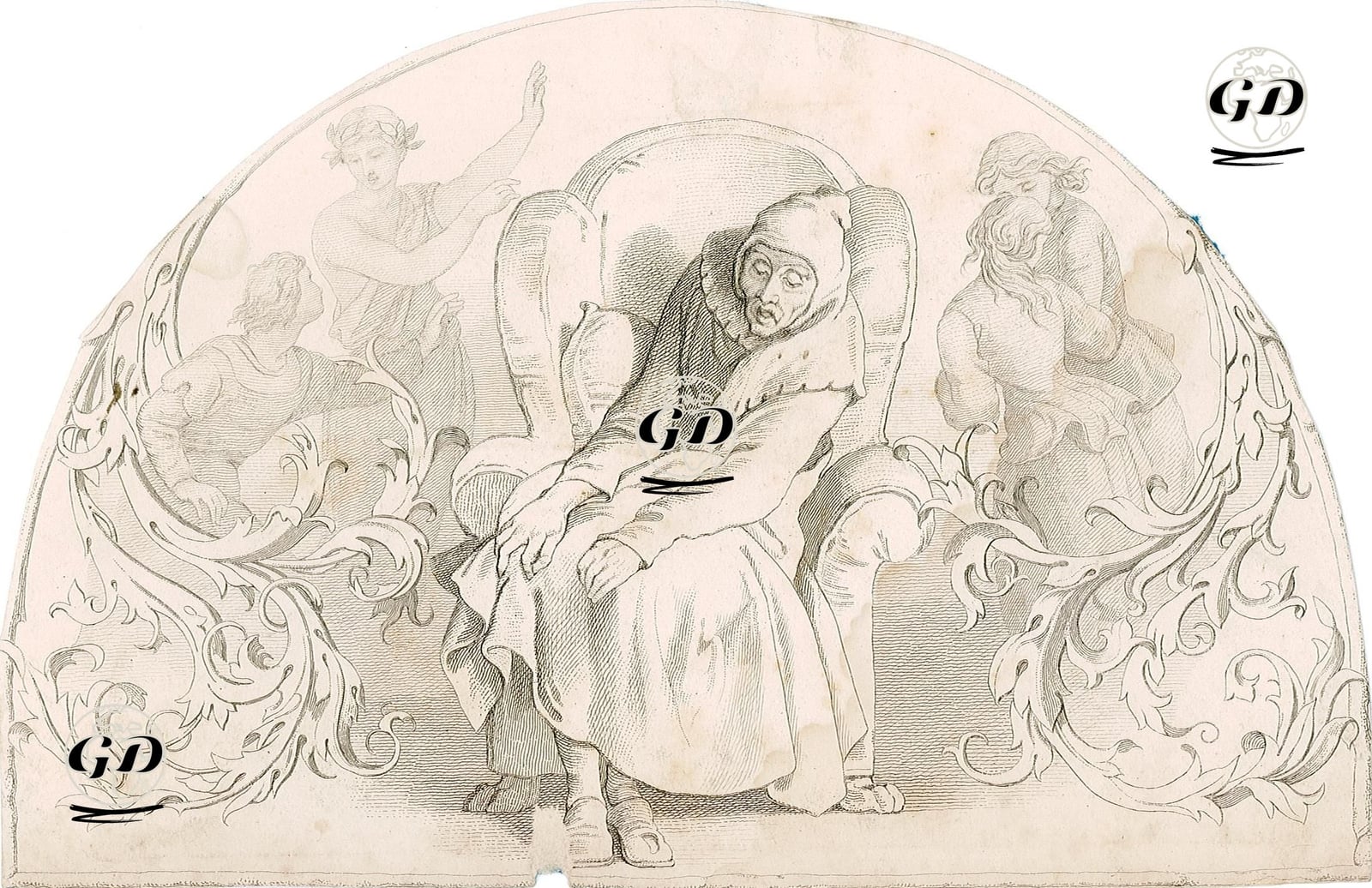
This engraving references William Shakespeare's famous "The Seven Ages of Man" monologue from his pastoral comedy, As You Like It. Beginning with Shakespeare's words, "All the world's a stage," this passage depicts human life in seven stages from birth to death: infancy, childhood, youth in love, military service, judicial service, old age, and finally, the "second childhood" that comes with infirmity. This engraving allegorically represents the seventh and last phase of the monologue, "Second Childhood or Extreme Old Age". The engraving depicts an old man in a large armchair. His head is bowed, his hands fallen on his knees, his eyes downcast, powerless and lonely. The young figures surrounding him, seen as silicified figures, symbolize the historical stages of life and the transience of experience. The figure's passive and fragile state clearly reflects the final stages of human life, where he once again remains standing like an infant. In Shakespeare's words, this period is marked by a struggle with "second innocence and salt oblivion." The old man has now lost his memory, senses, and physical strength; he is toothless, his vision and hearing are impaired, and he is completely dependent on capacity support. The problem of life, beginning in infancy, culminates once again in a kind of "childhood." This powerfully symbolically reveals the inevitable fragility of the stage and the cyclical nature of existence, as depicted by Shakespeare. The engraving reflects the most dramatic and sorrowful phase of the series, strikingly revealing the similarities between the beginning and end of human life.