GRAVÜR DÜNYASI
Digital Engraving Library
| Artist | Daniel Maclise (1806-1870) |
| Engraver | Charles William Sharpe (1818-1899) |
| Date | 1879 |
| Technique | Steel Engraving |
| Category | William Shakespeare And His Works |
| Source | The Art Journal (London, Virtue & Co. Limited) |
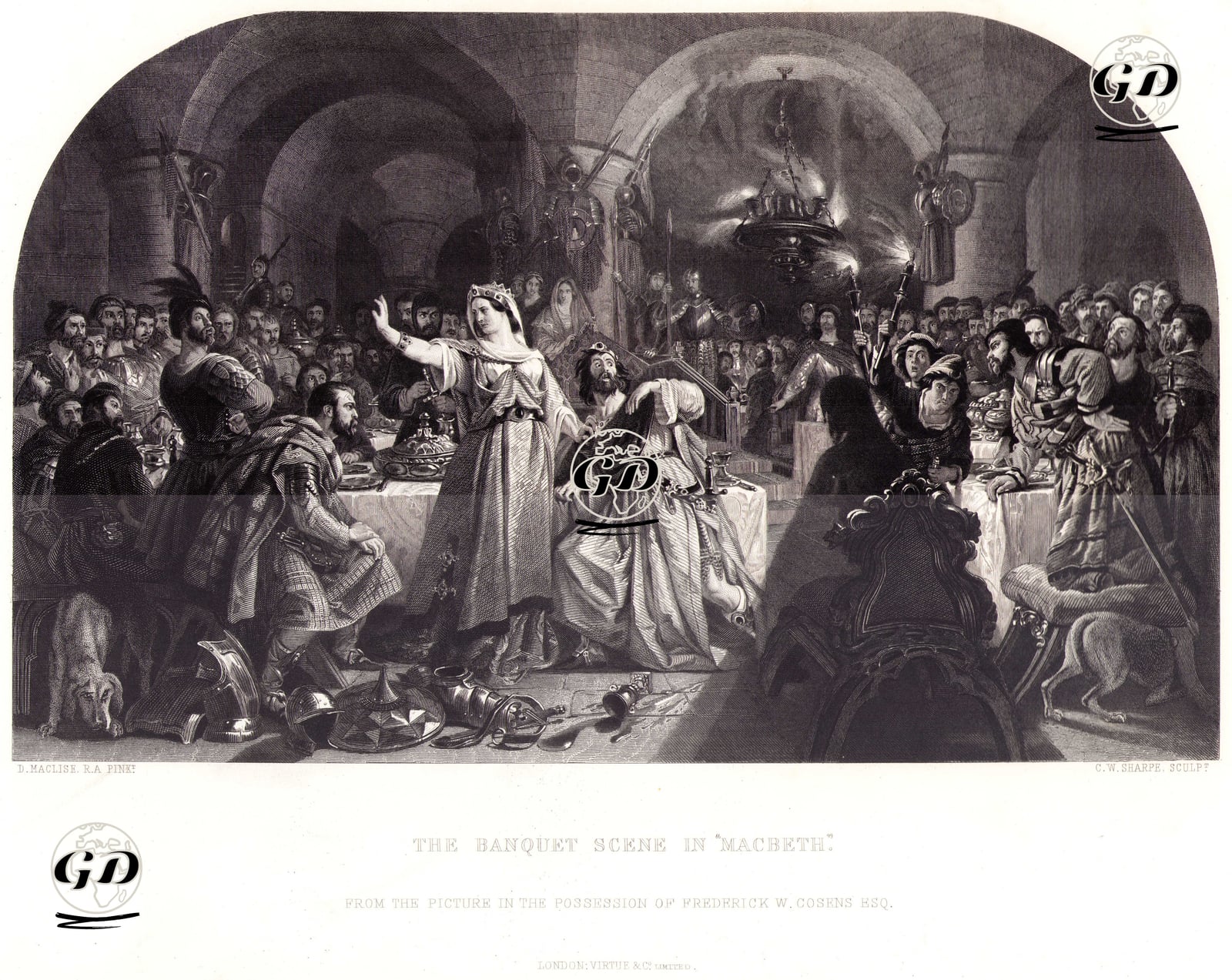
William Shakespeare's tragedy (1606), Macbeth, depicts the tragic rise and fall of the Scottish general Macbeth, triggered by a prophecy from witches that he would one day become king. At the instigation of his wife, Lady Macbeth, Macbeth ascends to the throne by killing King Duncan, building his power on guilt, paranoia, and bloody deeds. The hero, increasingly isolated and disillusioned by the prophecies, descends into a tragedy laced with unhappiness and violence. The engraving depicts one of the most critical moments in the tragedy: Macbeth's vision of the ghost of Banquo, his friend whom he had murdered, during the banquet (Act III, Scene IV). This scene expresses Macbeth's remorse, paranoia, and the burden of guilt. Despite being killed by Macbeth, Banquo returns to the stage in spirit, and only Macbeth, not the other guests, sees this presence. The composition takes place in a magnificent banquet hall, where nearly seventy guests are meticulously reflected, each with different facial expressions, gestures and postures.The focal point of the scene is Macbeth's terror at the sight of Banquo's ghost. The convulsions on his hands and face reveal his inner collapse. Lady Macbeth, in contrast, rises with a calm and false confidence, attempting to calm the guests. Banquo's figure is implied rather than directly depicted. He is rendered as a vague, almost indistinct image within dark shadows. This visual choice symbolizes Macbeth's psyche, torn by guilt and paranoia. The use of light and shadow heightens the dramatic tension within the scene, while details such as the crown, jeweled goblets, and the banquet table highlight the ironic contrast between external splendor and internal collapse. Although the engraving technique fails to convey the power of the original painting's colors, the richness of chiaroscuro presents the scene with a powerful psychological intensity. This engraving not only visually represents Shakespeare's scene; it also recreates in a timeless image the tragic collapse of mankind in the face of guilt, conscience, and fate.