GRAVÜR DÜNYASI
Digital Engraving Library
| Artist | John Pettie (1832-1910) |
| Engraver | Frederick Augustus Heath (1810-1878) |
| Date | 1874 |
| Technique | Steel Engraving |
| Category | William Shakespeare And His Works |
| Source | The Art Journal (London, Virtue & Co.) |
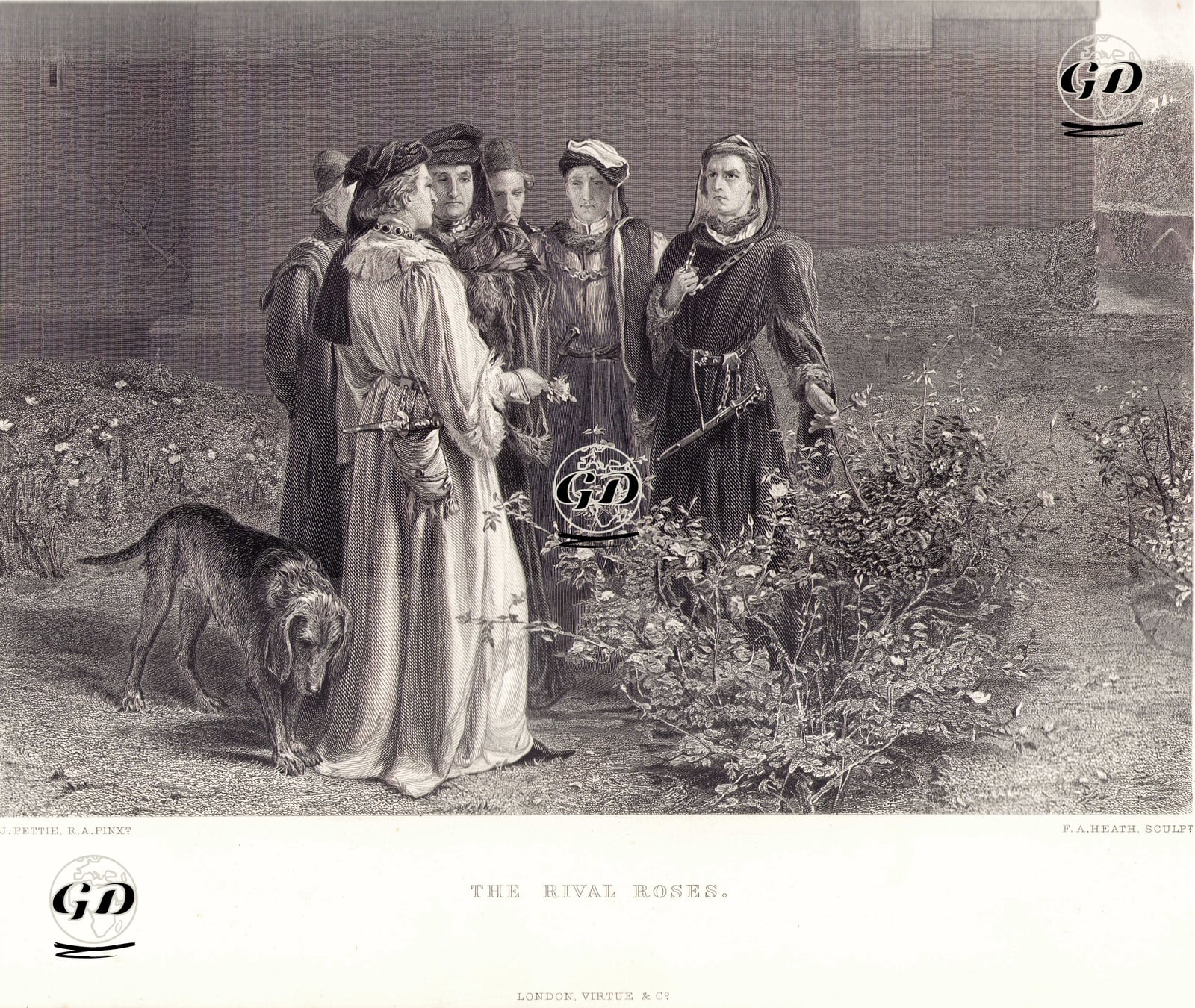
"King Henry VI" (Henry VI, Parts I–III) is one of William Shakespeare's historical plays, written in the early 1590s, and constitutes the first parts of a trilogy depicting the civil war known as the "Wars of the Roses." The plays portray the political intrigues, bloody conflicts, and power struggles between the houses of York and Lancaster for the English throne, which determine the fate of the country. Shakespeare portrays not only the course of historical events but also the devastating effects of dynastic strife on individuals and the disasters engendered by the lust for power. The scene depicted in the engraving as "The Rival Roses" is a reference to the Temple Garden scene in the first part of the play. Although historically fictional, this episode carries significant symbolic significance. The debate between the supporters of York and Lancaster escalates into a symbolic act in the garden, and the parties choose roses to represent themselves: Lancaster adopts the red rose, while York adopts the white rose. This seemingly simple choice is considered the symbolic beginning of the Wars of the Roses (1455-1487), which would ravage England for nearly thirty years. In the engraving, Richard Plantagenet (York) and the Earl of Somerset (Lancaster) are seen in the foreground, reaching their hands among the roses and plucking flowers of various colors. Somerset holds the red rose, Plantagenet the white. Behind them, other nobles silently observe the debate, while the dog depicted on the left, depicted with a pensive and calm demeanor, contrasts with the tension of the scene and enhances the dramatic irony. The figures' heavy clothing evokes Tudor aesthetics, and the artist emphasizes the symbolic power of the act of plucking the roses rather than the verbal argument itself. Thus, the composition conveys to the viewer the scene dramatized in Shakespeare's text as a "symbolic beginning," and the origins of the Wars of the Roses are here portrayed through the symbolic choice of flowers.