GRAVÜR DÜNYASI
Digital Engraving Library
| Artist | William Frederick Yeames (1835-1918) |
| Engraver | William Greatbach (1802-1885) |
| Date | 1876 |
| Technique | Steel Engraving |
| Category | William Shakespeare And His Works |
| Source | The Art Journal (London, Virtue & Co. Limited) |
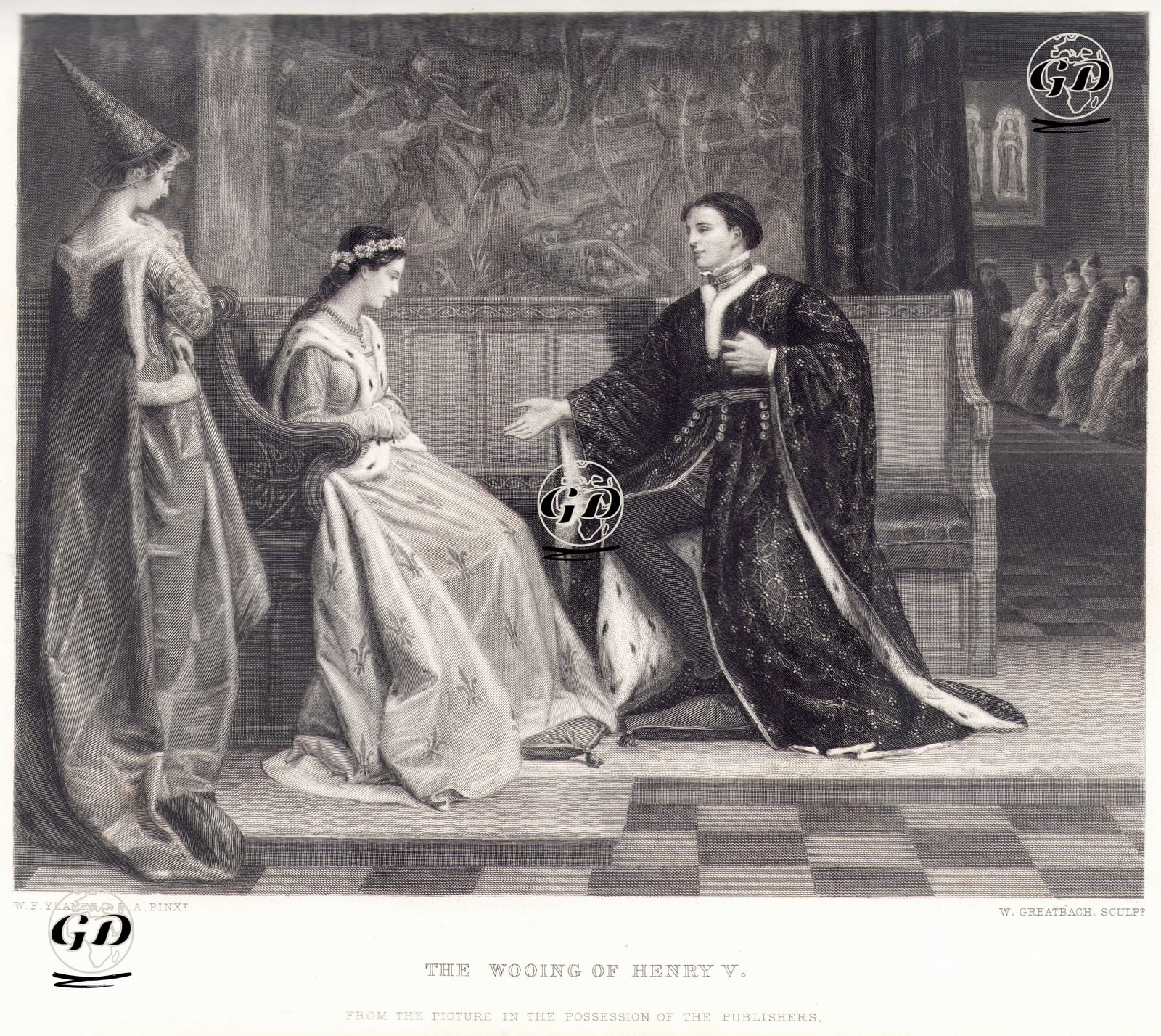
William Shakespeare's "The Life of King Henry V" is a history play, first performed in 1599, that glorifies English nationalism, heroism, and the king's leadership qualities, particularly through the Battle of Agincourt (1415). The play is the final installment of Shakespeare's four-part Lancaster history series and reveals how Prince Hal, known for his youthful irresponsibility in the previous plays (Henry IV Parts 1 and 2), matures into a statesman and "hero king." While exploring themes of political strategy, the brutality of war, and national identity, the play also reveals human frailties and emotions on a personal level. In this context, the scene depicted in the woodcut is the scene in the fifth act of the play where Henry V proposes to Princess Katherine, daughter of King Charles VI of France, during the post-war peace negotiations. Historically, this marriage secured a temporary peace between England and France. However, Shakespeare elevates this diplomatic agreement to a humorous and human dimension on stage. The linguistic differences between Katherine, who speaks little English, and Henry, whose French is limited, add a comic touch. Unlike his battlefield resolve, Henry here plays a timid yet persistent lover. In the engraving, Henry V is depicted on the right, dressed in sumptuous attire, solemnly and courteously courting Princess Katherine. His open gesture of extending his hand symbolizes both a diplomatic alliance and his personal feelings. Princess Katherine, with her head slightly bowed and her hands clasped in her lap, represents humility and timidity. Next to her, her lady-in-waiting, Alice, wearing a long headdress and a dress in the French court fashion of the time, is a witness on stage and also the mediator in the play's language difficulties between Henry and Katherine. The tapestry in the background depicts battle scenes, reminding us that this romantic moment was, in fact, shaped in the shadow of war. On the right, members of the French court are depicted in a blurred manner, reinforcing the scene's historical context. The figures' facial expressions, the details of their clothing, and the decorative elements of the setting present the scene as both a historical event and a theatrical moment.