GRAVÜR DÜNYASI
Digital Engraving Library
| Artist | Edward Gibbon (1737-1794) |
| Engraver | Thomas Kitchin (1718-1784) |
| Date | 1781 |
| Technique | Copper Engraving |
| Category | Maps |
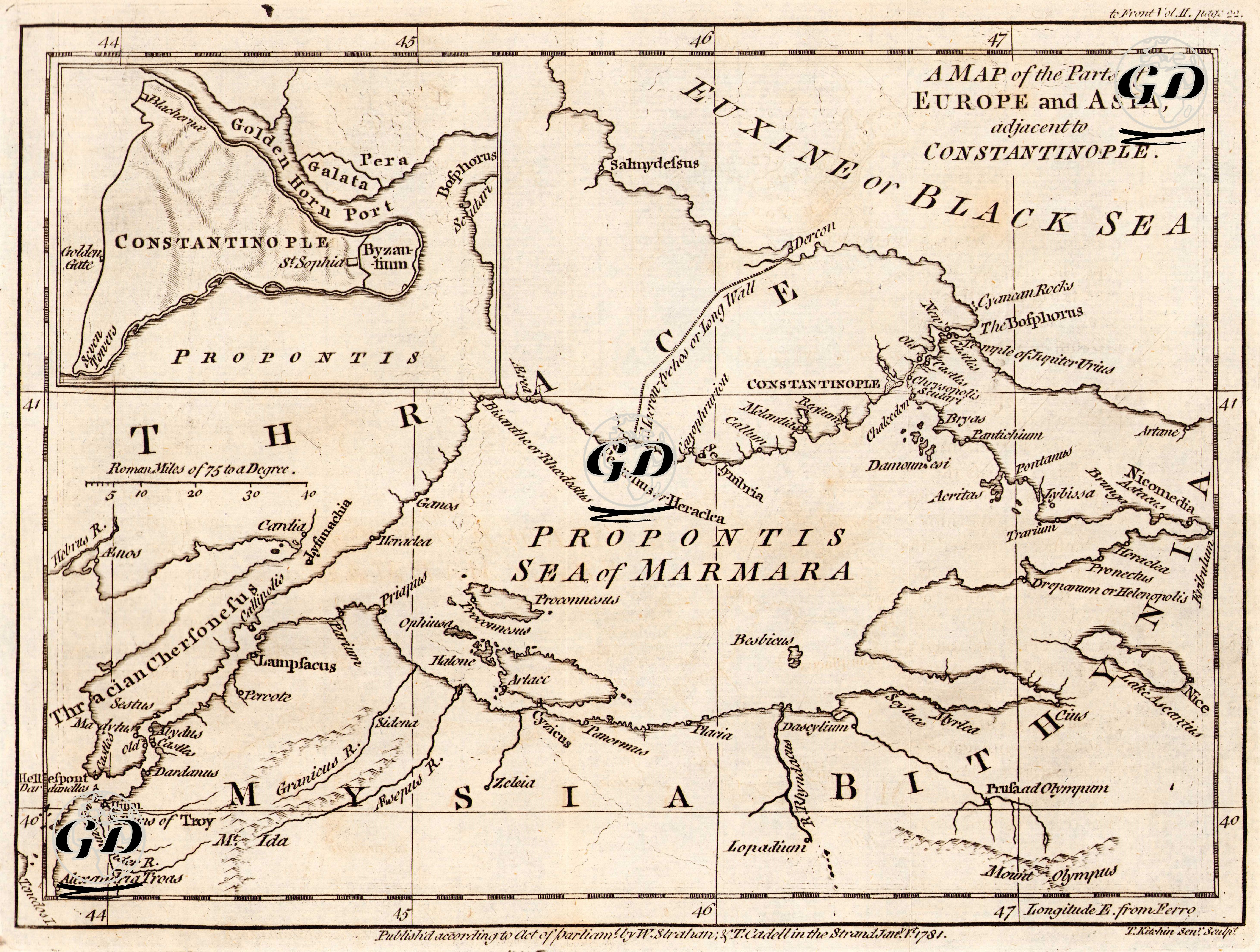
| Source | The History of the Decline and Fall of the Roman Empire Vol. II. By Edward Gibbon - Published According To Act Of Parliament By W.Strahan & T.Cadell In The Strand Jan.1 1781 |
The map shows Istanbul and its surroundings with their ancient names. It is a work prepared based on the sources belonging to the ancient geographers Strabon, Ptolemy and Byzantine periods. The map uses the ancient names Thrace for the European side (Thrace), Mysia and Bithynia for the Asian side (Western Anatolia and the Marmara coast), Propontis for the Sea of Marmara and Euxine for the Black Sea. In addition, Chalcedon for Kadıköy, Scutari and Chrysopolis for Üsküdar, Nicomedia for İzmit, Dardanelles and Hellespont for the Dardanelles, Sestos / Abydos for the Gelibolu location, Nicea for İznik, Prusa for Bursa, Ilium for Troy, Lampsacus for Lapseki and Cyzicus around Erdek. Sacred/mythological mountains such as Mount Athos, Mount Ida and Mount Olympos are also shown on the map. The “Makron Teichos or Long Wall” on the map is the structure built by Emperor Anastasian I (491-518 AD), which was the western border defense line of the Byzantine Empire and is known as the Anastasius Walls in modern literature.These walls, built to prevent nomadic tribes (especially northern invaders such as Slavs, Avars, Gepids) from reaching Constantinople, start from the Marmara coast near Silivri and end near present-day Kilyos on the Black Sea coast. Approximately 56 km long (some sources say 45-65 km), 3-4 meters high and approximately 3 meters wide, these walls can be compared to long border walls such as Hadrian's Wall (England) or the Great Wall of China. Today, their remains can still be found in the forested areas west of Istanbul (e.g. Çatalca, Silivri).