GRAVÜR DÜNYASI
Digital Engraving Library
| Date | 1853 |
| Technique | Woodblock Engraving (Newspaper-Text on Reverse) |
| Category | Maps |
| Source | The İllustrated London News (December 03 1853-Page 479) |
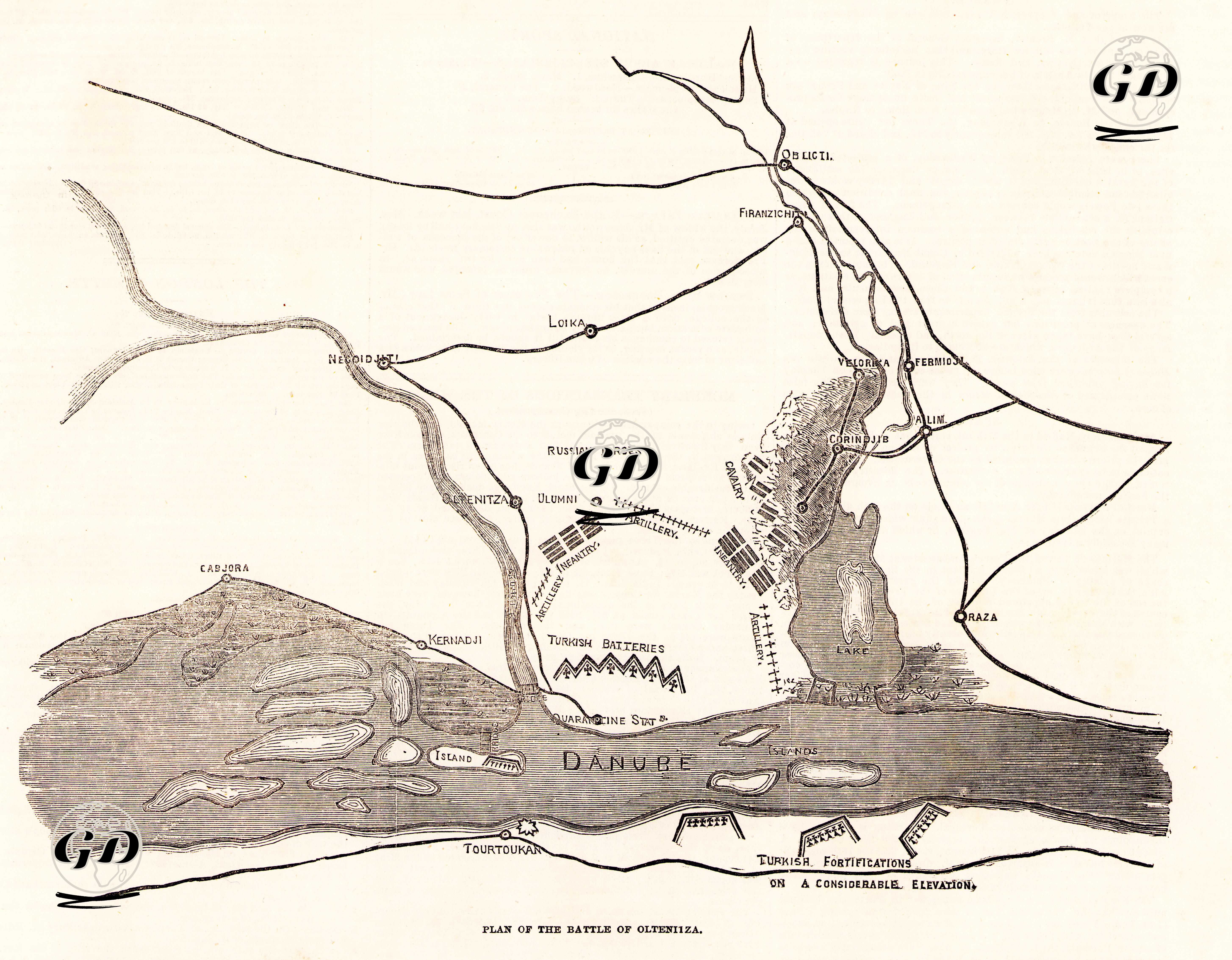
The Battle of Oltenitza (November 4, 1853) was one of the first major clashes between Ottoman and Russian forces on the Danube Front of the Crimean War. This map and accompanying news text, published in The Illustrated London News on December 3, 1853, visualizes in detail the Battle of Oltenitza on the banks of the Danube River. The map clearly shows the positions of Turkish and Russian troops, artillery batteries, forts and strategic crossing points on the Danube River, allowing an understanding of the tactical nature of the battle. The map clearly shows Ottoman positions to the south of the river, and Russian troops to the north. In addition, the placement of Ottoman artillery, the drawing of the fortress walls and the defensive function of the river islands are visualized. The newspaper report on the battle is based on the report submitted by Ömer Pasha to the Turkish government. The Ottoman army, under the command of Marshal Ömer Pasha, fortified the island opposite Turtukai (Tourtoukan), which has great strategic importance, throughout the night and reinforced it with 1,000 soldiers, artillery batteries and ammunition. Russian forces entered the village of Oltenitza on November 3rd and took up positions, and launched an attack on the morning of November 4th with 20 infantry battalions, 3 cavalry divisions and artillery. Although the Russians launched a major attack, especially on the right wing, they suffered heavy losses from the Ottoman artillery. The defense line led by Ömer Pasha resisted calmly and disciplined; the Russians' order was broken and their troops were forced to retreat. At the end of the battle, approximately 1,000 Russian soldiers were killed or wounded. It was reported that General Gortschakoff's son was among those killed. The success of the Ottoman artillery in the battle was admired by European military observers, especially the Prussians. The victory was personally celebrated by Sultan Abdülmecid, who sent medals to Ömer Pasha and promotions and awards to the commanders. This conflict enabled the Ottoman army to make a strong start to the Crimean War. This map is considered an important visual source that documents not only military movements but also the decisive effect of geography on the war. Especially the successful strategy of Ömer Pasha, the capture of the islands, the provision of the river crossing and the victory of the Ottoman army in this first battle with its strong defensive order were revealed in detail both on the map and in the news.