GRAVÜR DÜNYASI
Digital Engraving Library
| Artist | John Rapkin(1815-1876) |
| Engraver | John Rapkin (1815-1876) |
| Date | 1860 |
| Technique | Steel Engraving |
| Category | Maps |
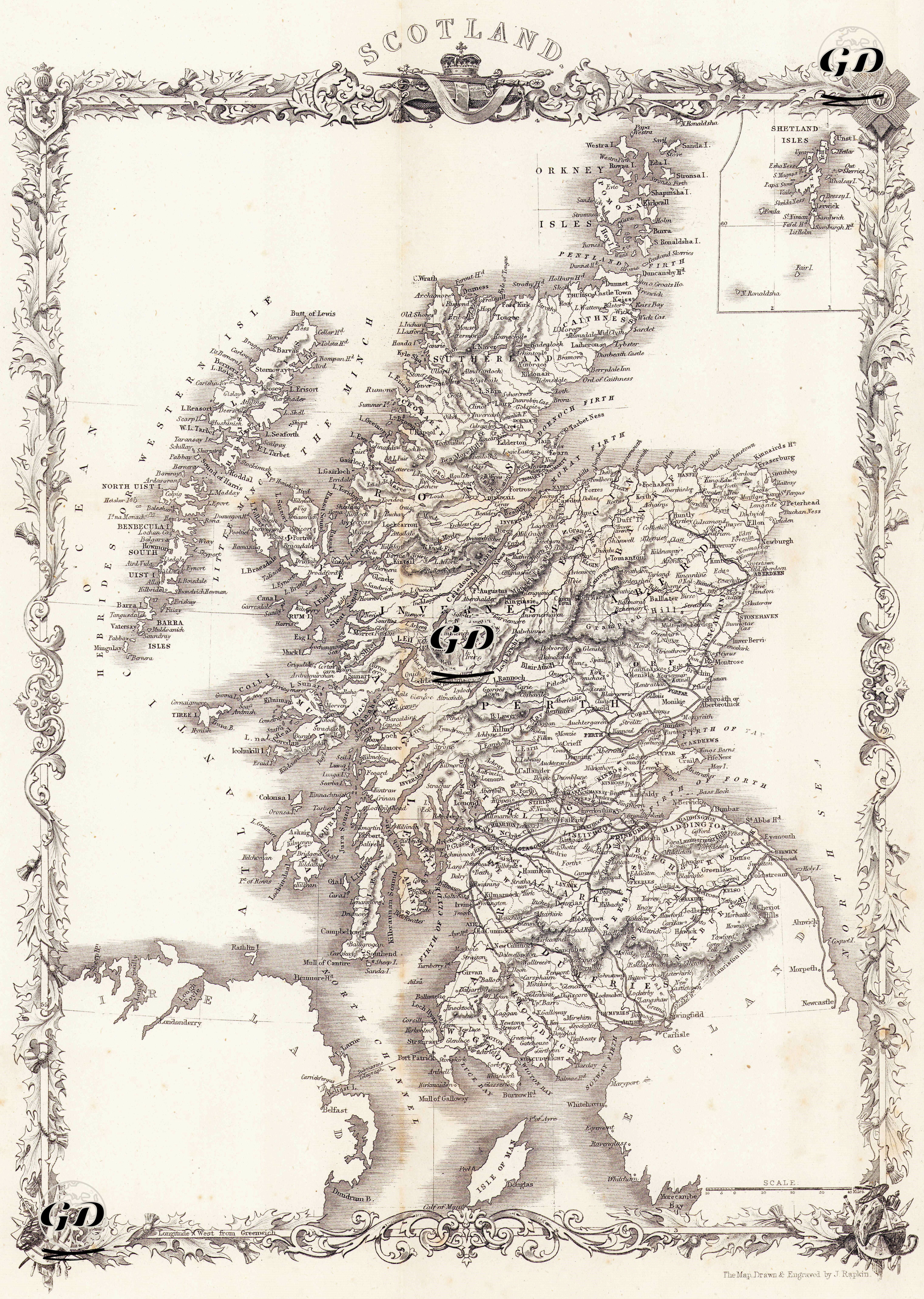
This map dated 1860 presents Scotland's physical geography, transportation network, major cities, and islands as a whole. 1860 was a period in the midst of Scotland's transformation following the Industrial Revolution. The detailed depiction of railways and roads on the map documents the development of Scotland's transportation infrastructure during this period. The density and orientation of railway lines during this period indicate a reshaping of Scotland's economic map. For example, the railway network extending from Edinburgh to Glasgow and then westward connected trade routes to seaports. The emphasis on cities such as Glasgow, Edinburgh, Aberdeen, and Dundee as central hubs is directly related to their economic and social importance in the mid-19th century. The ornamental frame surrounding the map is filled with cartographic design elements reflecting the 19th-century Victorian aesthetic. Military, industrial, and maritime symbols in the corners symbolize Scotland's diverse contributions and historical roles within the British Empire. The Shetland Islands are also shown in detail on the small inset map in the upper right corner. The map also provides a detailed view of Scotland's physical and settlement structure. Scotland's three main regions, running north to south—the Highlands (mountainous north), the Central Belt (central belt), and the Lowlands (southern lowlands)—are clearly depicted on the map. Fjords, lochs, coastal inlets, mountain ranges, and rivers are carefully delineated and supported by place names. Scotland's major freshwater resources, such as Loch Ness, Loch Lomond, and Loch Tay, are clearly marked on the map. The Western Isles, Orkney, and Shetland archipelagos are shown in their entirety, with settlements marked. The map also reflects the relationship of the islands and coastal areas to the sea, reflecting Scotland's maritime culture.