GRAVÜR DÜNYASI
Digital Engraving Library
| Artist | Franz Matsch (1861-1942) |
| Engraver | Wilhelm Woernle (1849-1916) |
| Date | 1894 |
| Technique | Photogravure |
| Category | Theatre,Opera And Ballet |
| Source | Die Theater Wiens; Das K.K. Hofburgtheater seit seiner Begründung, von Oskar Teuber und Alexander von Weilen - Gesellschaft für vervielfaaltigende Kunst, Wien |
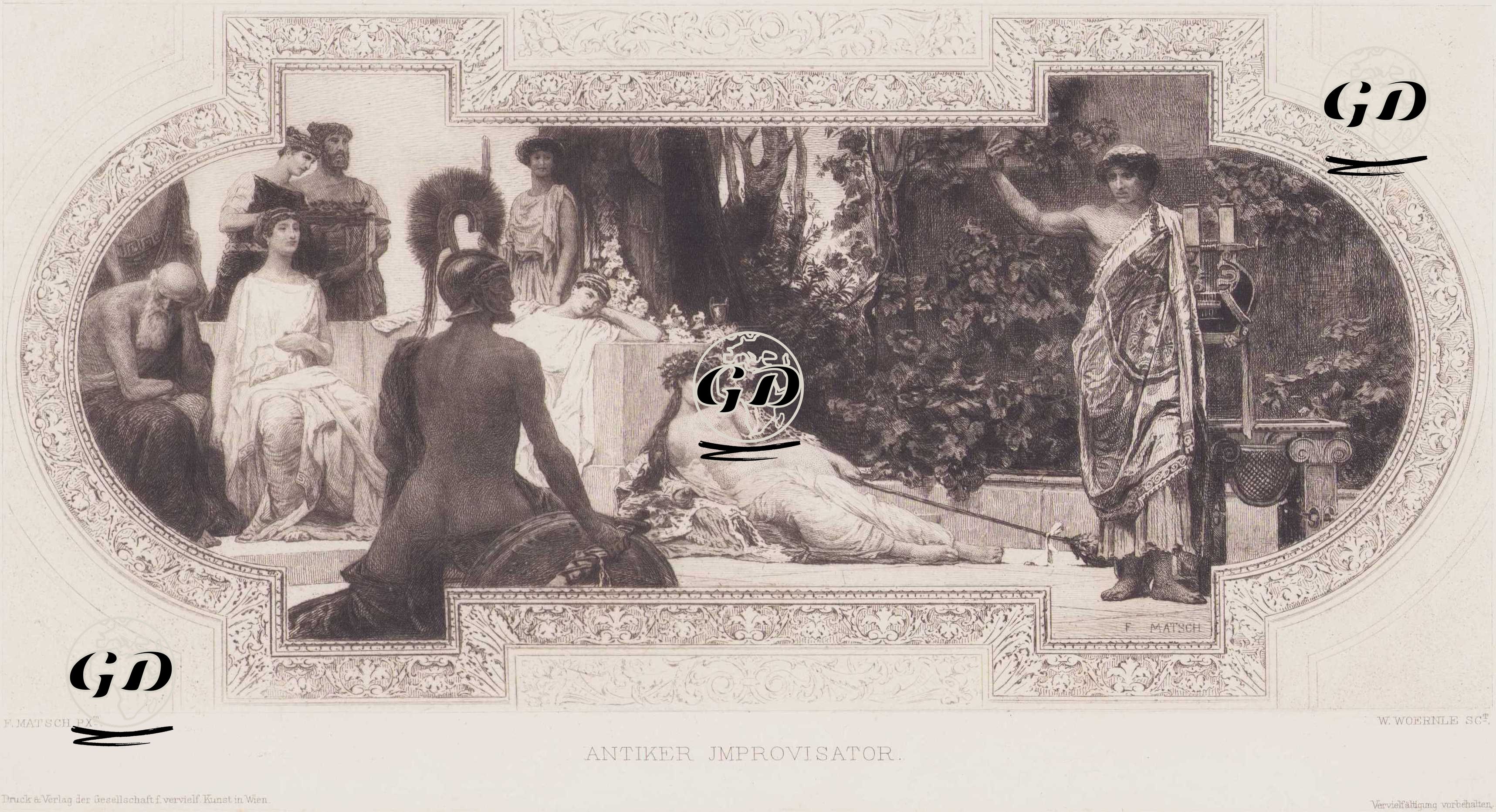
Published in 1894 in "Die Theater Wiens," a documenting of Viennese performing arts, this engraving was designed by Franz Matsch and engraved by Wilhelm Woernle. The engraving is based on the composition "Ancient Ex-Tempore Actor" (German: Antiker Improvisator), a mural by the Austrian painter Franz Matsch located on the Landtmann side of the State Staircase (Staatstreppe, Landtmannseite) in the Vienna Burgtheater. The central figure in this engraving, which recreates an iconic moment of historical theater with magnificent aesthetics, is an ancient improvisational actor standing alone on stage. This figure likely represents early tragedians like Phrynichos or a moment in which Homeric rhapsodes recited heroic epics. The ceremonial costume he wears bears a resemblance to the theatrical garments typical of Dionysian festivals. In this respect, it reflects both the sacred origins of the narrative and the earliest forms of tragic art. The lyre (kithara) at the narrator's side emphasizes the performance's musical as well as verbal content. The dense vegetation on the stage right suggests that the narrative takes place against a pastoral or mythological backdrop. The audience on the left represents different social segments of the period. The nude warrior in the foreground, in particular, with his helmet and stance reminiscent of vase paintings, is an important figure that both appeals to visual memory and alludes to the theme of heroism. The reclining, wreathed, semi-nude woman figure in the immediate center adds an erotic and mythological dimension to the narrative, symbolizing Dionysus's connection to pleasure, poetry, and theater. The audience's gestures and facial expressions reflect their intense emotional responses to the narrative. An old man bows his head in sorrow, while other figures represent attention and admiration. This scene reveals not only the artist's performance but also the story's connections to the stage, the audience, and society. The composition's framing with architectural borders presents the scene like a temple frieze, emphasizing the sacred and timeless nature of classical art. Originally a mural in the Burgtheater, this scene reflects the admiration for classical idealism in 19th-century Austria, while also extolling the influence of ancient theater, born of oral tradition, and its cultural role in society with a romantic nostalgia.