GRAVÜR DÜNYASI
Digital Engraving Library
| Date | 1855 |
| Technique | Woodblock Engraving (Newspaper-Text on Reverse) |
| Category | Ottoman Empire And Turkey |
| Source | The İllustrated London News (October 20 1855-Page 472) |
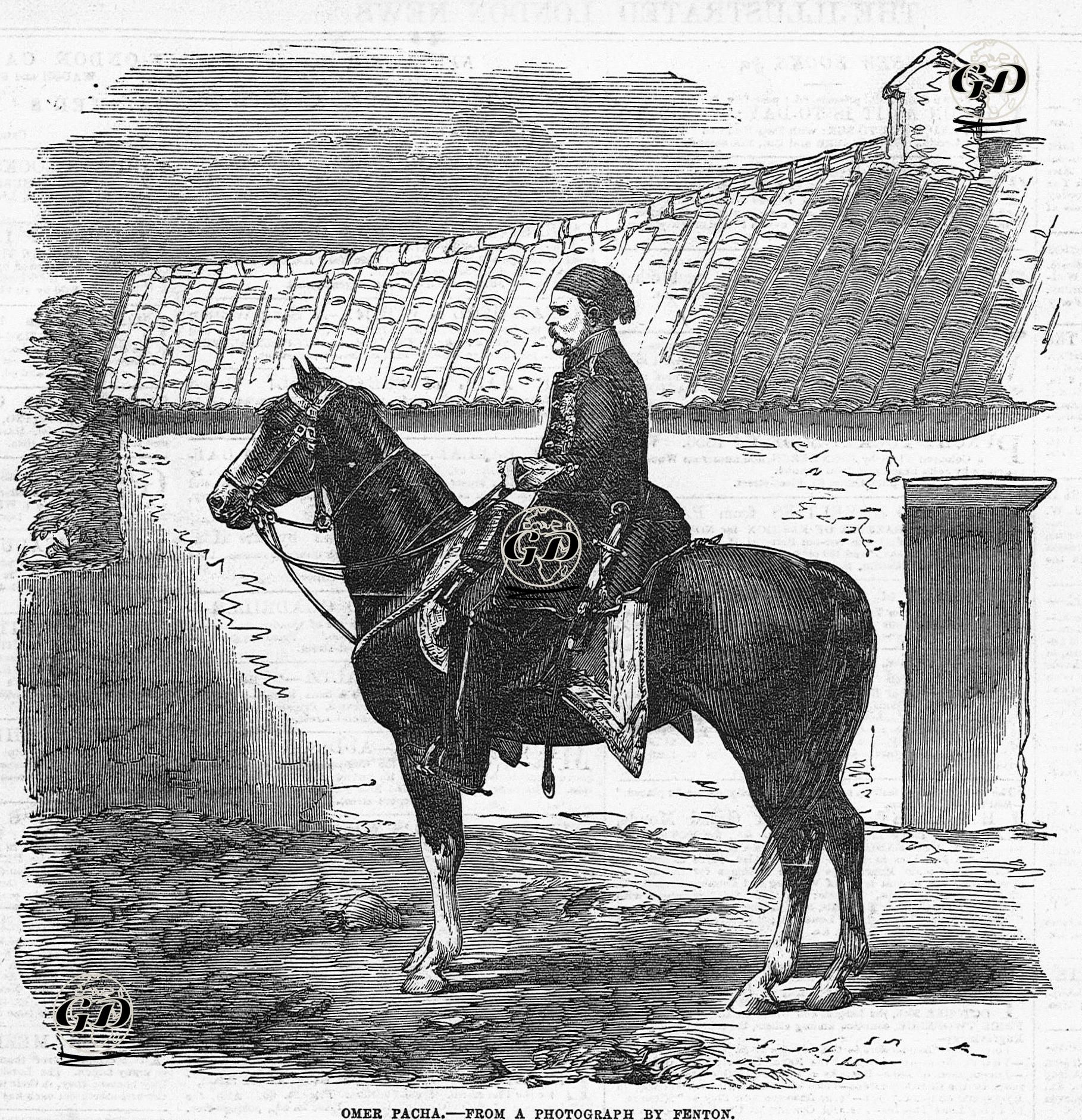
Ömer Lütfi Pasha (1806-1871) served as the Commander-in-Chief of the Turkish Army during the Crimean War (1853-1856). Standing out with his military intelligence, the importance he gave to discipline, his European understanding of education and his experience in frontline management, the Pasha achieved significant successes, especially on the Balkan front of the war, and was influential in the modernization process of the Ottoman army. When the war began, he was appointed as the general commander of the Ottoman Land Forces. His primary duty was to stop the Russian advance along the Danube River line. He successfully defended critical positions on the current Bulgaria-Romania border, especially Vidin, Kalafat and Oltenitsa, against the Russians. He played critical roles not only on the battlefield but also in internal security issues such as the suppression of rebellions in the Balkans. By the end of the war, he had risen to the rank of Grand Vizier (1861-1863). In addition to his military successes, he also held civilian positions, but he was not as effective in politics as he was in the military. He died in 1871 and was buried in Istanbul. In the articles and images published in the European press, he was portrayed as a modern and European Ottoman commander, a figure whose military genius and discipline rivaled Western generals. This engraving is based on an original photograph taken during the Crimean War around 1855 by British war photographer Roger Fenton. Fenton was one of the first official photographers of war history and documented many important scenes, including the Siege of Sevastopol, the Camps, and portraits of the Commandant, and presented them to the Western public.