GRAVÜR DÜNYASI
Digital Engraving Library
| Artist | Francis Danby (1793-1861) |
| Engraver | James Tibbitts Wilmore (1800-1863) |
| Date | 1857 |
| Technique | Steel Engraving |
| Category | Ottoman Empire And Turkey |
| Source | The Art Journal |
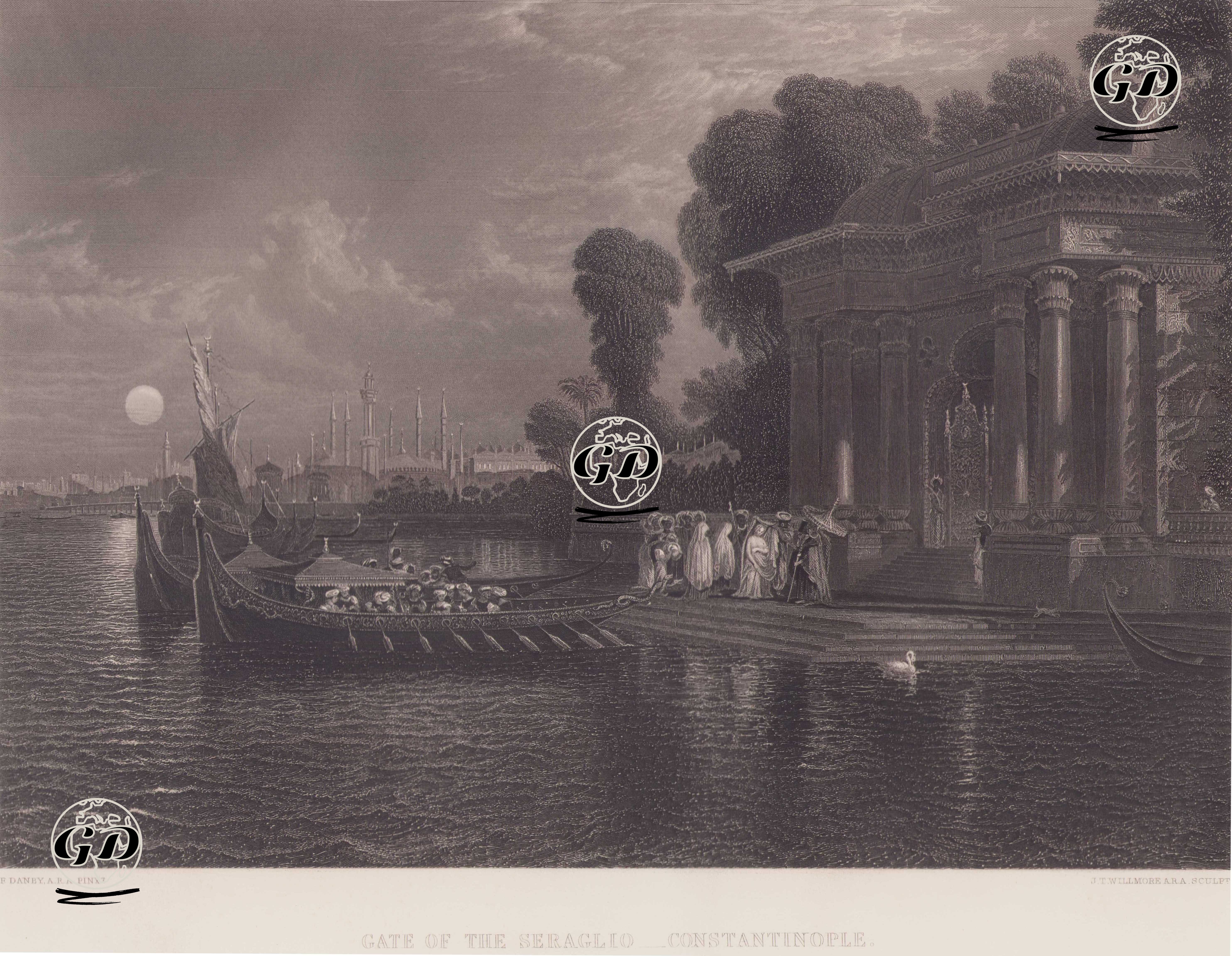
The engraving titled “Sarayburnu Gate” was designed by the British artist Francis Danby and processed using the steel engraving technique of James Tibbitts Willmore. This engraving was first seen at a British Institution exhibition in 1845 and was subsequently included in the Osborne Collection by Queen Victoria. The fact that Danby did not directly visit Ottoman territory suggests that this scene is based on an imaginary depiction of the East rather than on geographical accuracy. This is a characteristic example of the Orientalist aesthetic prevalent in 19th-century Europe. In the foreground of the engraving is the magnificent sea-facing gate and pier of Topkapı Palace, one of the most magnificent structures in the Ottoman capital. Embellished with ornamentation reminiscent of the classical Ottoman Baroque style, this entrance gate represents the grandeur of Ottoman palace architecture as an element of "exotic" enchantment to Western viewers. In the engraving, the waters of the Bosphorus shimmer under the light of the sunset and the rising full moon, while the figures on the shore symbolize both the Ottoman elite and the Western fascination with palace life. The silhouettes of long, thin boats, in particular, emphasize Istanbul's maritime culture. The silhouettes of mosques rising on the horizon (reminiscent of the Hagia Sophia or the Sultanahmet Mosque) present Istanbul's Islamic and Eastern identity as a dramatic backdrop for Western viewers. The engraving's use of chiaroscuro is striking. The simultaneous appearance of both sunset and full moonrise lends the scene a dramatic intensity. However, the overall atmosphere is dominated by darkness and shadows, lending the engraving both a mysterious and melancholic grandeur. Consequently, the "Sarayburnu Gate" engraving depicts the Ottoman capital through Western imagination rather than historical reality, and the East is presented as a mysterious "other world" that inspires awe through art.