GRAVÜR DÜNYASI
Digital Engraving Library
| Artist | David Wilkie (1785-1841) |
| Engraver | William Greatbach (1802-1885) |
| Date | 1850's |
| Technique | Steel Engraving |
| Category | Ottoman Empire And Turkey |
| Source | London, Virtue & Co. |
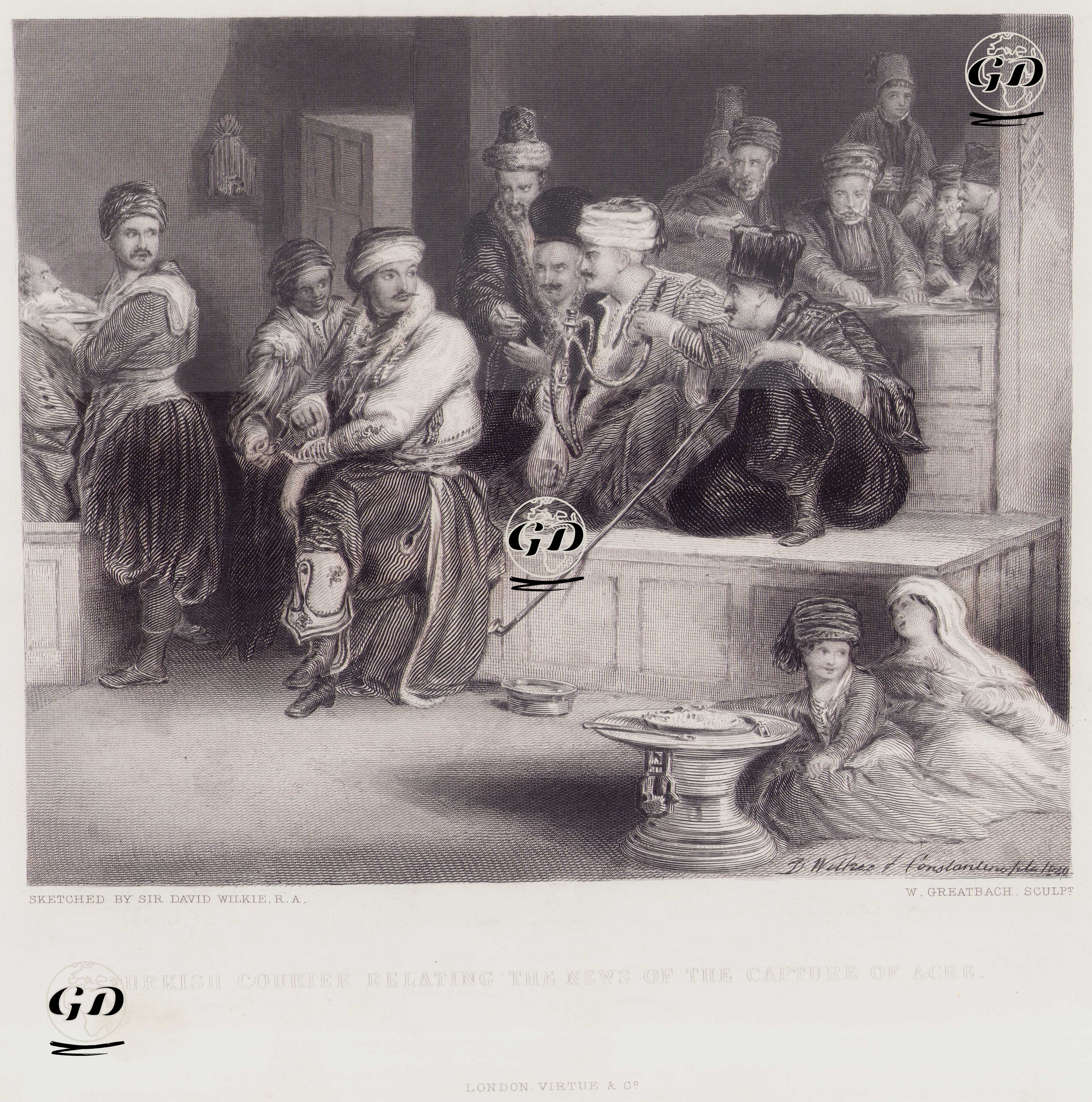
This engraving dramatizes the repercussions in Istanbul of the news of the "capture of Acre (St. Jean d'Acre)" as a "news scene." The historical background of the engraving is the process shaped by the Egyptian-Ottoman tension in the Eastern Mediterranean in 1840 and the intervention of European powers, primarily Britain, in this crisis. The fall of the Egyptian fortress in Acre (November 3, 1840) was seen as a strategic victory for the Ottoman and British-led allied forces against the Egyptian forces, and therefore, the engraving emphasizes the public jubilation that the news caused in Istanbul. The Tatar messenger at the center of the composition is not only a narrator figure but also a symbolic focal point representing the circulation of information across the imperial geography and how news of war and diplomacy spread into daily life. The scene's coffeehouse-like interior setting, with men gathered on divans, long tobacco pipes, serving dishes, and everyday objects, places the historical weight of the event within an "ordinary moment," and the engraving invites the viewer to read the collective emotion generated by the news. The composition also emphasizes Istanbul's cosmopolitan fabric through the variety of clothing and accessories. Different types of turbans and head coverings, layered caftans, fur-trimmed outer garments, and belted silhouettes indicate both status and cultural belonging.