GRAVÜR DÜNYASI
Digital Engraving Library
| Artist | Sebastian Munster (1489-1552) |
| Engraver | Georg Scharffenberg (1530-1607) |
| Date | 1552-1575 |
| Technique | Wood Engraving |
| Category | Ottoman Empire And Turkey |
| Source | La cosmographie universelle de tout le monde : en laquelle, suivant les auteurs plus dignes de foy, font au vray descriptes toutes les parties habitables, et non habitables de la terre, et de la mer, leurs ssiettes et choses qu'elles produisent, puis la description et peincture topographique des regions, la difference de l'air de chacun pays, d'où advient la diversité tant de la complexion des hommes que des figures des bestes brutes...., by Sebastian Münster (French Version) |
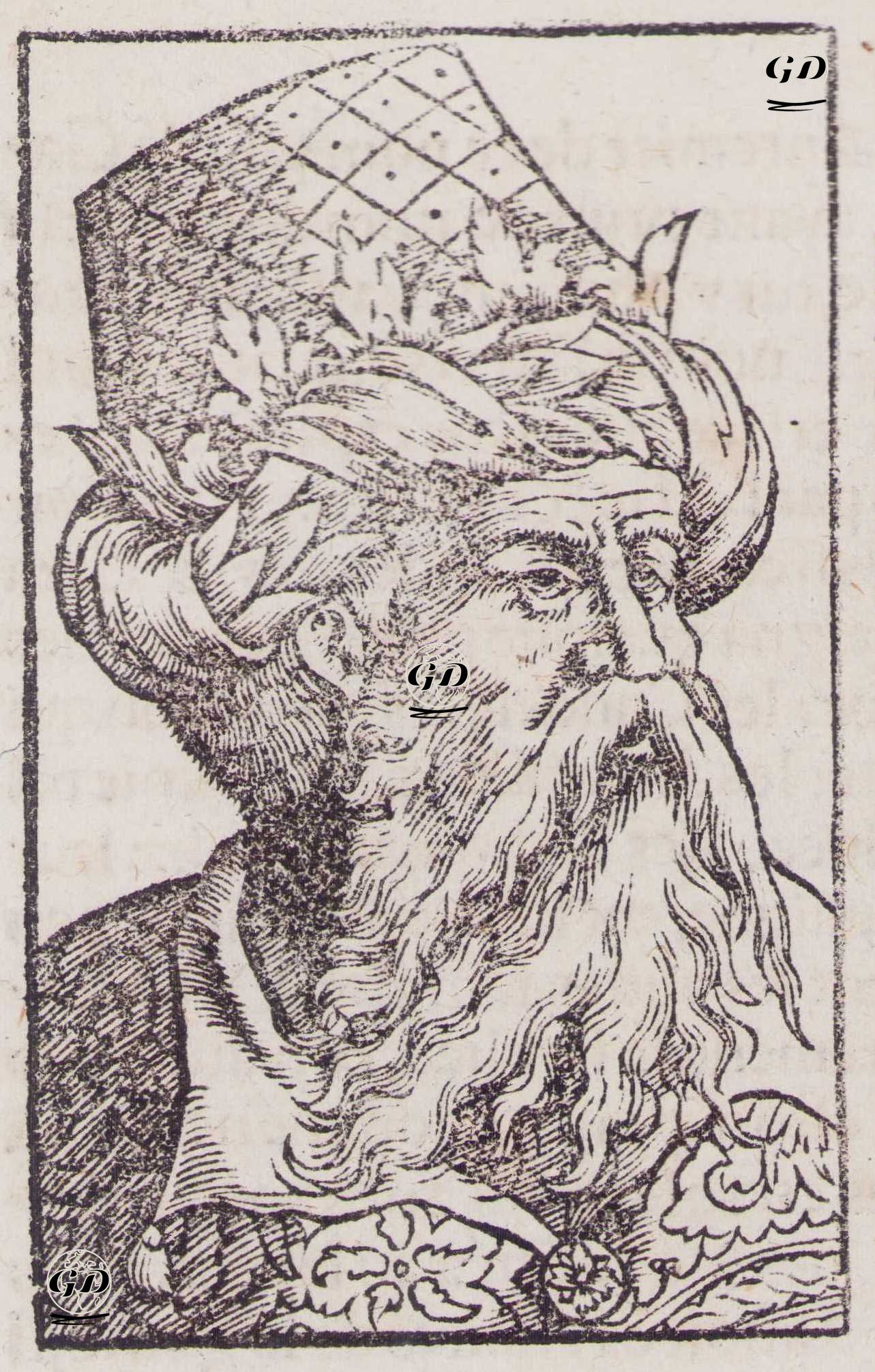
This French woodcut engraving is one of the early modern European representations of Orhan Bey (Orhan Gazi), the second ruler of the Ottoman State. Such ruler portraits, which became widespread in Europe throughout the sixteenth century, reflect not so much a lack of knowledge about the actual appearance of Ottoman sultans as the tendency of European artists and authors of historical works to construct the Ottoman world as the “Other.” For this reason, the facial features, beard styles, types of headgear, and costume details depicted in these engravings are symbolic representations shaped by the Renaissance European image of the “Oriental ruler,” rather than historically accurate portrayals. When the engraving and the accompanying explanatory text are considered together, Orhan Gazi is portrayed as the second ruler of the Ottoman dynasty within the framework of his military competence, political pragmatism, and expansionist state ideology. The text particularly emphasizes that Orhan Gazi resembled his father, Osman Gazi, in ambition and courage, yet surpassed him in terms of military experience, organizational capacity, and the provision of arms and equipment. This narrative records, from a Western perspective, the transformation of the Ottoman beylik during Orhan’s reign from a local frontier power into a regional political actor. The expansion that began in Bithynia and its surroundings is associated with Orhan’s generosity, his mild style of governance, and his ability to maintain direct contact with the populace. These attributes constitute a typical reflection of the theme of “charismatic leadership” often ascribed to Ottoman rulers in early modern European texts. Orhan Gazi’s conquest of regions such as Mysia, Lycaonia, Phrygia, and Caria, and the extension of Ottoman influence to the Hellespont (the Dardanelles) and the shores of the Black Sea (Pontus Euxinus), are presented as clear indicators that the Ottomans had become a permanent power within the Byzantine geographical sphere. Particular emphasis is placed on the internal conflicts within the Byzantine world, which are described as having facilitated Ottoman expansion, and the capture of Bursa is conveyed as a symbolic turning point in this process. One of the most striking aspects of the text is the explicit reference to Orhan Gazi’s involvement in Byzantine internal politics. Orhan’s support for Kantakouzenos in the power struggle between the Palaiologoi and the Kantakouzenoi, and his subsequent invitation to Europe for the first time, document—through the lens of Western sources—the diplomatic and military background of the Ottoman passage into Rumelia. This narrative foregrounds the idea that the Ottomans entered Europe not solely through military conquest, but also through political alliances and diplomacy. At the end of the text, it is stated that in the twenty-second year of his reign, Orhan Gazi transferred the administration of the state to his son Murad. However, the account also claims that Orhan lost his life during conflicts with the Tatars, a detail that does not fully correspond with historical reality. This discrepancy is significant, as it demonstrates that both the engraving and its accompanying text are grounded not in Ottoman historical chronicles but in Western cosmographic historiography, shaped by contemporary perceptions, limited information, and circulating rumors. The bold lines of the engraving, its pronounced hatching, and the frontal, dynamic pose that occupies nearly the entire pictorial field are characteristic features of Renaissance woodcut technique. This engraving was published in the book Cosmographia Universalis, written by Sebastian Münster, which was first issued in 1544. Over the years, the book underwent numerous editions and revisions, becoming one of the most important geographical and historical works of the sixteenth century. Containing rich information on geography, cartography, natural history, and anthropology, the book served for centuries as a widely consulted reference source for scholars, explorers, and cartographers. The French editions of this work were published in 1552, 1556, 1560, 1565, 1568, and 1575.