GRAVÜR DÜNYASI
Digital Engraving Library
| Artist | Sebastian Munster (1489-1552) |
| Engraver | Georg Scharffenberg (1530-1607) |
| Date | 1552-1575 |
| Technique | Wood Engraving |
| Category | Ottoman Empire And Turkey |
| Source | La cosmographie universelle de tout le monde : en laquelle, suivant les auteurs plus dignes de foy, font au vray descriptes toutes les parties habitables, et non habitables de la terre, et de la mer, leurs ssiettes et choses qu'elles produisent, puis la description et peincture topographique des regions, la difference de l'air de chacun pays, d'où advient la diversité tant de la complexion des hommes que des figures des bestes brutes...., by Sebastian Münster (French Version) |
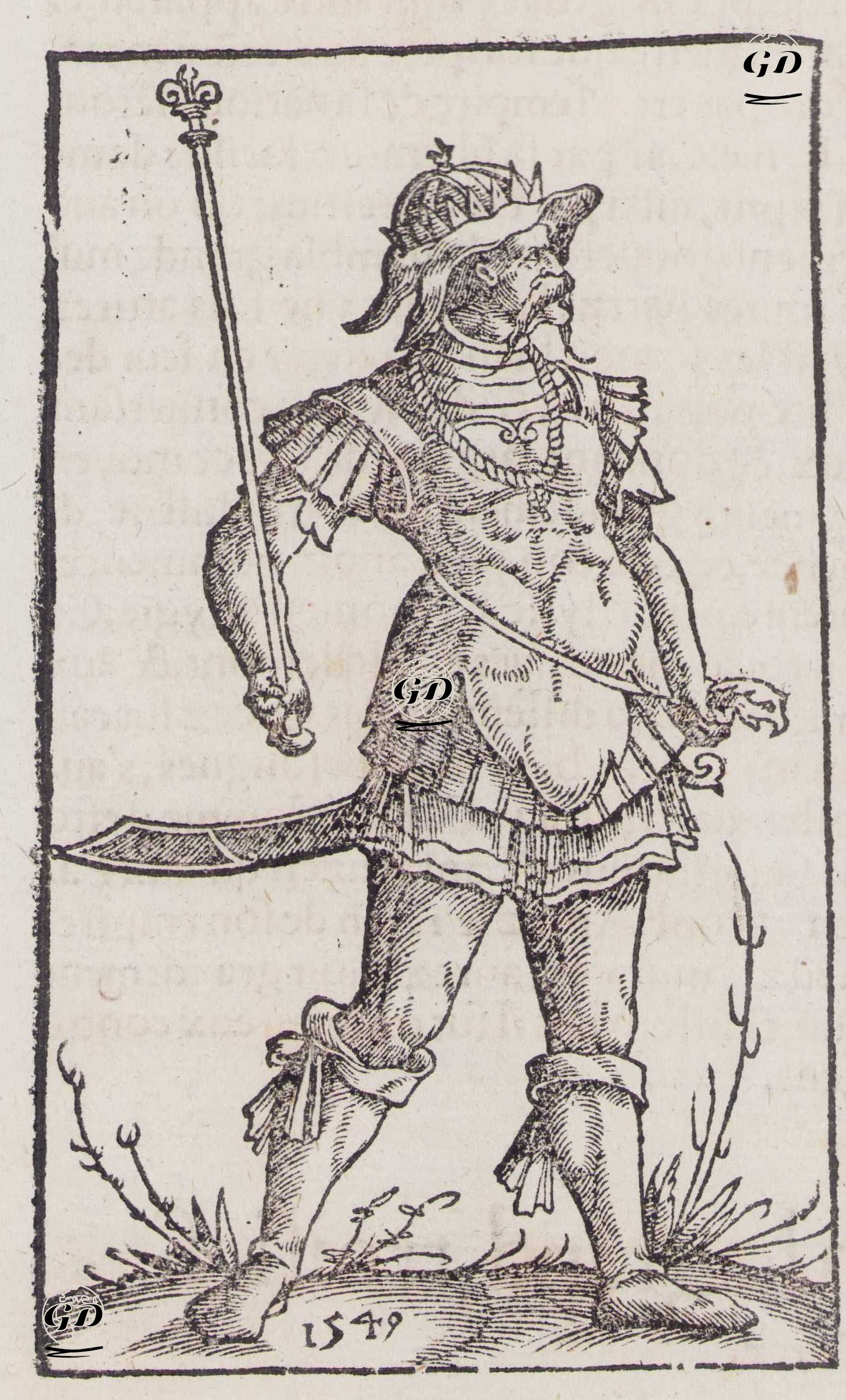
This French woodcut engraving is one of the iconographic representations of Osman Gazi, the founder of the Ottoman Empire, produced in 16th-century European history books. The figure depicted in the engraving bears no visual resemblance to Osman Gazi's historical persona; instead, it is constructed as a fantastical and Eurocentric "founding ruler" type reflecting the early modern European perception of the Ottomans. Osman Gazi is shown here with a muscular torso reminiscent of ancient Roman-German warriors, segmented armor, a short tunic, thigh armor, and a European-style helmet. These elements are entirely different from the actual court and military attire of Ottoman sultans. This demonstrates the artist's reconstruction of Osman within his own cultural framework. The text in the book containing the engraving is typical of the anti-Ottoman propaganda literature prevalent in the 16th century. The text is filled with conflicting accounts of Osman Gazi's origins (such as claims that he came from Galatia, joined forces with bandits and committed acts of violence, burned and destroyed cities, and conquered all of Asia Minor within 10 years), which are both historically inaccurate and exaggerated claims that fueled contemporary European fears. Such depictions are visual and textual reflections of the rising "Turkish threat" narrative in the West during a period when the Ottomans were rapidly gaining power in the Balkans and the Eastern Mediterranean. Therefore, the engraving documents the mental world, prejudices, and political anxieties of early modern Europe regarding the Ottomans, rather than offering historical information. The engraving's thick lines, distinct hatching textures, and frontal-dynamic stance that fills almost the entire area are typical of the German woodcut (Holzschnitt) technique of the Renaissance period. This engraving is from Sebastian Munster's book Cosmographia Universalis…, first published in 1544. The book has undergone numerous editions and revisions over the years, becoming one of the most important geographical and historical works of the 16th century. Containing rich information in the fields of geography, cartography, natural history, and anthropology, it has been widely used as a reference source by scientists, explorers, and cartographers for centuries. French versions of this book were published in 1552, 1556, 1560, 1565, 1568, and 1575.