GRAVÜR DÜNYASI
Digital Engraving Library
| Date | 1877 |
| Technique | Woodblock Engraving (Newspaper-Text on Reverse) |
| Category | Ottoman Empire And Turkey |
| Source | The Illustrated London News (March 17, 1877-Page 241) |
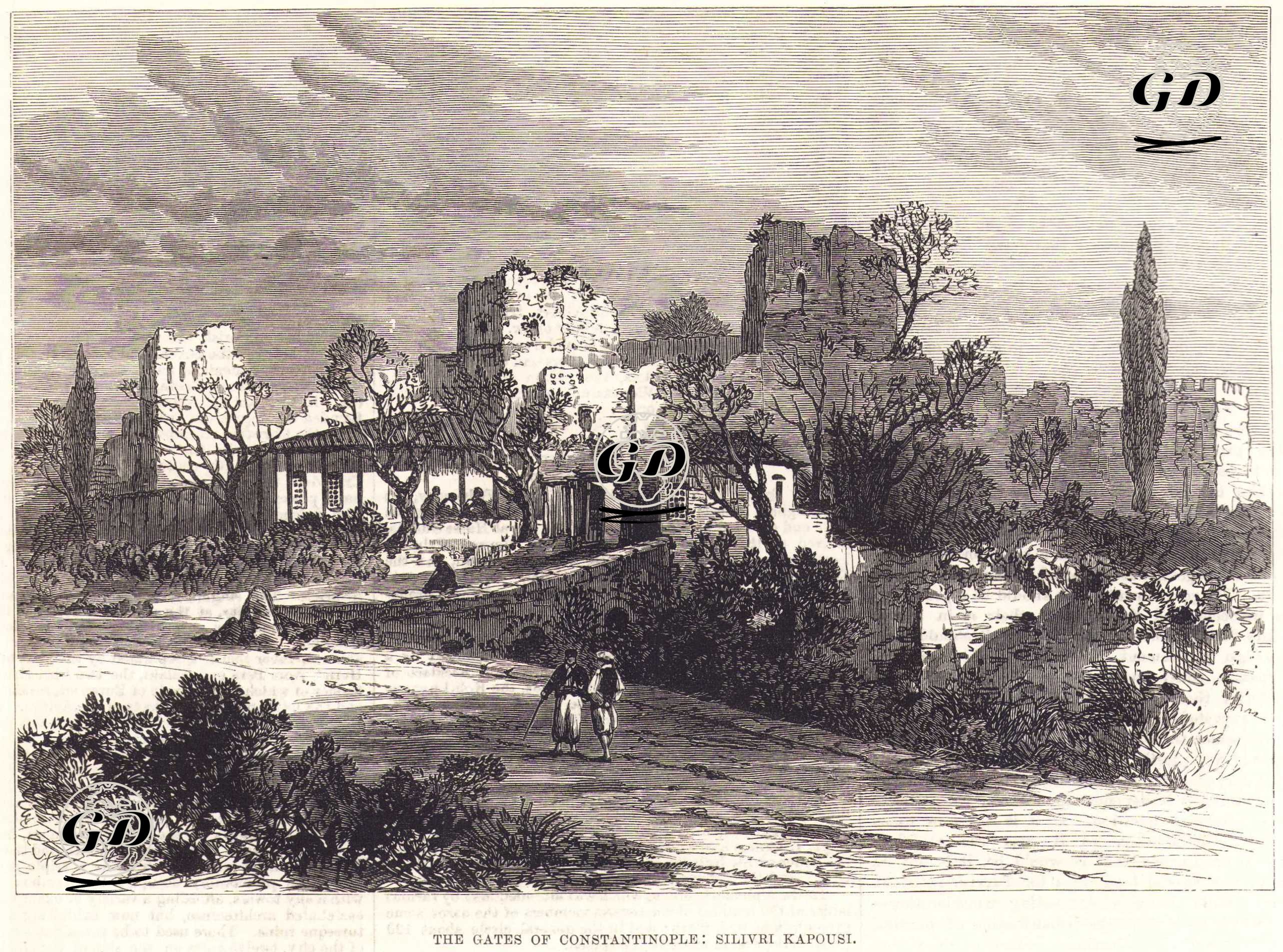
This engraving is based on an image from the March 17, 1877, issue of The Illustrated London News, depicting the Istanbul city wall gate known as the Selymbria Gate, now known as the Silivri Gate. As the article notes, this gate was one of the city's major gateways to the western province. The gate's historical name is directly linked to Silivri, a small town on the Marmara coast known in antiquity as Selymbria. Of particular note in the article is the historical significance of a structure located just outside the gate. This site is associated with Ali Pasha of Ioannina, an Albanian who was executed in 1822. The text states that Ali Pasha was described as a "traitor and tyrant" and that his residence for a time after his beheading was located near the Silivri Gate. Above the gate is an inscription dated 1585 and a relief depicting an Ottoman soldier wielding a mace. This mace symbolizes the ancient tradition of the athlete who won the competition hanging his weapon on the wall. The composition of the engraving presents the Silivri Gate as part of the western outer walls of the city, while also reflecting the tranquil character of the region, its rural landscape and life around the walls in the 19th century.