GRAVÜR DÜNYASI
Digital Engraving Library
| Date | 1877 |
| Technique | Woodblock Engraving (Newspaper-Text on Reverse) |
| Category | Ottoman Empire And Turkey |
| Source | The Illustrated London News, (February 17 1877-Page 149) |
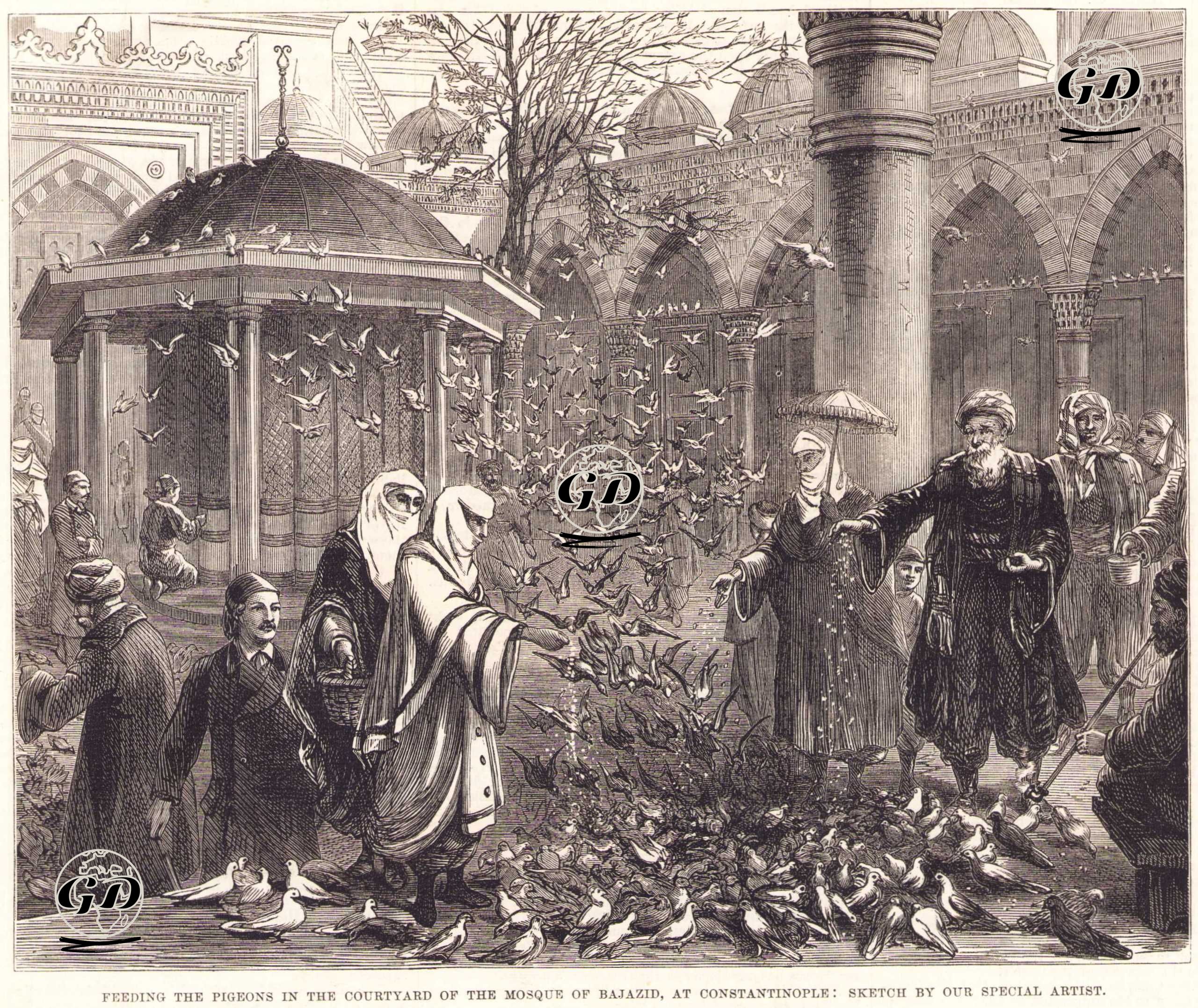
This engraving, published under the title "Feeding Pigeons in the Courtyard of the Beyazıt Mosque," reflects the sense of piety, compassion, and grace inherent in Ottoman society's daily life from a Western observer's perspective. The image depicts a group of Istanbul residents feeding pigeons with food they scattered on the ground in the spacious courtyard of the Beyazıt Mosque. In Ottoman tradition, feeding birds, especially pigeons, was considered a sign of both good deeds and compassion. This act was seen as an extension of the concept of charity, and compassion for all living things was believed to be a sign of human spiritual maturity. The details in the engraving are striking. The women, in their abayas and veils, and the men in kaftans and turbans, reflect the Istanbul dress code of the period. The fountain, elegant arches, and domes in the background lend a spiritual atmosphere to this simple yet meaningful act within the aesthetic order of Ottoman architecture. The newspaper article described this scene as "a commendable display of piety and a natural act of kindness." The article also emphasized that many devout Muslims participated in such behavior voluntarily. This perspective aimed to introduce Western readers to Ottoman society not only through politics and war, but also through its daily culture based on spiritual values.