GRAVÜR DÜNYASI
Digital Engraving Library
| Date | 1877 |
| Technique | Woodblock Engraving (Newspaper-Text on Reverse) |
| Category | Ottoman Empire And Turkey |
| Source | The Illustrated London News (January 27 1877–Page 77) |
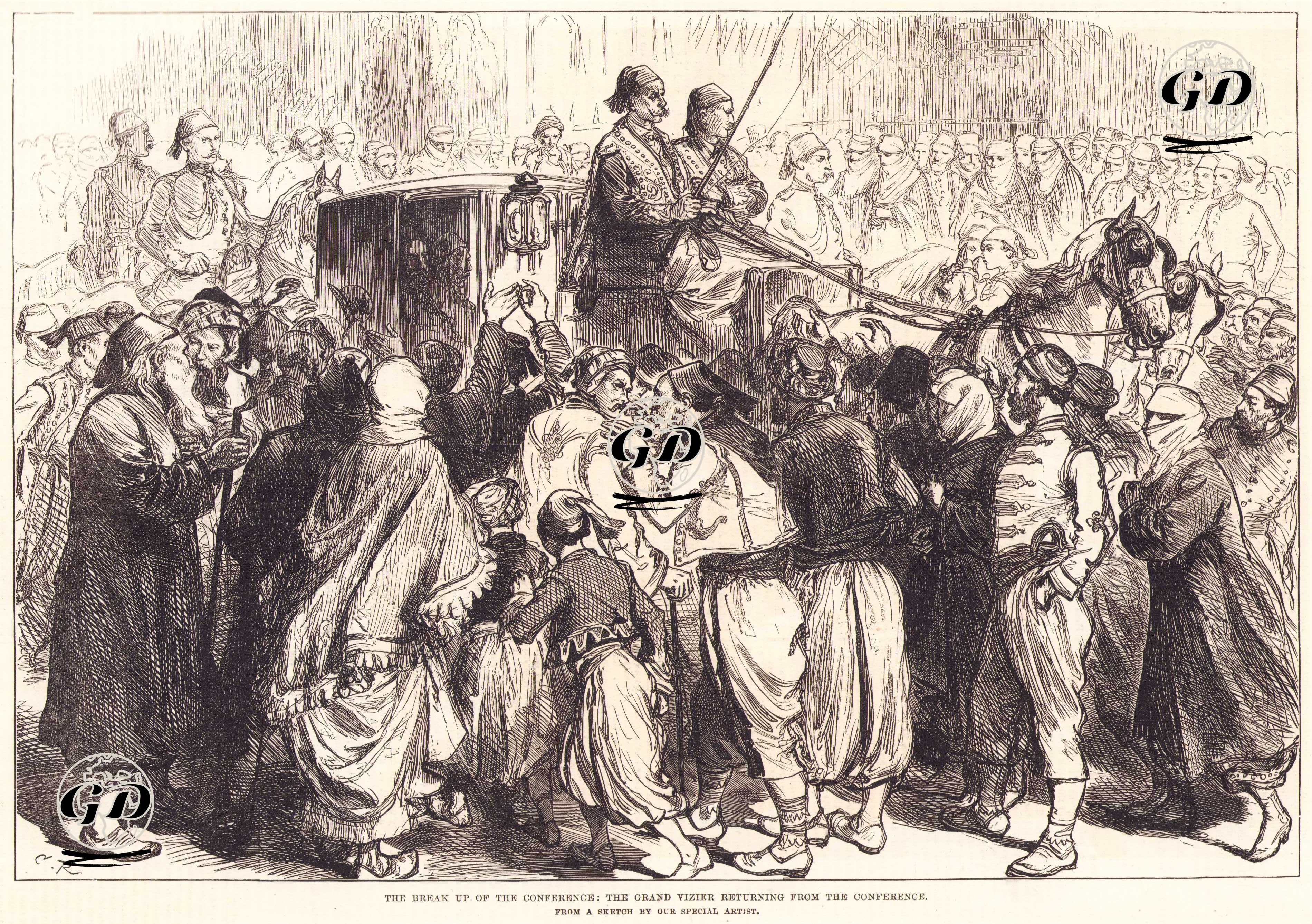
This engraving documents a dramatic moment at the Tersane (Istanbul) Conference, immediately following the Ottoman Empire's rejection of the demands of the European great powers. The engraving depicts Grand Vizier Midhat Pasha's carriage moving through a crowd of people. As the architect of the Kanun-ı Esasi (Code of Essentials), the Pasha's rejection of the interventionist proposals of European powers resonated strongly in the political atmosphere of the period. The artist conveyed this scene through the public's curious and anxious gazes, as well as the Pasha's dignified stance. The diverse attire of the crowd is striking. Fez-wearing soldiers, turbaned ulema, veiled women, and individuals from different ethnic backgrounds are all present in the same frame. This also reflects the multilayered structure and cultural diversity of 19th-century Ottoman society. The engraving's dense composition and dense use of figures impressively portray the public's curiosity, uncertainty, and resolve following the conference's collapse. Historically, this scene symbolizes the Ottoman Empire's diplomatic will to maintain independence from Western powers. Despite European pressure for reform, the Ottoman government demonstrated its resolve to implement internal reforms through a new constitution. The crowd surrounding Midhat Pasha's carriage reflects the spirit of this period: an atmosphere of transformation filled with both hope and anxiety.