GRAVÜR DÜNYASI
Digital Engraving Library
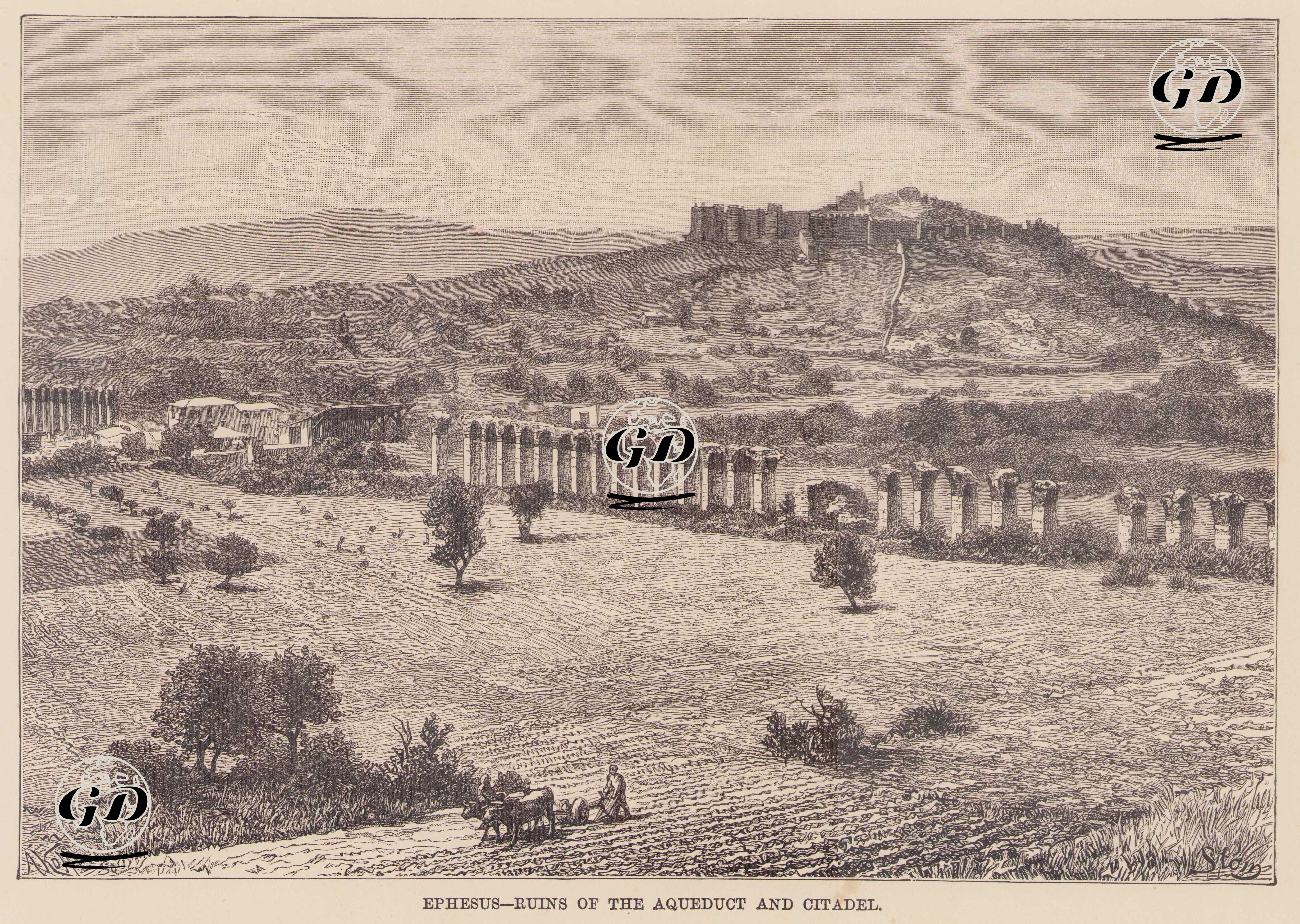
| Artist | Armand Kohl (1845-1923) |
| Engraver | Andre Slomszynski (Slom) (1844-1909) |
| Date | 1882 |
| Technique | Wood Engraving |
| Category | Ottoman Empire And Turkey |
| Source | The Universal Geography, the Earth and its inhabitants, by Elisee Reclus |
Ephesus Ancient City is located three kilometers southwest of Selçuk district of Izmir province. Ephesus Ancient City was established as a simple settlement in 8600 BC. It was transformed into a city by the Attic and Ionian Greek colonists in the 10th century BC. It was one of the twelve cities of Ionia in the classical Greek era. The city developed after it came under the control of the Roman Republic in 129 BC. During this period, Ephesus turned into one of the biggest metropolises of its age with a population of over 200,000. Ephesus Ancient City was added as a UNESCO World Heritage Site in 2015. Saint John (Saint John-Saint Jean) Church, one of the Seven Churches in Asia, is located in Ephesus. St.Paul (from Tarsus) tried very hard to spread Christianity in Ephesus and gave one of her famous sermons here. Ayasuluk Castle is located at the highest place of Ayasuluk Hill next to Ephesus. Ayasuluk Castle was built by the Byzantines in the 7th and 8th centuries AD in order to protect it from Arab attacks. Ayasuluk Castle was restored and used during the Selcuk and Ottoman periods. There is St.John's Church in the castle, which was built in the 5th century AD and known as the pilgrimage church. The Byzantine aqueducts depicted in the engraving were built to carry drinking water from the water sources in the Pranga area between Belevi and Selçuk to the Byzantine settlement on Ayasuluk Hill in Selçuk and to the St. Jean Church, an important pilgrimage center of the Middle Ages.