GRAVÜR DÜNYASI
Digital Engraving Library
| Artist | Henry Warren (1794-1879) |
| Engraver | William Radclyffe (1783-1855) |
| Date | 1840's |
| Technique | Steel Engraving |
| Category | Ottoman Empire And Turkey |
| Source | Blackie & Son, Glasgow, Edinburgh & London |
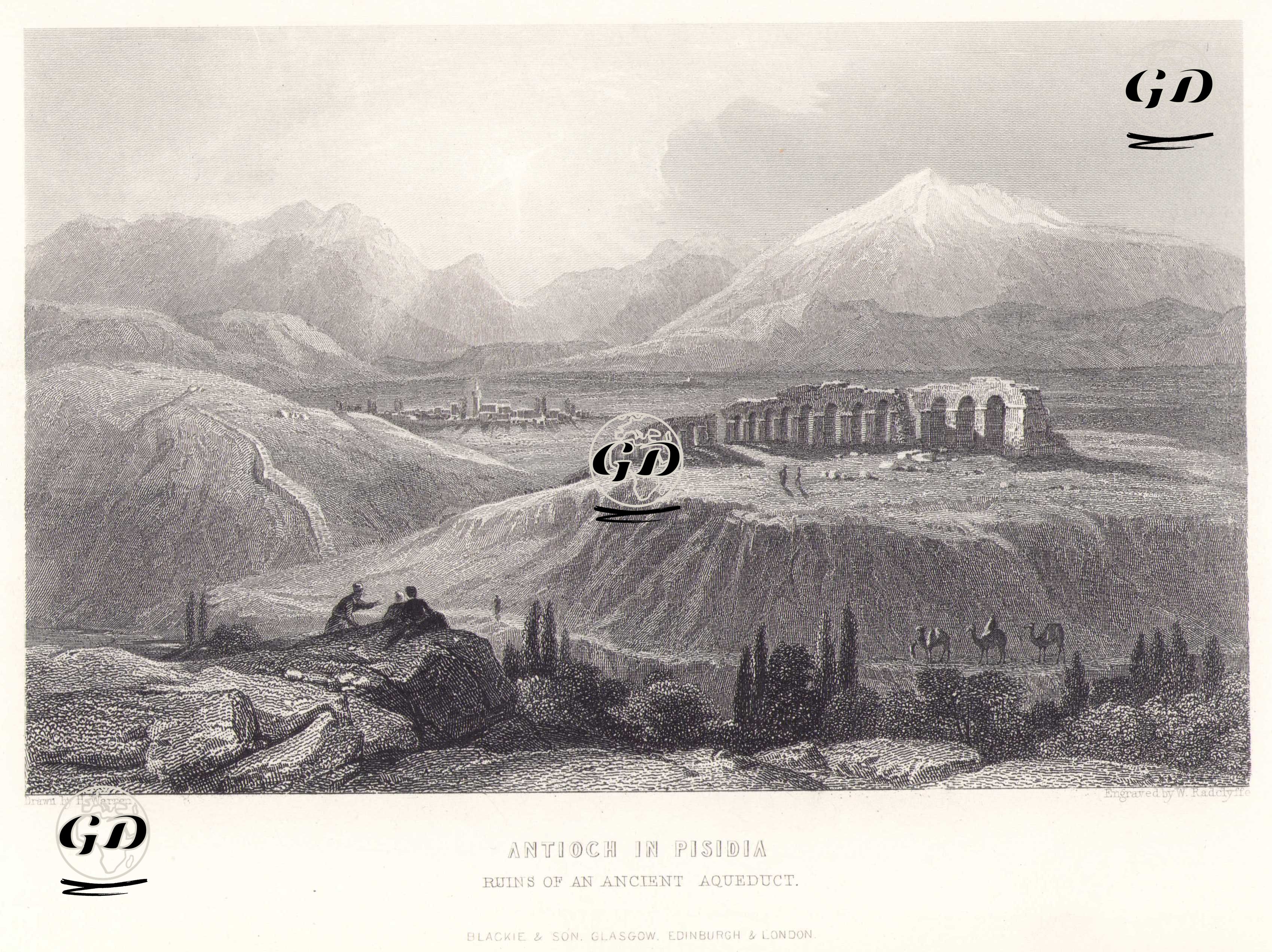
Pisidia Region covered the provinces of Isparta and Burdur completely and the northern part of Antalya province. Antiocheia Pisidia, the capital of this region, is approximately 1 km. Of Yalvaç district of Isparta. It was located on a fertile land that stretched north and south of the Sultan mountains. The Ancient City was founded by Antiochus I in 281-261 BC. In order to distinguish it from Antioch (Antakya) on the Orontes (Asi River), the city has been given the title "name Psidiam" (adjacent to the Psidia region). St Paul (Paul) and Barnabas, who were important people in the spread of the Christian faith, came to the City in 46 A.D. and St. Paul gave his first official sermon here. When his sermon caused anger and reaction, both St. Paul and his accompanying St. Barnabas were expelled from the city. In the following years, St. Paul's Church was built in his name. The arches, which were built in the 1st century AD in the ancient city of Antiocheia Pisidia and were the backbone of the water transmission system, are depicted in engravings. The water coming from the source called "Su Çıkan" was coming to the monumental fountain called Nympheum in the ancient city via a waterway of approximately 10 km in length, 2 km of which was provided by arches. Only a 250-meter-long section of the aqueducts located in the north of the ancient city has survived to the present day. The height of the standing arches varies between 5-7 meters.