GRAVÜR DÜNYASI
Digital Engraving Library
| Artist | Charles Felix Marie Texier (1802-1871) |
| Engraver | Augustin François Lemaitre (1797-1870) |
| Date | 1863 |
| Technique | Copper Engraving |
| Category | Ottoman Empire And Turkey |
| Source | Asie Mineure, Depuis Les Temps Les Plus Anciens Jusqu’a La Bataille d’Ancyre en 1402 Ph. Le Bas Termine par M. Cheron |
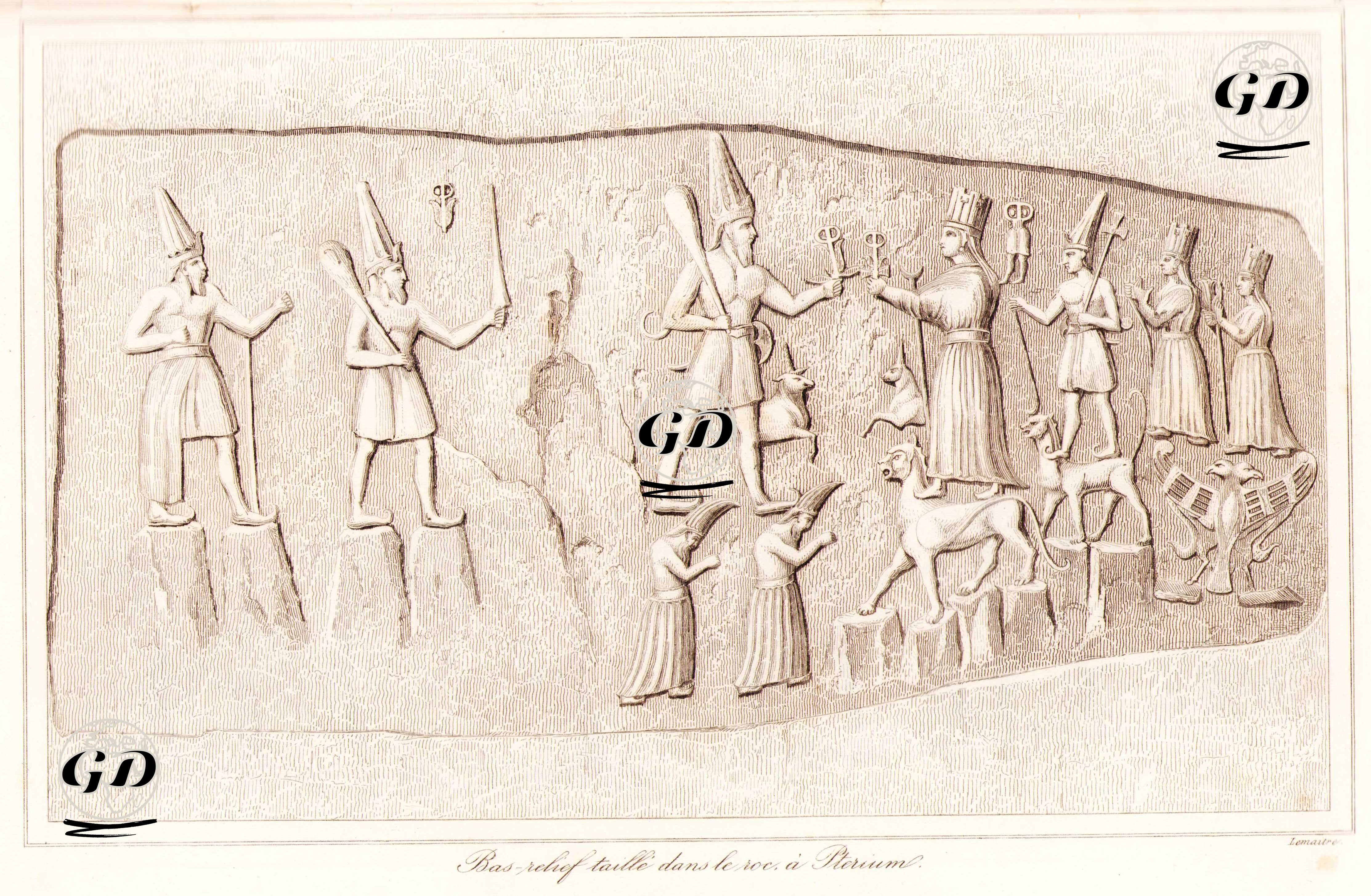
The national temple of the Hittite Empire, Yazılıkaya Hittite Open Air Temple, is located among natural rocks 2 km northeast of the ancient settlement of the Hittite capital Hattusha (Boğazköy). This temple, the largest of the Hittite rock monuments, consists of two open-air sacred spaces (rooms A and B). It is thought that the Hittite New Year celebrations were held in one room (room A), while the cult ceremonies of the kings' deaths and commemorations were held in the other room. Important Hittite gods and goddesses were carved in relief on the rock in rows in these rooms. The wall reliefs depicted in the engraving are in Room A. The relief shows the weather (or storm) god Teshub standing on two mountain gods and holding a large mace, and the weather god of the country of Hatti and the god Kumarbi behind him. Opposite the weather (or storm) god Teshup, standing on a wild cat (or leopard) stepping on four rock masses, is the Sun Goddess Hepat in her long pleated dress and high headdress, and behind her is her son Sharruma and her daughter Alanzu. While there are those who accept this scene as the agora of the gods or the sacred wedding scene, there are also those who attribute very different meanings to it.